Get Full Government Meeting Transcripts, Videos, & Alerts Forever!
Get email alerts on the Law Enforcement Certification topic
No spam. Unsubscribe anytime.
House Judiciary panel hears bill to allow case-by-case law-enforcement certification for people with past convictions
Summary
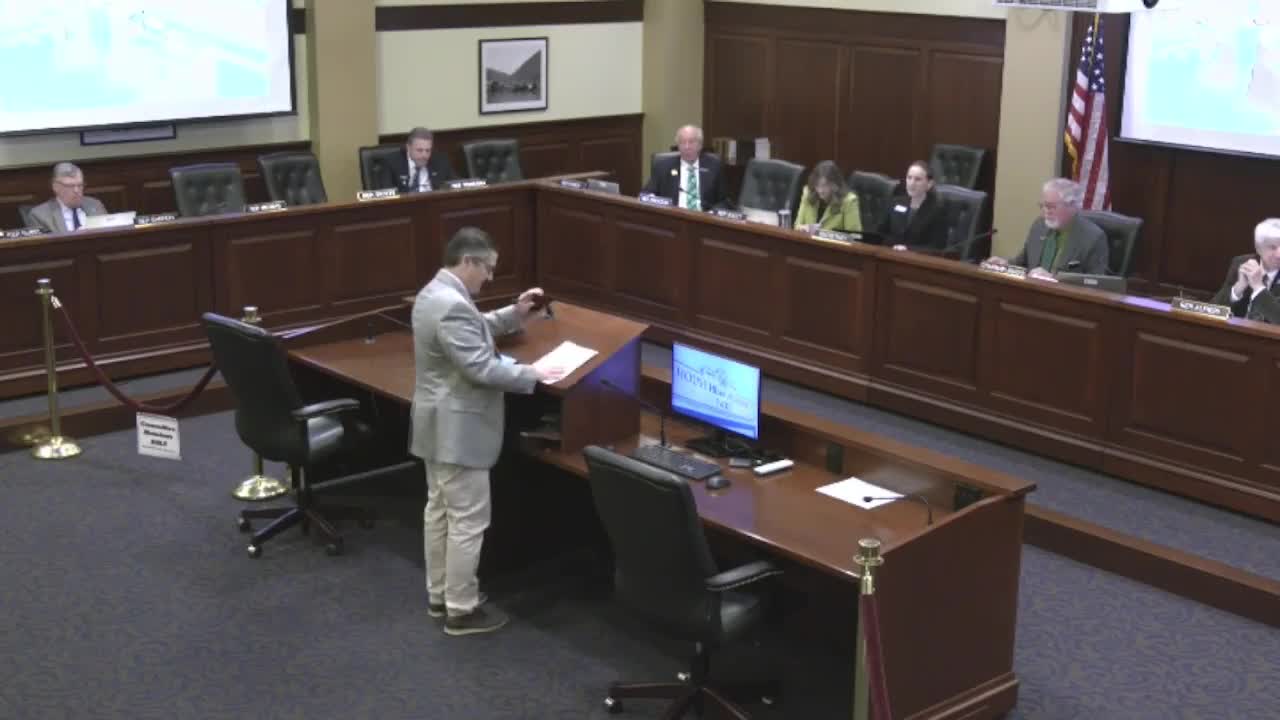
The Idaho House Judiciary and Rules Committee on March 17 heard testimony on Senate Bill 1139, a measure that would let hiring agencies and the state POST council consider, on a case-by-case basis, certifying applicants who have certain past convictions that current law bars automatically.
The Idaho House Judiciary and Rules Committee on March 17 heard testimony on Senate Bill 1139, a measure that would let hiring agencies and the state POST council consider, on a case-by-case basis, certifying applicants who have certain past convictions that current law bars automatically.
Supporters, including Rep. Charlie Shepherd, said the bill targets people who have been rehabilitated and would not change the automatic disqualification for the most serious felonies. "What this Senate bill 11 39 is about is about how long are we gonna continue to punish people after they have done their time and now we want to put them back in the workforce and let them become productive part of society again," Shepherd said.
Sheriff Chris Getz, testifying for the Sheriffs Association, said current Idaho law treats any felony conviction as an absolute bar to certification. "Currently in Idaho, if you have ever been convicted of any felony, you can never, no matter what happens, be certified in law enforcement," Getz said, and described a deputy who had a 24-year-old grand-theft conviction that was later dismissed and who could not be certified under the present statute. Under the bill, Getz said, crimes listed in Idaho Code 18-3-10 would remain an automatic restriction ("shall not"), while other convictions would change to a "may not" standard that permits agency hiring and POST Council review.
Getz described POST Council membership and the two-step process he envisions: an agency would need to be willing to hire a candidate and then POST would consider certification under occupational-licensing factors listed in the statute cited in testimony as "67-94-11." He estimated the number of similar cases in the state would be small—"at the most, maybe 1 or 2 a year at the very most." Kelli Brasfield of the Idaho Association of Counties told the committee the association supports the bill and "appreciate[s] that this legislation gives the post council the ability to review these cases case by case."
Committee members asked how juveniles and pardoned convictions would be treated. Getz responded that juveniles whose records are set aside, expunged or dismissed would qualify under the bill and that pardoned convictions could be considered but only if an agency wanted to hire the person and POST granted certification. Representatives also asked whether decertified officers could regain certification; Getz said that an agency would first have to want to hire that person and POST would have to grant a waiver, and he expressed doubt some decertified officers would be eligible.
Representative Ehart moved to send Senate Bill 1139 to the floor with a due-pass recommendation. The record does not include a roll-call or voice vote on that motion in the transcript supplied; there was no negative testimony on the bill. The committee chair later announced plans to form an informal summer group to review Title 18 and related statutes.
The bill as described would not automatically reinstate certification for people convicted of the most serious felonies listed in Idaho Code 18-3-10. Instead, it would create a discretionary path requiring both agency hiring interest and POST Council certification review. The transcript does not record a formal vote tally for SB 1139 in this meeting.