Get Full Government Meeting Transcripts, Videos, & Alerts Forever!
Get email alerts on the H281 Penalties For Crimes Against Officers topic
No spam. Unsubscribe anytime.
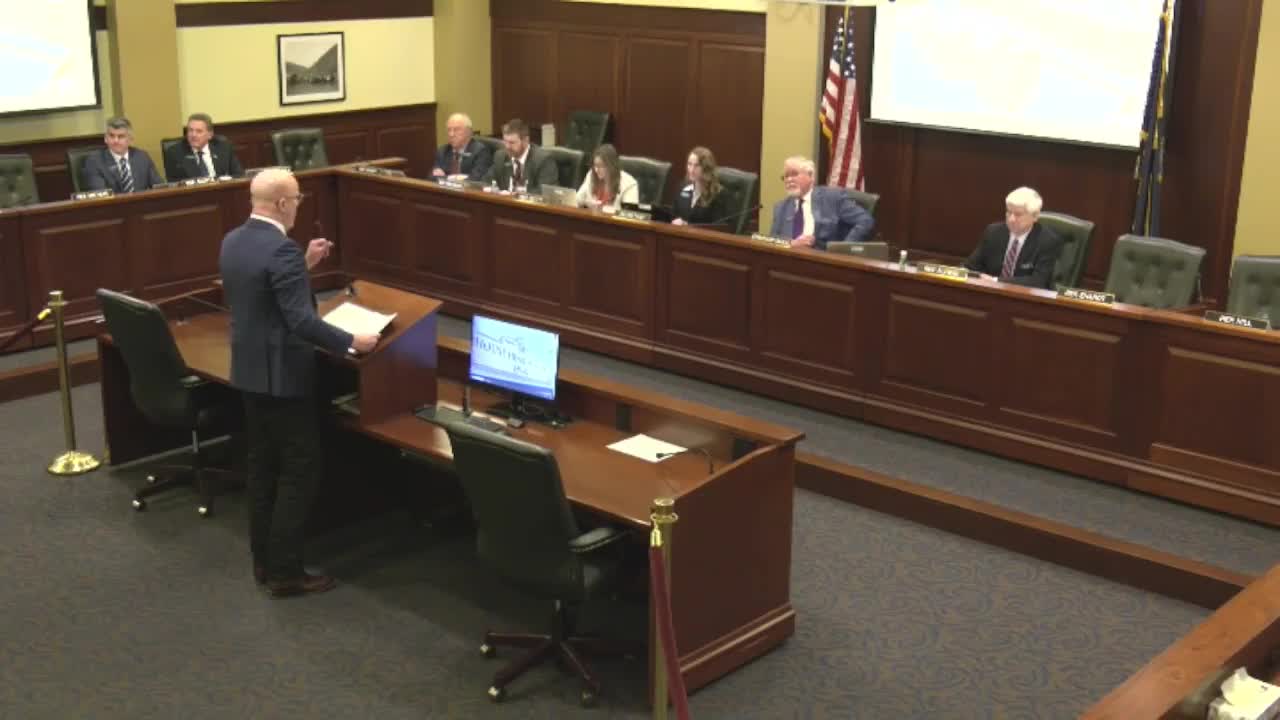
Committee hears testimony for and against H281, bill to raise penalties for crimes against peace officers
Summary
Representative Ted Hill introduced House Bill 281 proposing higher mandatory minimums for assaults and murders of peace officers; the House Judiciary, Rules and Administration Committee heard nine testifiers with competing views about equal protection, deterrence and scope, but the committee took no vote.
Representative Ted Hill, sponsor of House Bill 281, told the House Judiciary, Rules and Administration Committee the measure would raise penalties for crimes against peace officers and memorialize two officers who were killed in separate incidents.
The bill drew a mix of law-enforcement supporters who called for stronger sentencing and civil-rights and equality-focused opponents who said penalties should not depend on the victim’s profession. The committee heard testimony and questions but did not vote; members said the measure would be discussed at a future session.
Representative Ted Hill (District 14) introduced the bill as the "Stahl and Bolter Defend the Defender Act," saying, "This bill will protect our defenders and also memorializes 2 of the finest that we lost in line of duty." Hill summarized the legislation’s sentencing goals: raising fixed terms for certain crimes against peace officers to a 15-years-to-life range and proposing a minimum of 35 years for the murder of a police officer, as discussed during testimony.
Several current and former law-enforcement officials spoke in favor. Robert Gillis, identifying himself as a former Los Angeles-area officer who moved to Idaho after retiring, said his experience of losing colleagues informs his support. "I was on the department for about a year... About 4 years later, a really good friend of mine was shot and killed," Gillis said, recounting multiple colleagues killed in the line of duty and urging passage.
Mike Maraglia, representing the Idaho Fraternal Order of Police, framed the measure as protecting what law enforcement "represents" rather than elevating officers as individuals: "It's the role that we play in society, which is special," he said and supplied national figures for early 2025 on officers shot and killed.
Ada County Sheriff Matt Clifford, speaking for the Idaho Sheriffs' Association, told the committee the bill was meant to send a deterrent message: "We need to send a message to people that it's not okay to do that. ... We need to make sure we send a message that says, these people that are protecting your community from evil also should have... harsher punishments for doing harm to them."
Opponents focused on equal-protection principles and the risk of creating privileged classes of victims. Michael Law argued, "All men are created equal. And when we... exact a punishment, it should be equal across the board." Garth Gaylord and others raised concerns about disparate treatment and about specific cases they said reflected overreach or wrongful convictions; Gaylord referenced past incidents and appeals.
Representative Heather Scott and Representative Alfieri pressed witnesses on comparative scenarios (firefighters, hospital workers and other first responders) and asked where the line would be drawn for expanded protections. Some witnesses suggested first responders could be considered; others said the bill’s focus is law enforcement because of the statutory role officers play in enforcing laws.
Benjie Wells and family members of Deputy Tobin Bolter spoke emotionally about the 2024 killing of Deputy Bolter and urged the committee to approve the measure. Wells said the family sought "assurance of our peace officers the state has their back" and called for "hefty mandatory minimums" for those who attack officers.
Ron Weiniger, a retired police chief who was present at the 1997 shooting that killed Officer Mark Stahl, described the incident and disputed circulating alternative narratives about the case. "They chose to draw weapons, to fire weapons at police..." he said, describing the suspects’ actions and the fatal wound to Stahl.
A number of legislators and witnesses raised technical concerns about the bill’s text. Representative Gannon noted possible drafting problems in how the bill lists multiple code sections and how those sentences interact; Representative Dave Pettinger urged clarifying language to limit the statute to officers acting lawfully, saying line 31 should require the victim be engaged in "lawful and constitutional duties." Several speakers recommended that committee attorneys or the draft room revise language to ensure consistency with Idaho criminal code and intended scope.
Chairing members concluded the hearing without a vote and said the committee would reconvene with additional questions and potential amendments at a later date.