Get Full Government Meeting Transcripts, Videos, & Alerts Forever!
Get email alerts on the Swatting topic
No spam. Unsubscribe anytime.
Committee unanimously advances anti-swatting bill making false emergency reports a felony in serious cases
Summary
Representative Judy Boyle presented SB1019 to criminalize false emergency reports intended to draw tactical responses; the committee voted unanimously 14–0 to send the bill to the House floor with a due-pass recommendation.
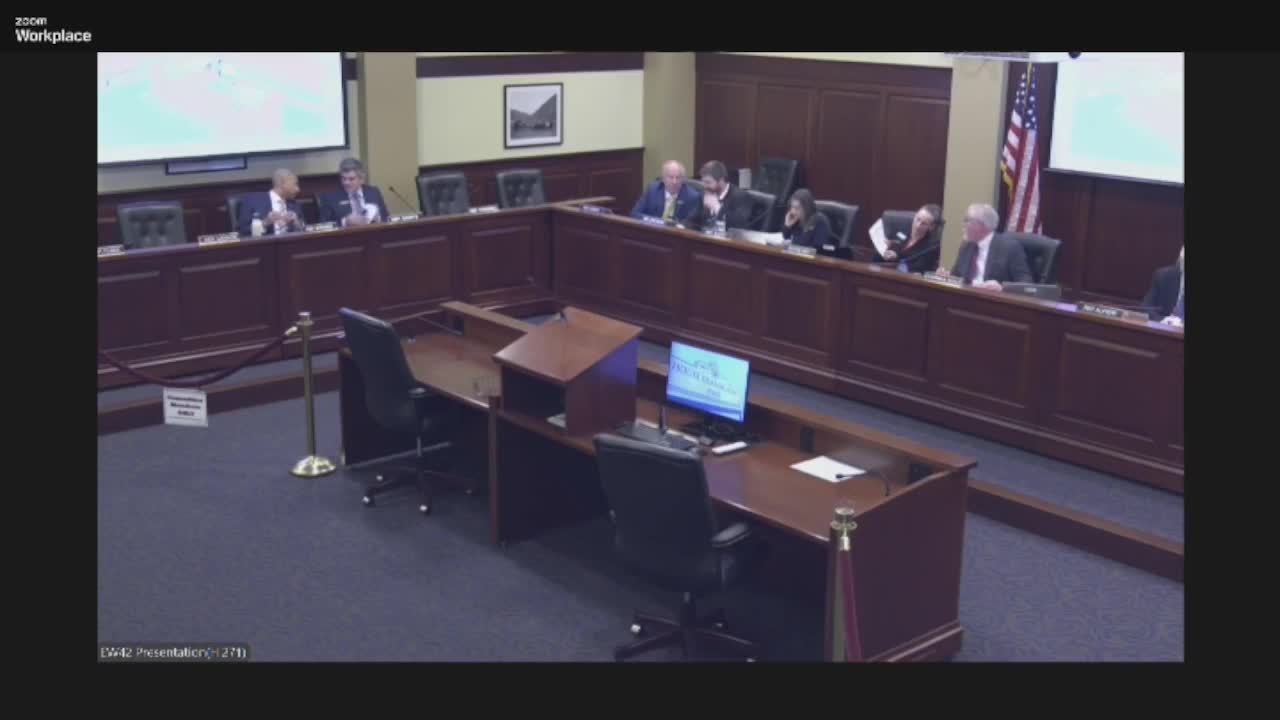
Representative Judy Boyle presented Senate Bill 1019 to the House Judiciary, Rules and Administration Committee, describing it as legislation to criminalize false emergency reports made to provoke tactical responses (commonly called "swatting"). The committee voted unanimously, 14–0, to send SB1019 to the floor with a due-pass recommendation.
The bill defines covered false reports and sets a penalty framework: a misdemeanor if the false report causes no harm; a felony if damages exceed $1,000 or if the false report results in great bodily harm; and the most severe felony penalties (including significant prison time and fines) if the false report results in a death. Representative Boyle told members the bill mirrors incidents in Idaho and elsewhere and enumerates the places and officials to whom a false report can be made.
Rex Ingram, president of the Idaho Chiefs of Police Association, described swatting as a dangerous, resource-draining pattern that has escalated in other states and now affects Idaho, tying up emergency medical and law enforcement response during staffing shortages. "During my previous tenure with the Los Angeles Police Department ... swatting calls had a direct correlation to injuries, death, and a complete misuse of taxpayer money and resources," Ingram said. Ingram told the committee many swatting suspects live out of state or overseas and said stronger penalties would help Idaho seek extradition and prosecution.
Committee members asked practical questions. Representative Alfieri asked about costs to deploy a SWAT team; Ingram estimated roughly $100 per hour per person and suggested overtime deployments can amount to "thousands upon thousands of dollars" depending on duration. Representative Ehart asked whether swatting can be preempted; Ingram said officers respond as to any critical incident and the bill provides tools to prosecute after the fact and pursue extradition when suspects are out of state.
Robert Gillis, testifying for Idaho Tough on Crime, described a personal incident in which his team was diverted by a false report to an elementary school while responding to another confirmed shooting—he described children hiding under desks during the false alarm and said a suspect connected to multiple swatting incidents was arrested in Texas with personal data about Idaho officers on his computer.
An exchange on labeling followed: Representative Heather Scott asked Ingram whether he considered swatting perpetrators "terrorists." Ingram said some perpetrators "are trying to terrorize our communities" and that labeling was his personal opinion; he and Representative Scott agreed to disagree on that characterization.
Action: Representative Hill moved to send SB1019 to the House floor with a due-pass recommendation. The committee recorded a roll-call vote and the motion passed unanimously, 14–0; the transcript lists committee members voting yes and the chair declared the motion carried.
Next steps: SB1019 advances to the House floor. Supporters said the bill would give prosecutors an enhanced statutory tool to pursue out-of-state suspects and pursue extradition for serious incidents.