Get Full Government Meeting Transcripts, Videos, & Alerts Forever!
Get email alerts on the Medical Freedom topic
No spam. Unsubscribe anytime.
Committee advances 'Idaho Medical Freedom Act' after extended public testimony; schools and public-health officials urge caution
Summary
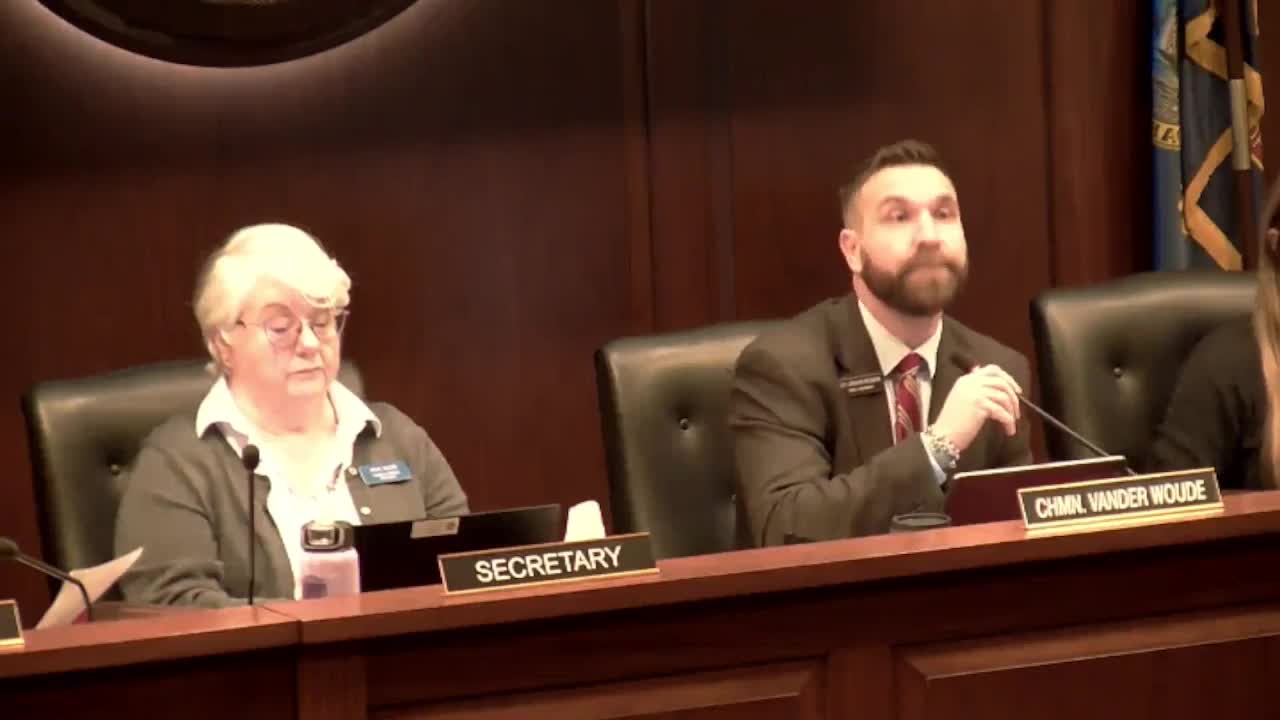
The House Health and Welfare Committee voted 8-5, with two members absent, to send Senate Bill 1023 — the Idaho Medical Freedom Act — to the House floor after extended testimony from advocates and public-health and education officials.
The Idaho House Health and Welfare Committee voted 8-5, with two members absent, to send Senate Bill 1023, the "Idaho Medical Freedom Act," to the House floor with a do-pass recommendation after more than two hours of testimony from proponents and opponents.
Sponsor Representative Rob Bieswanger introduced the measure and deferred to Leslie Manoukian of the Health Freedom Defense Fund, who presented the bill and framed it as a restoration of "bodily autonomy." "The right to medical freedom is foundational to our nation," Manoukian said, arguing the bill would prevent employers, schools and businesses from conditioning employment, education or access to services on an individual's medical choices except in limited circumstances such as recognized occupational or vocational hazards.
Proponents included national- and state-level advocates who described experiences during the COVID-19 pandemic when they said local policies, employer mandates and business requirements infringed on individual medical choice. Dr. Ryan Coles, an Idaho-trained pathologist testifying in support, said, "Any medical intervention has risk. And where there is risk, there must be choice. A mandate takes away choice." Ron Nate, president of the Idaho Freedom Foundation, also supported the bill, saying it would protect Idahoans from what he described as indirect or back-door mandates.
Opponents included school officials, health-care workers and public-health advocates who warned the bill as written would create legal conflicts and hamper disease mitigation in schools and other settings. Quinn Perry, deputy director of the Idaho School Boards Association, said the measure would "create massive confusion and issues for school leaders" by pitting the new language against existing code. Perry cited Idaho Code 33-5-12 (school boards' authority to limit attendance for contagious disease) and other sections that the association interprets as necessary tools for outbreak response.
Nurses and pediatricians objected that the bill would reduce the information schools and public-health authorities use to respond to contagious diseases. School nurses Heather Gagliano and Jane Withers told the committee that immunization records help districts identify risk and notify families during outbreaks; Withers described using state immunization registry data to track students' vaccine status. Pediatrician Noreen Womack warned that lower vaccination rates are associated with increased risk of vaccine-preventable disease and said the state saw more than 1,000 pertussis cases in 2024.
Committee members pressed proponents on the bill's scope. Representative Egbert asked whether the bill would apply to common school health issues such as head lice; presenters replied that the measure targets government or business directives about medical interventions and does not bar schools from excluding students for contagious conditions that threaten others. Sponsors and proponents repeatedly pointed to an exemption in the bill for occupational or vocational hazards and for entities that receive Medicare or Medicaid funding. Several committee members said the bill's language around those exemptions and its interaction with existing code was unclear.
Representative Redmond moved to report the bill to the floor with a do-pass recommendation. The committee recorded a roll-call vote that produced 8 ayes, 5 nays and 2 absences; the chair announced the motion passed and the bill will go to the House floor.
Why it matters: If enacted, the bill would broaden protections against requirements tied to medical interventions across employment, education and public access in Idaho, with possible downstream effects on school outbreak management, employer policies, and private-business operations. The hearing showed a split between proponents emphasizing individual autonomy and opponents raising practical public-health and legal concerns.
Votes at a glance: Motion to report SB 1023 to the floor with a do-pass recommendation — Passed by roll call, 8 ayes, 5 nays, 2 absent.