Get Full Government Meeting Transcripts, Videos, & Alerts Forever!
Get email alerts on the Public Safety Communications topic
No spam. Unsubscribe anytime.
Euclid committee told radios are ‘end of life’; city shown $610,000 savings option on replacements
Summary
Council members heard that the Euclid Police Department’s Motorola radios are about 13 years old, parts are hard to obtain, and a direct purchase option with Motorola could save roughly $610,000 versus third‑party procurement. No purchase was approved; staff said radios are a priority and legislation could follow.
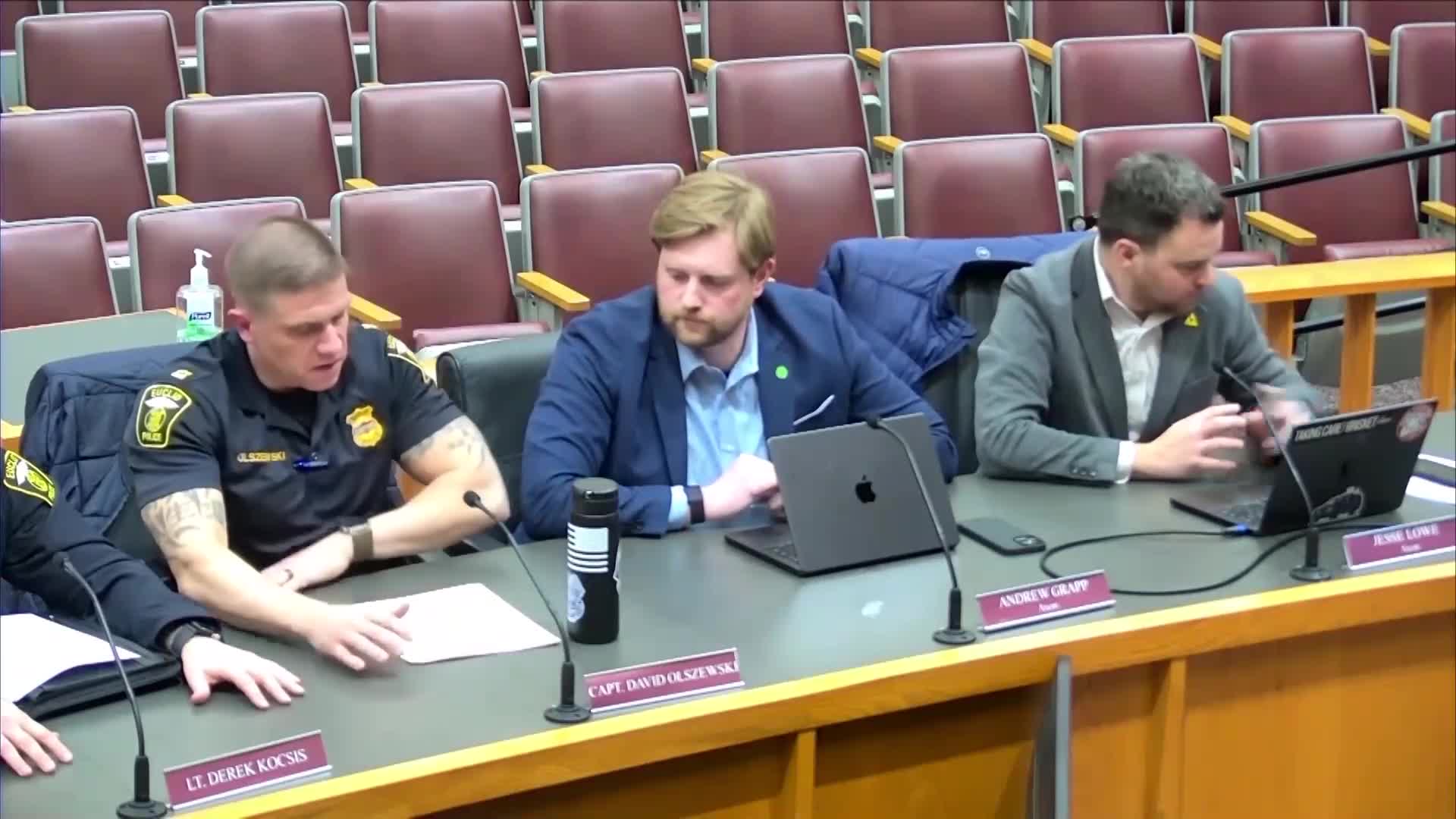
Euclid’s Executive Finance Committee on Jan. 27 reviewed options to replace the police department’s aging Motorola radio fleet, which presenters said is roughly 13 years old and increasingly difficult to maintain.
Lieutenant Kosas and other police staff told council the department still relies on older, unencrypted radios bought around 2011 and that finding repair parts and spare units is getting harder. Kosas said newer radios would include encryption to prevent public scanning of police communications.
Administration staff said they solicited three approaches: continuing current arrangements with Chagrin Valley Dispatch and a local provider, or contracting directly with Motorola. Presenters said direct procurement from Motorola could save about $610,000 compared with other options; a five‑year maintenance and replacement comparison placed one option at about $713,000 and another at $408,000 (five‑year costs reported in the presentation). The committee discussed maintenance staffing: presenters noted B&C Communications has a sizable technician staff, while the city currently relies on a single technician who also handles body‑camera work.
Council members asked about priority and timing. Administration said radios are among the highest priorities because parts and serviceability have become an operational risk; staff suggested legislation or budget moves could be presented soon. No formal procurement vote was taken at the Jan. 27 meeting.
Councilman Cosgrove and others requested written cost breakdowns. Presenters said hardware availability timelines are 90–120 days after order and that the recommended options include spare units and maintenance plans.