Get Full Government Meeting Transcripts, Videos, & Alerts Forever!
Get email alerts on the Safe Haven Babies topic
No spam. Unsubscribe anytime.
Health and Welfare committee advances bill to place safe‑haven infants directly with adoptive families
Summary
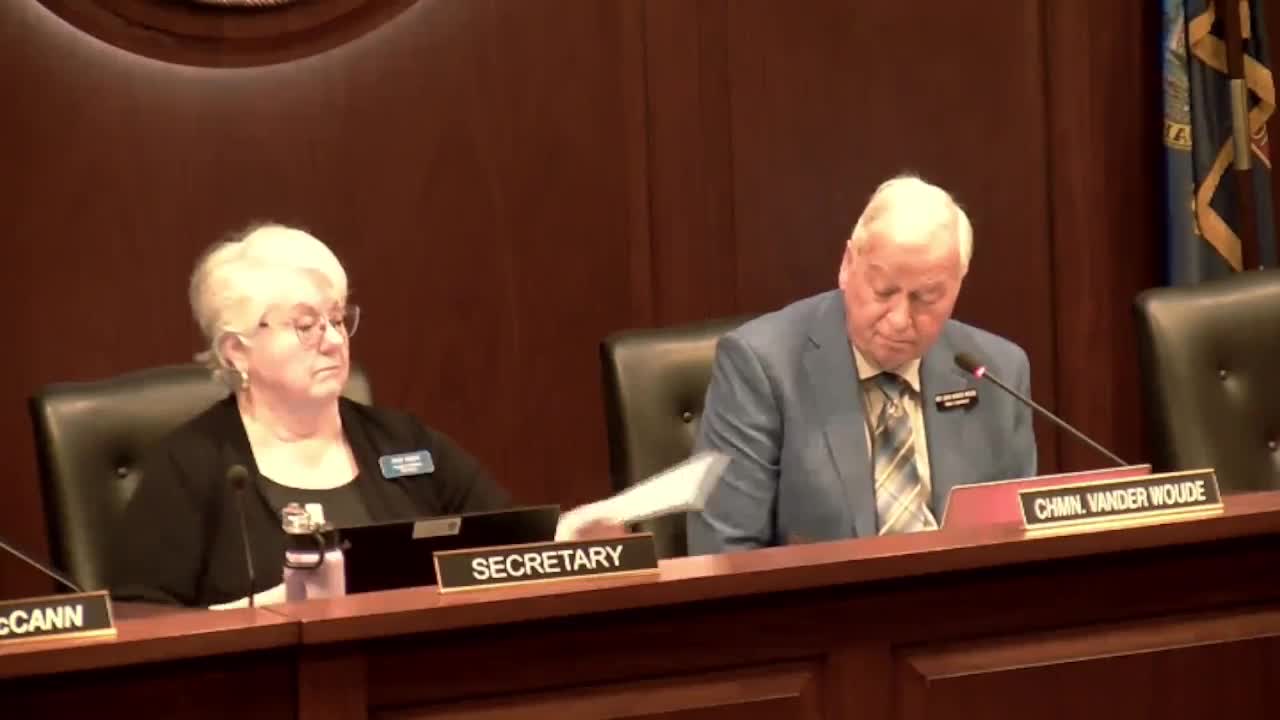
The Idaho House Health and Welfare Committee voted to send Senate Bill 1058 to the full House with a "do pass" recommendation, advancing legislation that would allow newborns surrendered at safe‑haven locations to be placed directly with pre‑vetted adoptive families instead of entering the foster care system.
The Idaho House Health and Welfare Committee voted to send Senate Bill 1058 to the full House with a "do pass" recommendation, advancing legislation that would allow newborns surrendered at safe‑haven locations to be placed directly with pre‑vetted adoptive families instead of entering the foster care system.
Representative Heather Scott, R‑District 2, the bill sponsor, told the committee the measure "allows for safe haven babies to avoid being placed in the foster care system and instead get placed with waiting adoptive homes." She said the change aims to reduce strain on the foster system and accelerate placement with families already vetted by licensed adoption agencies.
The bill directs the Idaho Department of Health and Welfare to maintain a list of licensed adoption agencies and to contact one of those agencies within 24 hours of a safe‑haven surrender, seeking placement. If placement cannot be arranged within 48 hours, the child would proceed through the ordinary foster‑care process, according to language discussed at the hearing.
Senator Julie Van Orden, R‑District 30, who helped craft the bill with sponsors and tribal leaders, said the sponsors engaged tribes while drafting the measure because of long‑standing federal protections. "I knew last year that the tribes had concern with the safe haven law, so we engaged them this year in the conversations and that's where the Indian Child Welfare Act language came in the language for that," she said.
Tyrell Stevenson, legislative director for the Coeur d'Alene Tribe, testified in support and described the bill as an attempt to reconcile the speed and anonymity of safe‑haven surrenders with requirements of the federal Indian Child Welfare Act. "This bill does a great job of balancing that and I think sets forth a clear process for the department to follow," Stevenson told the committee, noting ICWA's purpose and recent federal court rulings upholding it.
Stevenson and other speakers clarified how ICWA protections would operate under the bill: tribes would be notified and could assert their interests if it becomes known before an adoption decree is entered. Witnesses said ICWA protections would remain in place up until the entry of an adoption decree; an adoption could be overturned for fraud or malfeasance within a two‑year period after the decree, but there is no guaranteed way to identify an infant's tribal status at the instant of a silent safe‑haven surrender.
Blake Hude, speaking on behalf of the Shoshone‑Bannock Tribes, said tribal partners and the Idaho Department of Health and Welfare had contributed language to ensure a clear link between the state's safe‑haven law and ICWA. Terry Marcroft, representing the group Unplanned Good, cited recent classroom adoption education and said more awareness of safe‑haven options could lead to more uses of the statute; Marcroft urged timely placement with adoptive families who have completed home studies and background checks.
Committee members asked whether safe‑haven locations near tribal land exist and how identification would be handled if tribal status is discovered after placement. Committee witnesses responded that protected placements could be revisited if tribal identity is later established and that statutory safe‑haven sites commonly include hospitals and fire stations.
The committee recorded no roll‑call vote counts during the floor recommendation; the chair called for the ayes and declared the motion passed. Representative Heather Scott indicated she would carry the bill on the House floor.
Votes at a glance: - Senate Bill 1058 — Motion: "Send Senate Bill 1058 to the floor with a due pass recommendation." Outcome: motion passed (chair called for ayes; "Aye. Opposed, no."). Mover/second: not specified in the record provided. Next step: bill to the House floor; sponsor indicated Representative Heather Scott will carry it. - RS32645 (directed‑donation placeholder) — Introduced to reserve a bill number for future work on directed donation. Motion to introduce made and passed; mover recorded in the transcript as Representative Bieswanger. This RS is an informational introduction and was not heard for debate at this meeting.
The committee session also approved minutes from March 4 and March 5 before taking up the bills and adjourned after scheduling follow‑up items later in the week.