Get Full Government Meeting Transcripts, Videos, & Alerts Forever!
Get email alerts on the Medical Records Social Security Disability topic
No spam. Unsubscribe anytime.
Idaho committee hears bill to require one free medical-record copy for Social Security disability claims; measure held in committee
Summary
Lawmakers considered Senate Bill 1087, which would require health care providers to furnish one free copy of a patient's medical records for documented Social Security disability claims, exempt smaller providers and set a 30-day fulfillment window. After debate and two roll-call votes, the committee left the bill in committee.
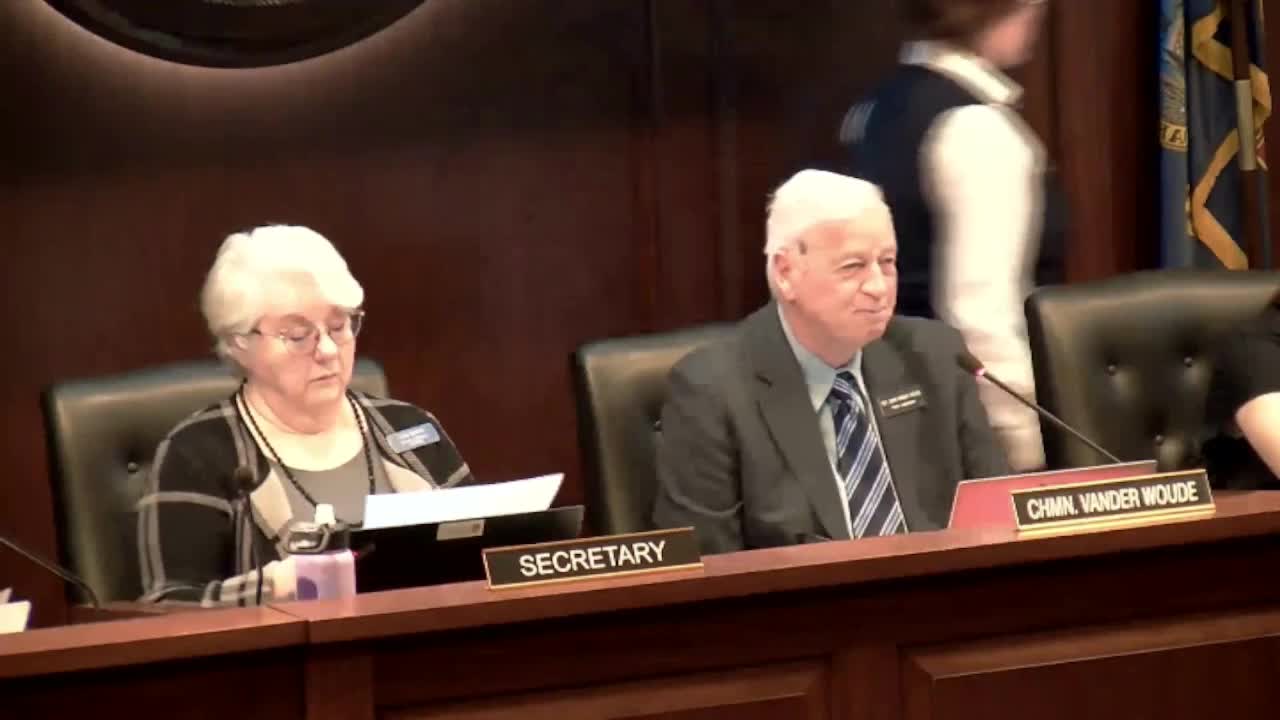
Representative Josh Wheeler, District 35, introduced Senate Bill 1087 to the House Health and Welfare Committee, saying the measure "will ensure that Idaho patients have timely and cost free access to critical medical records while pursuing their Social Security benefits." The bill would require health care providers to furnish one free copy of a patient's medical records—physical or mental—when needed to support a documented claim or appeal under the Social Security Act.
Why it matters: Supporters said the bill would remove financial barriers for disabled Idahoans who often rely on attorneys to request records and who can face high per-page charges from third-party record aggregators. Opponents cautioned that the mandate could impose costs on providers and suggested alternative ways to narrow costs.
Senator Doug Ricks, District 34, said the bill targets large out-of-state medical-record aggregators that contract with hospitals and "have attached, what I feel is excessive fees" for producing records. He described the proposal as "narrowly" focused on records associated with Social Security disability claims, with an exemption for smaller providers and a 30-day timeline for fulfillment that prioritizes electronic delivery.
Kate Haas, representing Kestrel West and the Alliance for Health Information Operations and Standards (AHEOS), told the committee her association does not oppose this narrowed version of the bill and that members appreciate the compromise language clarifying the limited subset of cases that would receive a free copy. Haas said federal law already allows patients to obtain their own records for free but that the difficulty arises when a third party—often an attorney—requests records on a patient's behalf and is charged fees. "What this law does is allows for Social Security disability purposes, it doesn't matter who requests the records, they get one free copy," Haas said.
Several committee members offered examples and concern. Former Representative Greg Furch, testifying remotely, said he opposes government mandates on private entities and warned of potential cost shifting to other services if providers are required to provide records without charge. Representative Furman and Representative McCann described situations where clients or patients were unable to retrieve full records themselves and said attorneys often need complete files to represent claimants effectively.
Key provisions discussed: the bill would (as presented in committee) require one free copy of medical records for documented Social Security disability claims, exempt health care providers with fewer than 50 employees that do not contract with third-party record vendors, set a 30-day response window for requests, and ask providers to prioritize electronic delivery when feasible. Representatives asked how the bill defines a qualifying claim; Wheeler said requesters must demonstrate a "qualified claim for disability" and that the provision targets properly documented disability claims.
Votes and outcome: The committee considered a motion to hold Senate Bill 1087 in committee and a motion to send the bill to the floor with a "do pass" recommendation. Roll-call votes split evenly in both instances; the committee recorded 6 ayes, 6 nays and 3 absent on the motion to hold (motion failed on a tie) and the subsequent motion to send the bill to the floor also failed on a tie. The final disposition recorded in committee was that Senate Bill 1087, as amended, will be held in committee.
What was not decided: The committee did not adopt any additional language changing the exemption threshold or provider obligations beyond the sponsor's narrowed draft. No amendments beyond the sponsor's compromise were passed, and no effective-date or implementation schedule beyond the discussed 30-day fulfillment window was adopted.
Next steps: With the committee vote failing to advance the measure, Senate Bill 1087 remains in committee for further consideration.