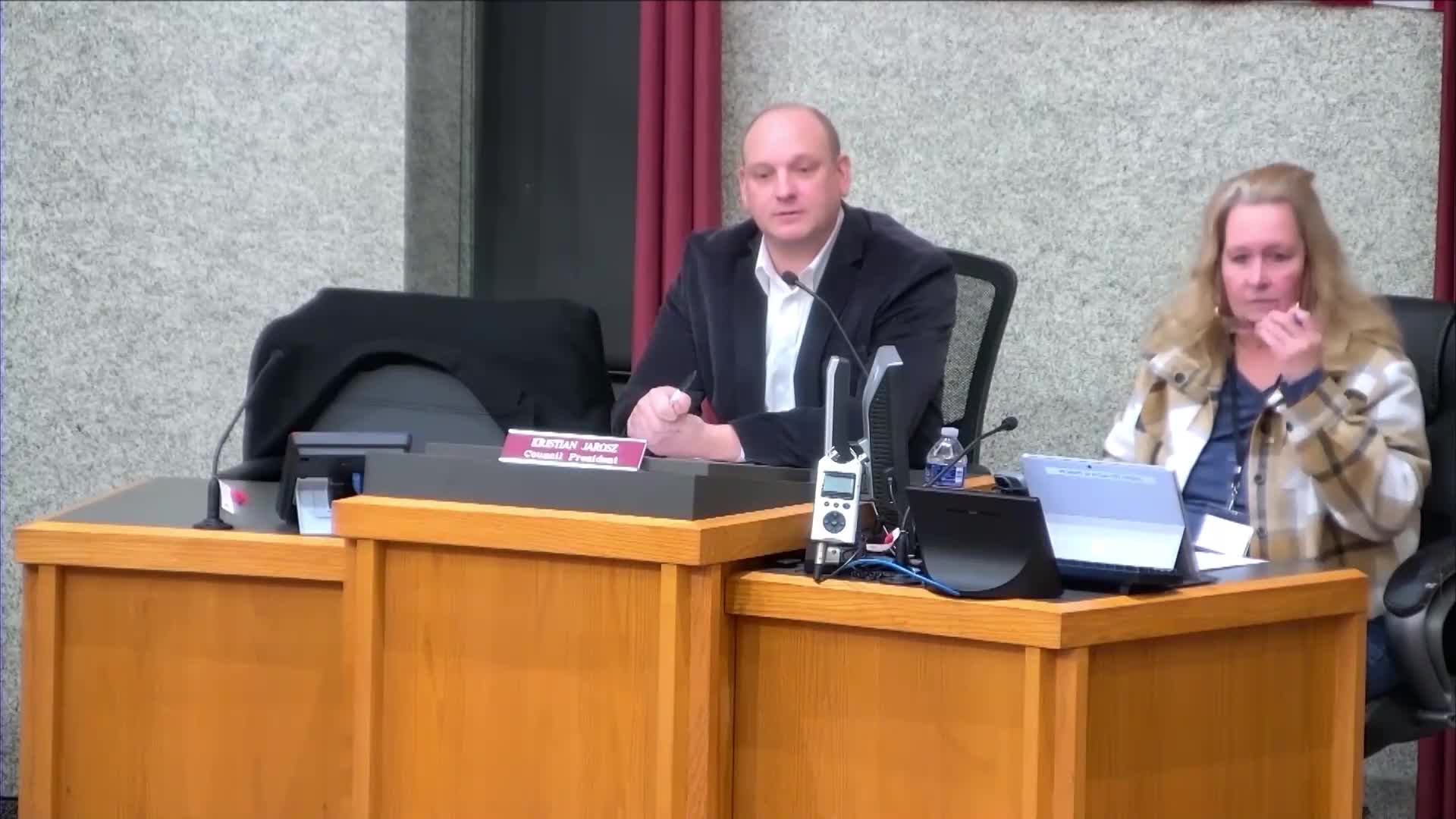
Euclid committee hears vendor pitch for ‘next‑generation policing’ package including body cams, evidence cloud and community camera integration
Loading...
Summary
Euclid’s Executive Finance Committee on Jan. 27 heard a multi‑component public‑safety technology proposal from Axon and AT&T that would replace the police department’s aging body and dash cameras, move digital evidence to a single cloud platform, add an integration layer for community and business camera feeds, and upgrade less‑lethal devices and training.
Euclid’s Executive Finance Committee on Jan. 27 heard a multi‑component public‑safety technology proposal from Axon and AT&T that would replace the police department’s aging body and dash cameras, move digital evidence to a single cloud platform, add an integration layer for community and business camera feeds, and upgrade less‑lethal devices and training.
The package — described in the meeting as “next generation policing” — was presented to council by Captain Olszewski and vendor representatives Andrew Gapp and Jesse Lowe of Axon, with AT&T FirstNet specialist Brett Cudachieff on hand to discuss cellular connectivity. Mayor (unnamed) opened the presentation by saying improved equipment and integration would protect both residents and officers.
Committee members were shown field tests the department ran comparing current Motorola body cameras and dash systems to Axon equipment. Captain Olszewski said Motorola V300/ V700 units are showing “battery issues” and premature failures; the department’s field tests reportedly found Motorola units died before the end of shift about half the time, while Axon Body 4 units had “25–32% battery life left” after a 12‑hour shift. The committee also heard the department’s current dash‑cam fleet has a 52% failure rate (12 of 23 vehicles), creating gaps in video capture.
Axon representatives described several linked components: (1) Axon Body 4 cameras and Axon Fleet in‑car cameras; (2) an Axon‑hosted digital evidence cloud (migrating the department’s current evidence, which presenters estimated at roughly 162 terabytes, into Microsoft Azure Gov Cloud); (3) FUSIS (a unified command/“single pane of glass” platform) that can ingest live feeds from agency cameras, blue‑light public cameras and voluntarily‑shared business cameras; and (4) upgraded TASER 10 devices and a virtual‑reality training suite for de‑escalation and scenario training.
Presenters emphasized integration as the selling point: FUSIS would allow officers responding to a 911 call to see related camera streams, license‑plate reader hits and other relevant data on the officer’s in‑car screen without separate logins. Axon said community and business cameras would be voluntary and business owners would control access; the vendor also said the system keeps an audit trail of accesses. When Councilwoman Hannell asked whether residents filmed on community cameras would face legal penalties, the presenter said that, “from a purely legal standpoint,” there is no expectation of privacy in a public place, and access is controlled by the camera owner.
On evidence and records tasks, Axon staff said moving to a single cloud platform would ease collection, playback and redaction. Presenters said current redaction tools and workflows are labor‑intensive — an example cited in discussion: it can take about eight staff hours to redact 60 minutes of video under the current process — and that Axon tools would reduce that time.
The taser portion highlighted technical changes: presenters said the TASER 10 increases effective deployment range from about 15 feet to about 45 feet and allows multiple shots without probe spread. Axon said hardware and program elements (spares, an advanced RMA replacement program, and a five‑year warranty) are included in its service package and that devices are refreshed at roughly 30 and 60 months.
Council members pressed on practical and privacy questions. Councilwoman Hannell asked whether camera failures were due to network problems or hardware; presenters said hardware. She also asked whether the cloud option required the city to buy new servers; the presenter responded that Axon would migrate existing data to Microsoft Azure Gov Cloud and the city could retire some local servers. Councilman Tanner asked about charging options for body cameras; presenters said cameras use USB‑C or magnetic charging options and supervisors would receive spare devices to avoid long downtime.
Mayor and police leaders said the department’s test results and detective‑use cases — including earlier successes with Flock and Verkada cameras and license‑plate reader data — supported pursuing integrated systems. Captain Olszewski and Lieutenant Kosas described prior cases where license‑plate readers and external business cameras helped identify vehicles and leads.
No procurement motion or final decision was taken at the meeting. Presenters said a draft package and supplemental videos could be circulated to council members; Council President and other members indicated legislation or budget requests would follow if the council wishes to pursue the package.
The committee also discussed cost offsets such as reduced staff time for evidence handling and lower server upgrade frequency; presenters estimated storage upgrade costs of roughly $40,000 every two years under the current approach. Council members requested written materials and live demonstration videos for absent council members.
As of the meeting’s close, council had not voted on the Axon package; the presentation concluded with an invitation to distribute more materials and schedule follow‑up work sessions or legislation.