Get Full Government Meeting Transcripts, Videos, & Alerts Forever!
Get email alerts on the Charter Salary Review topic
No spam. Unsubscribe anytime.
Lackawanna council votes 3-2 to hire outside counsel to review mayor salary, charter/local-law questions
Summary
The Lackawanna City Council approved retaining outside legal counsel by a 3-2 vote to review whether past local laws or the city charter govern changes to the mayor’s salary and whether a referendum is required.
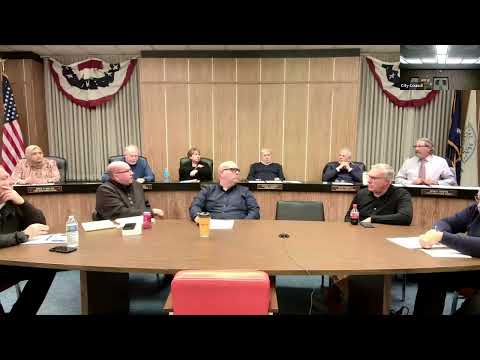
The Lackawanna City Council voted 3-2 on March 3 to retain outside legal counsel to examine apparent conflicts between the city charter and past local laws concerning the process for setting or changing the mayor’s annual salary.
Councilmember Moreno moved to retain outside counsel and the motion passed 3-2 after roll-call votes. Councilmembers listed in the roll call as voting yes and no were recorded in the meeting minutes and roll calls as follows: Maflahi — Yes; Anderson — No; Reni — No; Sertai/Saturday — Yes; Moreno — Yes. The motion's final tally was recorded as carried, 3 to 2.
The vote followed an extended council discussion about whether a disputed 1996 ordinance or a provision in the charter controls mayoral pay and whether the city must use a referendum to alter that arrangement. The city attorney advised the council that referendums are governed by municipal home rule sections 23 and 24 and explained the procedural differences between local laws and referendums. The city attorney said, "The city council has that right to do no matter what, and it's pretty simple. You make a motion, and you just have to have a majority of the counsel in order to approve." The city attorney also summarized referendum basics, saying mandatory and permissive referendums are "dictated by the municipal home rule sections 23 and 24."
Fourth Ward Councilmember Kevin Sirdai asked how the council would proceed, asking, "How would how would we move forward to proceed to referendum?" Council discussion also flagged uncertainty about whether a 1996 action properly amended the charter or instead created a stand-alone ordinance that could be rescinded; one council member described the legal history as needing review and said that if an ordinance was passed incorrectly it "may not apply." Several members said outside counsel should provide a definitive opinion on whether a charter amendment (requiring a referendum) is needed or whether the council can rescind an incorrectly passed ordinance.
Council members raised related procedural questions, including whether raises tied to other elected or appointed salaries take effect immediately or only at the start of the next elected term; that timing issue was discussed but not resolved at the meeting. The city attorney recommended the council seek an opinion from outside counsel, and the council voted to retain outside counsel for that purpose.
The motion as recorded in the meeting minutes was: "Retain outside legal counsel for an opinion addressing concerns and conflicts that have arisen over time regarding the city charter and past local laws on the setting and changing of the mayor's annual salary." The motion was moved by Councilmember Moreno and seconded as recorded in the minutes. The council did not specify in the meeting transcript which outside firm would be retained or a timeline for delivery of the written opinion.
The action requires no further formal council action recorded in this meeting beyond the vote; the minutes show the motion carried and the item closed at the meeting.
Why this matters: If an ordinance was improperly used to change provisions that belong in the charter, the legal status of any salary-setting language could be unclear, with potential consequences for future budgets and for how the council exercises its authority over compensation and charter amendments.