Get Full Government Meeting Transcripts, Videos, & Alerts Forever!
Get email alerts on the Electronic Monitoring Long Term Care topic
No spam. Unsubscribe anytime.
House committee sends bill letting families install monitoring devices in care-facility rooms to House floor
Summary
Representative Healy, sponsor of House Bill 337, told the House Health and Welfare Committee the bill would allow residents or their authorized representatives to install electronic monitoring devices in care-facility rooms at the families’ expense and with safeguards intended to protect privacy and legal rights.
Representative Healy, sponsor of House Bill 337, told the House Health and Welfare Committee the bill would allow residents or their authorized representatives to install electronic monitoring devices in care-facility rooms at the families’ expense and with safeguards intended to protect privacy and legal rights.
"It enhances residential safety, it empowers family and residents," Representative Healy said, describing the proposal as a tool for families who cannot be physically present to oversee care. She told the committee the measure is modeled on laws in other states, citing Esther’s Law and a list of more than a half-dozen states that already permit family-installed monitoring.
The bill’s core provisions discussed in the hearing would: allow a resident or the resident’s authorized representative to install electronic monitoring devices at the resident’s expense; require facilities to be notified and permit facilities to post notice at the entrance to a monitored room; prohibit facility staff from viewing footage without the family’s permission; and require that residents who choose monitoring be placed in single rooms if necessary. Representative Healy said the bill does not require state funding and that families would bear costs for devices and any connectivity.
Witness testimony highlighted competing concerns. Monte Morland, who identified himself as a son who had installed cameras for his parents, urged the committee to adopt the bill. "This law here in Idaho is for precious mothers like Esther and for all like my parents who need the ones who love them most to watch out for them," Morland said, recounting difficulty monitoring care after staff removed cameras from his parents’ room.
Robert Vandermer, executive director of the Idaho HealthCare Association, said the association could not support the bill as written. "We can't support this bill as written," Vandermer said, citing concerns about footage of intimate body parts, unintended public dissemination of video, and legal exposure for facilities. He said federal surveyors hold facilities accountable for abuse that occurs on property regardless of who recorded it and urged more time to resolve technical and liability questions.
Committee members pressed on logistics and wording. Representative Kaler raised a civil-liberties concern, saying, "We already live in a overly surveilled state," and asked whether facilities currently allow monitoring without statute. Representative Bieswanger asked who would troubleshoot connectivity; Healy responded families would be responsible for Internet or Wi‑Fi and device maintenance. Representative Kaler also questioned the bill’s use of the word "intentionally" in criminalizing tampering or viewing; Healy said she had reviewed the language with legal counsel and was advised to keep it.
Members discussed technical options and protections: witnesses noted examples where facilities use specialized cameras that obscure intimate detail, and representatives proposed or noted existing bill language for signage and definitions to protect privacy. Committee members also described draft changes discussed with stakeholders, including limiting monitoring to single rooms and adding a definition addressing exposure of intimate areas.
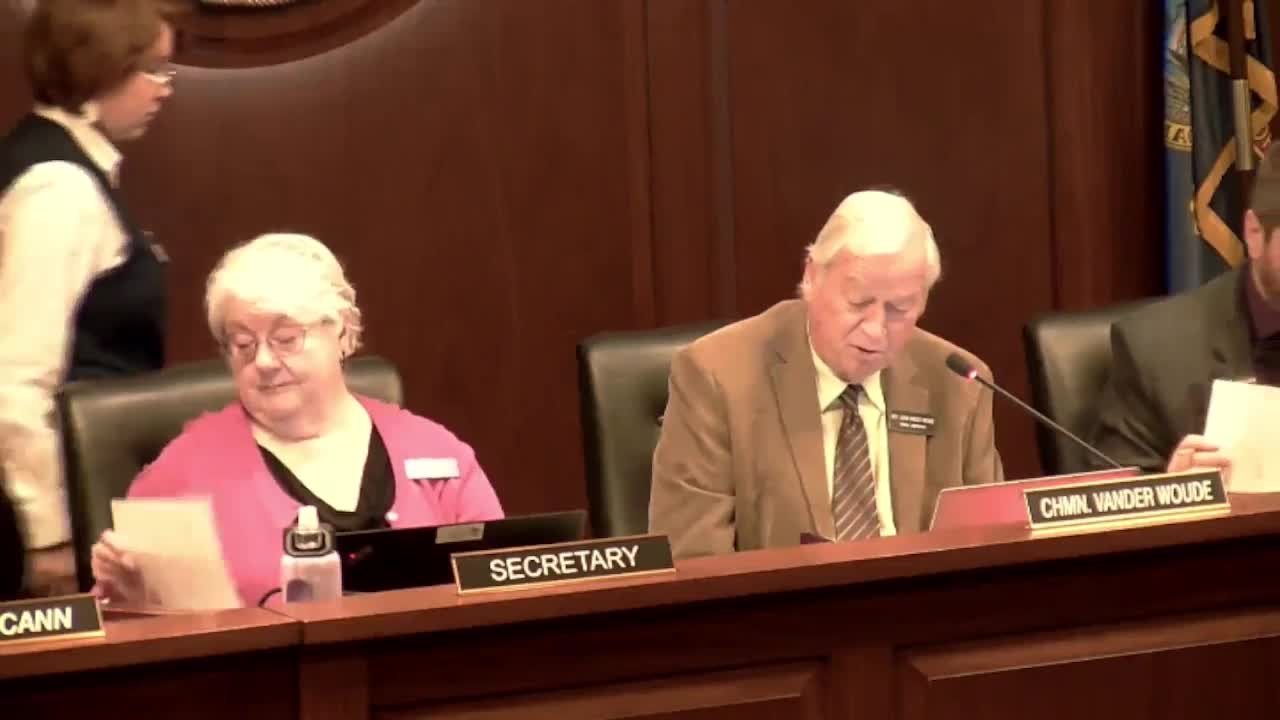
After roughly a 40‑minute hearing with public testimony, questions and sponsor remarks, Representative Wheeler moved to send the bill to the House floor with a do-pass recommendation. The committee approved the motion by voice vote; the chair announced the motion passed and the bill was referred to the full House.
Votes at a glance: the committee approved transmission of House Bill 337 to the House floor by voice vote; individual recorded tallies were not provided in the hearing transcript.
The bill will next appear on the House floor calendar for further debate and any floor amendments.