Get Full Government Meeting Transcripts, Videos, & Alerts Forever!
Get email alerts on the Health Blood Donation topic
No spam. Unsubscribe anytime.
House committee sends bill to floor to allow donors to disclose mRNA vaccination on blood donations
Summary
The House Health and Welfare Committee voted 9-5 to send House Bill 131 to the floor with a ‘do pass’ recommendation after supporters said the bill protects donors’ and patients’ choice and opponents including the Red Cross and blood centers warned it could harm Idaho’s blood supply.
The House Health and Welfare Committee on an unrecorded date advanced House Bill 131, a measure that would require disclosure and labeling of donated blood when the donor indicates they received an mRNA vaccine, sending the bill to the full House with a “do pass” recommendation after a 9-5 roll call vote.
Sponsor Representative Bruce (R-District 23) said the bill is intended to provide patients a choice to request blood labeled as coming from donors who did or did not report receiving an mRNA vaccine for nonemergency, elective transfusions. “I’m not challenging the fact that they’re testing or not testing … This is only for non emergency situations,” Bruce said during his remarks.
Supporters said the bill answers patient preference concerns. Morgan Lutkin, a District 22 resident, described difficulties obtaining physician-directed donations and said a labeling system “would offer significant positive impact to citizens and support the right to informed consent and personal choice.” Jonathan Bonk, M.D., also testified in favor, citing research he said shows vaccine-derived spike protein can be detectable for long periods and arguing that patients should be able to choose.
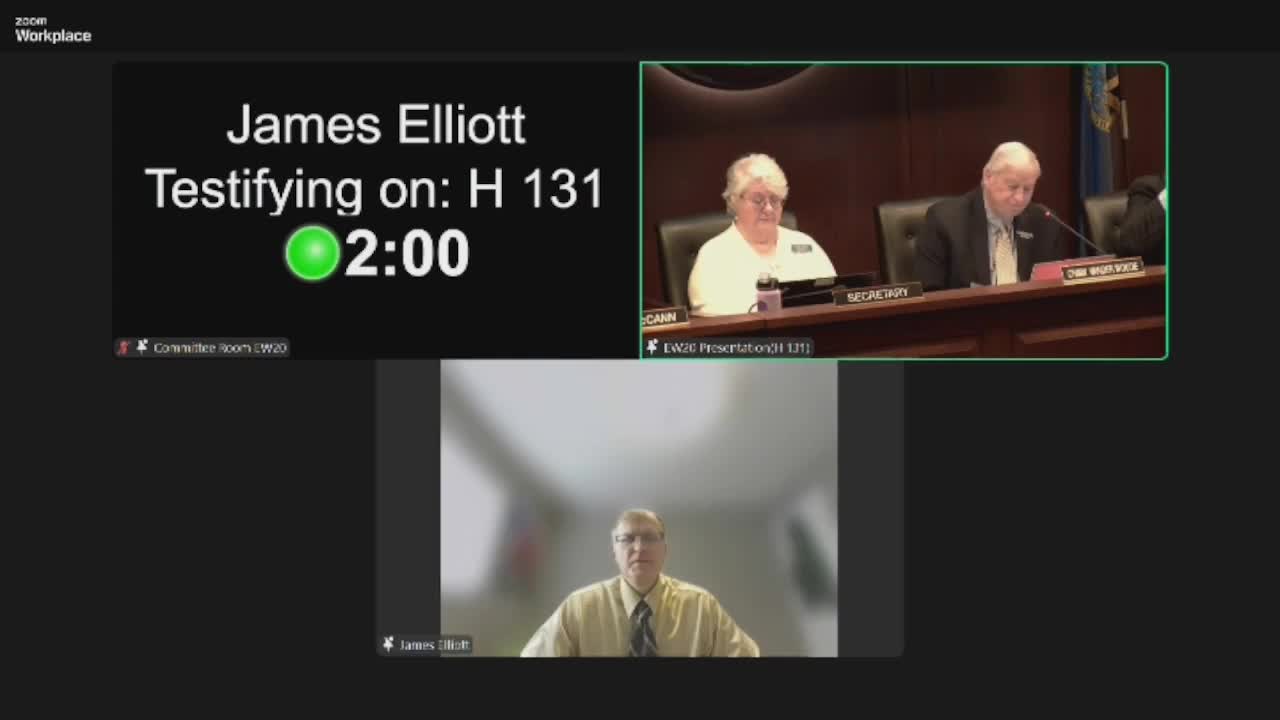
Medical providers and blood-collection organizations opposed the bill. Dr. Cole Elliott, medical director for the American Red Cross in Idaho, testified that HB131 “would overly complicate blood-supply management and could lead to adverse patient outcomes,” saying blood routinely moves across state lines and there is no validated test to determine whether a donation came from an mRNA-vaccinated donor. Nicole Cyraker Erwin, CEO of the American Red Cross of Idaho, Montana and East Oregon, said the Red Cross could not comply with the bill’s labeling requirements because FDA-approved tests do not identify vaccination status and because labeling that conflicts with federal standards could force blood providers to suspend operations in Idaho. Vitalant, which operates blood centers in Coeur d’Alene and Lewiston, also opposed the bill and urged the committee to vote no.
Witnesses and committee members debated practical consequences. Opponents warned that asking donors to disclose vaccination status could reduce donations and make out-of-state transfers impractical; supporters said states can set additional disclosure requirements and that Idaho has recently added donation centers. Representative Furman raised concerns about whether an mRNA vaccine could persist in blood indefinitely and about the availability of compatible blood for patients who request labeled units; Bruce replied that the bill applies only to nonemergency, elective situations and that conversations about unit availability would occur before transfusion.
Committee chair called a roll call. The clerk recorded the following votes on the motion to send HB 131 to the floor with a do-pass recommendation: Chairman Vanderwauben — Aye; Vice Chairman Erickson — Nay; Representative Healy — Yes; Representative Redmond — Yes; Representative Wheeler — Nay; Representative Beissinger — Yes; Representative Bergoyne — Yes; Representative Kaler — Yes; Representative Furman — Nay; Representative Leavitt — Yes; Representative Raiser — Yes; Representative Thompson — Yes; Representative Rubel — Nay; Representative Egbert — Nay. The roll call count reported by the clerk was 9 in favor, 5 against.
The bill sponsor and supporters said the measure is narrowly drawn to preserve patient choice in nonemergency settings; opponents called for holding the bill because they said it could exacerbate existing blood shortages and conflict with federal labeling and testing practices. The committee forwarded HB 131 to the floor with the recorded do-pass recommendation.
Votes at a glance: Motion to send HB 131 to the floor with a do-pass recommendation — Passed, roll call 9–5.
The committee did not adopt any amendments on HB 131; testimony and debate will be part of the public record when the bill reaches the full House.