Get Full Government Meeting Transcripts, Videos, & Alerts Forever!
Get email alerts on the Career And Technical Education topic
No spam. Unsubscribe anytime.
LRTC reports record enrollment, requests Lewiston cover its share of $84,000 subsidy shortfall
Summary
LRTC directors reported 981 students (largest CTE in Maine), new programs and employer partnerships and said state ED 279 subsidy leaves an $84,000 variance; under a regional cost-share Lewiston's portion is about $33,000.
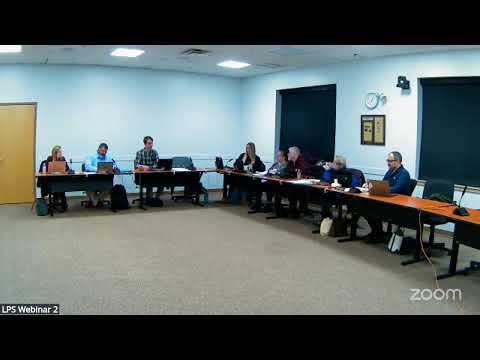
Rob Callahan, director of the Lewiston Regional Technical Center (LRTC), and assistant director Rob Schmidt updated the School Committee on career and technical education (CTE) enrollment, program expansions and budget needs.
"Last year, our enrollment was 865 students, and currently we're at 981, which makes us the largest CTE school in the state of Maine," Schmidt said. The center now offers 25 programs across three campuses, including 18 programs at the Lewiston campus and an expanding partnership with Central Maine Community College for precision machining and early childhood education credits.
The directors described recent program additions and partnerships: an auto collision and manufacturing program opening next year, workplace/extended learning opportunities placing about 30 students with local employers, industry partnerships for teller training with five banks, and employer collaboration for trades training. They also highlighted student achievements: the FIRST robotics team qualified for districts and SkillsUSA competitors won 49 medals across 31 competitions at a state event.
On funding, Callahan described the state's ED 279 funding formula for CTE. Using state data, LRTC is eligible for roughly $5.3 million in state subsidy but, after growth and program costs, reported an $84,000 variance above the subsidy. Under a regional cost-sharing agreement, Lewiston's share of that variance is about 39% (approximately $33,000); Edward Little and Auburn share other portions and smaller districts contribute based on agreed percentages.
Callahan asked the committee to consider supporting the modest local contribution to cover the variance and noted three budgetary pressures: equipment (not included in ED 279), inflationary increases for materials and supplies for trades, and the need to add a second student services position to serve Auburn and Lewiston campuses. "Our staffing model currently has one student services person; we are asking to increase that number to two," Callahan said, citing growing enrollment and student needs.
Committee members praised the program and asked operational questions about cosmetology, donated equipment (an ambulance in Auburn used for health training) and capacity; directors said limited seats mean they will turn away a sizable number of applicants (roughly 100+ applicants will be waitlisted this year because of capacity limits).
No formal vote was requested at this meeting on the regional contribution; Callahan said the regional partners have agreed to make proportional contributions and Lewiston's share would be reflected in the LRTC budget submission.