Get Full Government Meeting Transcripts, Videos, & Alerts Forever!
Get email alerts on the School Funding Levy topic
No spam. Unsubscribe anytime.
Residents, board members warn May levy failure would trigger cuts as voucher funding grows
Summary
At the March 25 Bowling Green Board of Education meeting, public speakers urged voters to approve a May operating levy, warning that state voucher growth and recent legislative moves are reducing funds available to public schools and that cuts already approved by the board would take effect if the levy fails.
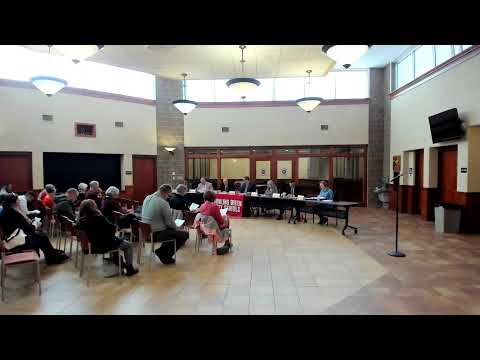
At the March 25 meeting of the Bowling Green Board of Education, residents and board members urged support for a May 6 operating levy, saying the district faces growing pressure from state policy and voucher funding that shifts public dollars to private schools.
Rick Nussell, a Bowling Green resident, told the board the state’s voucher program is removing substantial per‑pupil funding from public schools. “The voucher program is now giving Ohio K‑8 students up to roughly $6,200 and high school students up to maybe $400 if they leave their public school,” Nussell said. “They typically take more from the public school than that school received to teach them.”
The concern comes as district leaders say local revenue is needed to maintain current programs. Jennifer Waldron, who identified herself as a Bowling Green resident, said the board already approved reductions that would be enacted if voters reject the levy. “These approved cuts will indeed be enacted. Athletics, field trips, marching band, and 29 jobs among other vital programs and positions will be eliminated,” Waldron said.
A board member who addressed state policy at length warned that Ohio legislative changes are shrinking local revenue streams. The member said Senate Bill 116 would “drastically reduce the tangible personal property tax assessment rate for pipeline companies, slashing it from 88% down to a mere 25%,” and argued that such changes undercut funding the district has relied on in the past.
Superintendent Ted Hazelman told the meeting that the levy is decisive for the district’s ability to sustain current services. “If the levy passes on May 6, we will be able to continue to provide the same programs and services to our students. However, if the levy fails on May 6, the district will be forced to implement reductions and eliminations the Board of Education approved,” Hazelman said. He added that those reductions were already approved at the previous board meeting and would be implemented without new revenue.
Speakers at the meeting flagged who benefits from vouchers and the distribution of federal and state funds. Nussell cited recent reporting and said that roughly $1 billion of state education funds have gone to private and religious schools statewide — he described that as about 8% of funds the public system otherwise could use. The board’s discussion also referenced broader state budget changes and litigation over tax sources that could affect district revenue.
The board did not vote on the levy at the March 25 meeting; the levy will appear on the May 6 ballot. Community members at the meeting were urged to contact legislators about state funding decisions and to participate in the upcoming vote.
The meeting included other routine business and recognitions; the levy and state funding concerns dominated public comment and several board remarks.