Get Full Government Meeting Transcripts, Videos, & Alerts Forever!
Get email alerts on the Short Term Rental Ordinance topic
No spam. Unsubscribe anytime.
Committee holds short-term rental ordinance after divergent public testimony over enforcement, grandfathering and multifamily caps
Summary
The committee held a proposed short-term rental (STR) ordinance that would add licensing, proximity limits and multifamily caps after hours of public testimony split between neighborhood safety concerns and hosts and housing advocates citing livelihood and housing-access impacts.
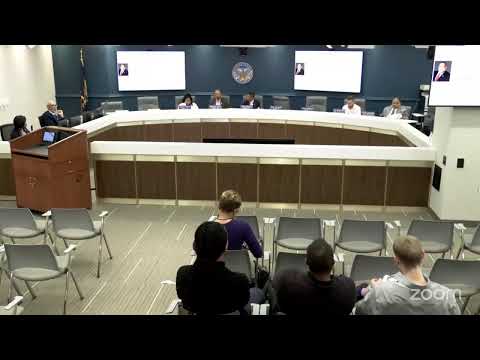
The Community Development and Human Services Committee held Councilmember Byron Amos’s short-term rental ordinance after a public hearing that drew hosts, property managers, condo board members and neighborhood residents.
Many residents and neighborhood advocates told the committee that short-term rentals operate as commercial businesses in residential areas and that existing enforcement is insufficient. Rachel Lou, owner in the Landmark building, urged stronger enforcement and transparency, including platform data sharing. “Enforcement is our biggest issue,” said Rob Myers, adding that a 1,000-foot buffer and other rules will be moot unless the city can enforce them.
By contrast, multiple STR hosts, property managers and small operators warned that the proposed rules — particularly a proposed 1,000-foot buffer and a 10% cap on units in multifamily buildings — would shutter small operators and harm households that depend on STR income. “The limitation would eliminate our ability to continue operations,” said a representative of BCA Furnished Apartments, citing clients who rely on furnished short-term units for patient families and visiting professionals. Several speakers also urged clear grandfathering rules for existing licensees; Cathy McClure (AMSTRA) argued the current draft does not adequately secure grandfather rights and cited case law concerns for constitutional takings.
The hearing featured detailed testimony about Landmark Towers and Peachtree Towers condos. Several speakers said that investor-run units and poor management, not short-term rentals per se, caused some building problems; Councilmember Bakhtiari said he had repeatedly visited Landmark and heard complaints from residents about safety and parties. Several STR hosts and managers countered that many operators follow strict security protocols and provide critical income for owners and visiting patients.
Commissioner Janae Prince (City Planning) explained that the short-term rental ordinance and a rewritten party-house ordinance have been considered together and routed through NPUs so communities can review both items in context. Committee members confirmed they would accept further NPU input before a final vote.
Outcome: The committee closed the public hearing and then voted to hold the ordinance in committee for further work and NPU input. The item was held in committee (vote recorded 5–0 in committee). No final ordinance vote occurred.
Why it matters: The ordinance would change licensing, fees and location limits for STRs and affect condo boards, small hosts, event enforcement and the local housing market.
What’s next: Planning staff will continue NPU outreach and the sponsor and staff will work on a substitute that addresses enforcement, grandfathering, multifamily caps and data sharing.