Get Full Government Meeting Transcripts, Videos, & Alerts Forever!
Get email alerts on the Tree Protection Ordinance topic
No spam. Unsubscribe anytime.
Committee holds tree protection ordinance after extended public testimony
Summary
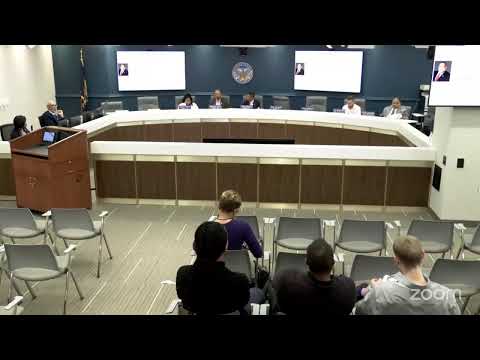
The Community Development and Human Services Committee on March 21 held a proposed citywide tree protection ordinance after extended public testimony and remaining NPU review.
The Community Development and Human Services Committee on March 21 held a proposed citywide tree protection ordinance after extensive public testimony and additional NPU (neighborhood planning unit) review.
Supporters and conservation groups pressed the council to adopt the ordinance intact, saying Atlanta’s canopy is shrinking and that the preservation standard in the draft is urgently needed. “We are rapidly losing trees and each cut down takes decades to replace,” testified Rachel Carroll of Trees Atlanta. Corina Newsome, a wildlife biologist, told the committee the canopy is critical for public health and wildlife habitat: “Trees provide shelter from extreme weather…Without a robust tree canopy, energy costs will soar.”
Speakers representing neighborhood groups and long-time Atlanta residents described repeated clear-cut redevelopment on single-family lots and urged adoption of the residential preservation standard. “If you get rid of this, you need to think about what you’re going to replace it with in the short term so that we have some protection for our trees,” said Dalil Anthony, a longtime tree advocate. Former Trees Atlanta board chair Trish Treadwell said the ordinance process has been ongoing for years and urged council to finalize protections.
Commissioner Janae Prince (Department of City Planning) said staff brought both the ordinance and a companion administrative setback variance to the NPUs so communities could see the “big picture,” and that most NPU feedback has been collected. Councilmember Bond — the ordinance sponsor — said he expects further NPU input but emphasized urgency: “This paper is about 85% complete…we need protections for our tree canopy, codified as quickly as possible.”
Committee members and advocates also discussed operational details raised during public comment: how recompense (replacement) fees should be spent, whether the tree trust fund should prioritize replanting or land acquisition, and whether discounts or waivers for affordable housing should be better targeted. Several speakers and groups requested stronger language to protect riparian buffers and to stop the classification of some tree removals as mere landscaping permits.
Outcome: Committee held the ordinance for further review and to collect remaining NPU feedback. The chair and commissioner indicated they will continue to refine the draft with stakeholders and try to reach agreement before the next council cycle.
Why it matters: Advocates say the ordinance is a necessary policy instrument to slow canopy loss, mitigate urban heat and flooding, and protect habitat and health in low-canopy neighborhoods. Developers and some industry groups argued for alignment with the larger zoning rewrite; advocates countered that delay would permit additional tree loss.
What’s next: Planning staff will continue NPU outreach and forward NPU recommendations to the ordinance author and committee. Councilmember Bond said he reserves the right to call the ordinance up for a future committee meeting if parties reach consensus.