Get Full Government Meeting Transcripts, Videos, & Alerts Forever!
Get email alerts on the Collective Bargaining topic
No spam. Unsubscribe anytime.
DFW captains and lieutenants seek interest arbitration and removal from coalition bargaining
Summary
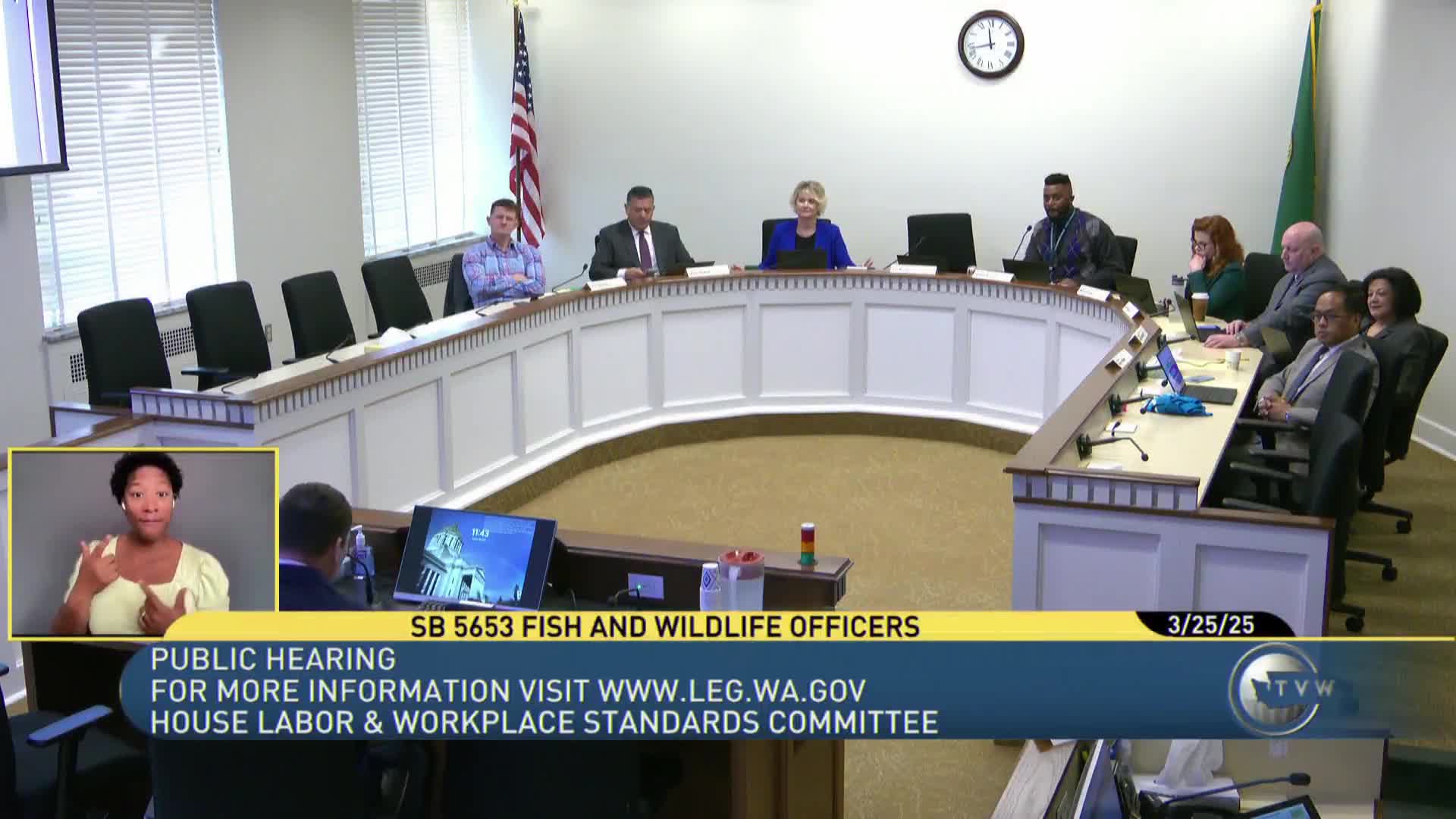
Senate Bill 5653 would move Department of Fish & Wildlife captains and lieutenants from the PSRA coalition requirement into PECBA bargaining with interest arbitration; the small, commissioned law‑enforcement group said the change is a technical correction that aligns their rights with lower ranks.
Senate Bill 5653 would remove Department of Fish and Wildlife captains and lieutenants from the coalition bargaining requirement under the Personnel System Reform Act (PSRA) and place them under the Public Employees’ Collective Bargaining Act (PECBA), granting interest arbitration rights.
Christopher Rosenberger, representing the Fish and Wildlife Lieutenants and Captains Association (affiliated with Teamsters Local 760), testified in support March 25 and described the measure as a “technical cleanup” that would align captains and lieutenants with officers and sergeants below them who already have interest arbitration rights.
Rosenberger told the committee the bargaining unit is small — 12 fully commissioned law‑enforcement officers — and that the change would streamline collective bargaining for both the state and the members. He noted that the unit’s members are fully commissioned police officers who attend the same police academy as municipal or county officers and enforce natural‑resource and public‑safety laws.
Why this matters: Moving the ranks into PECBA would remove the requirement that small exclusive bargaining representatives bargain as part of a single coalition of small bargaining units and would give captains and lieutenants access to interest arbitration, the dispute‑resolution mechanism available to other ranks in the enforcement program.
Committee response: Members asked clarifying questions about the unit’s history and law‑enforcement authority; Rosenberger confirmed that captains and lieutenants are commissioned officers with routine law‑enforcement responsibilities. The bill passed unanimously in the Senate and had bipartisan support in prior committees, Rosenberger said.
No other proponents or opponents testified in the transcript. The committee closed the SB 5653 hearing after Rosenberger’s testimony; no vote was recorded in the transcript.