Get Full Government Meeting Transcripts, Videos, & Alerts Forever!
Get email alerts on the Juvenile Justice topic
No spam. Unsubscribe anytime.
House approves narrower definition of juvenile neglect after extended debate; bill passes 100-69
Summary
The Georgia House on March 26 approved Senate Bill 110, which revises definitions in the state juvenile code to narrow the circumstances that constitute neglect. Supporters said the change restores parental discretion for routine childhood activities; opponents warned it could hinder child-protective interventions. The measure passed 100-69.
The Georgia House of Representatives on March 26 passed Senate Bill 110, updating the state juvenile codedefinition of neglect to exclude a range of routine "independent activities" and to require more specific, obvious risk of serious harm before state intervention. The bill passed on a roll-call vote of 100 in favor and 69 opposed.
Supporters, including Chairman Eddie Lumsden of the Juvenile Justice Committee, told lawmakers the bill clarifies an open-ended legal standard that had allowed officials to charge some parents for ordinary childhood activities. "It will allow parents to make these family decisions and makes it clear that the parent, not the government, determines when their child is of sufficient maturity," Lumsden said while presenting the measure on the House floor.
The bill's sponsor and backers said the change limits government intrusion by specifying that an independent activity is not neglect and by tightening the statutory language so neglect requires conduct that creates an "obvious" and substantial risk of physical harm. Representative Eddie Lumsden said the bill "gives parenting decisions back to Georgia parents and childhood back to Georgia children." The chairman told colleagues the bill was intended to prevent law enforcement and child-welfare workers from using vague standards to criminalize ordinary parenting choices.
Opponents pressed for specifics about how the new language would apply in practice. Representative Park Cannon asked how particular statutory language, including cross-references in section lines cited in the amendment, would affect children living with HIV and whether the bill changes existing protections. "Can you advise what this language does as it relates to HIV and children in Georgia?" Cannon asked. Lumsden replied that the challenged language was already in code and that nothing new in the bill would change that provision.
Other members voiced concern that the revised standardwhich replaces broader wording with a requirement of an "imminent" or "obvious" risk of harm for a neglect findingmight make it harder for caseworkers or courts to act in borderline cases. Supporters responded that the measure restores clarity and prevents arbitrary prosecution or investigation for ordinary childhood activities, such as walking to school or playing unsupervised in a nearby area.
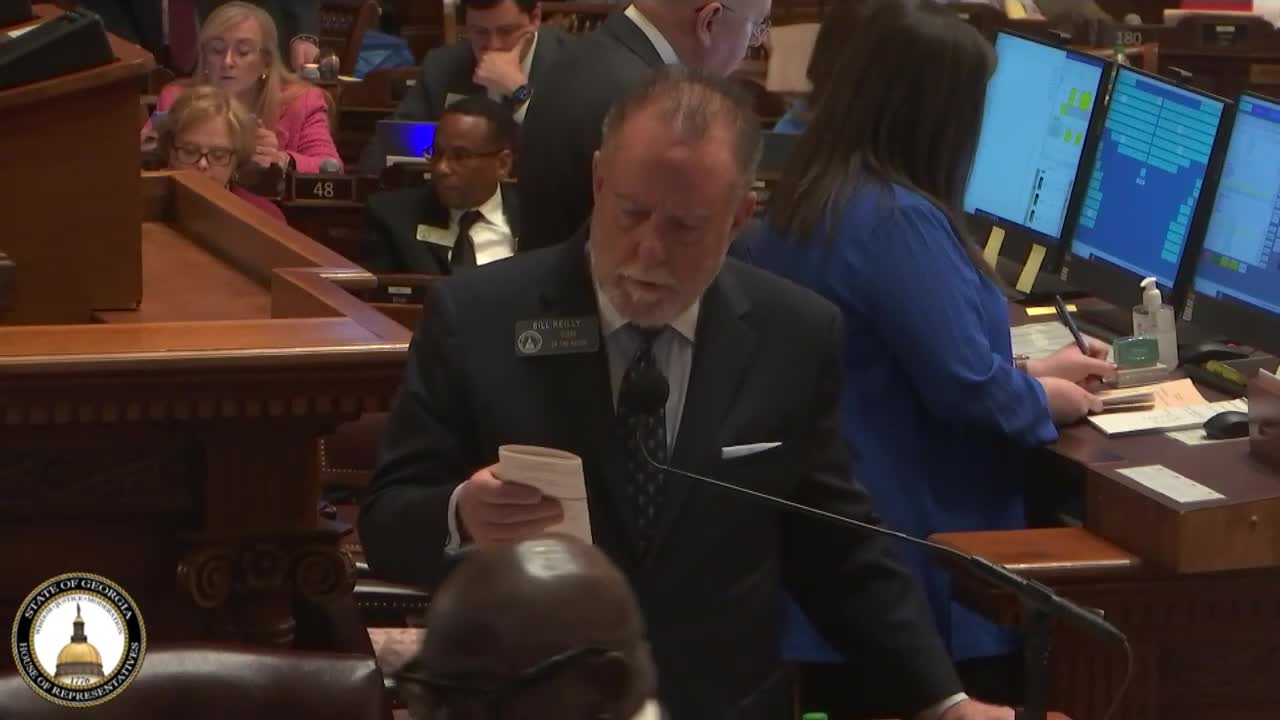
After more than an hour of back-and-forth questions and statements from members on both sides, the chamber voted. The clerk recorded 100 yeas and 69 nays; the speaker declared the bill passed.
Why it matters: The amendment changes the statutory threshold for state intervention in family life. Supporters described it as a clarification that protects parental discretion for routine, age-appropriate independence; critics said the change risks raising the bar for child-protection action in some situations.
What happens next: The bill passed the House and will return to the Senate as appropriate under the legislative process; the transcript records the House vote and debate but does not record subsequent steps beyond passage in the chamber.