Get Full Government Meeting Transcripts, Videos, & Alerts Forever!
Get email alerts on the Education Accessibility Literacy Civics topic
No spam. Unsubscribe anytime.
Committee advances bill to require accessible playgrounds, fund K–5 writing pilot and preserve scouts' access to schools
Summary
A multi-part House bill advanced by the committee would set accessibility standards for new elementary-school playgrounds, create a three-year immersive writing pilot for grades 2–5, and add language protecting youth civic organizations' access to school facilities, including Boy Scouts and Girl Scouts.
The committee advanced a multi-section House bill (LC 6,202,004 S as presented) that includes accessible-playground standards for new elementary schools, a three-year immersive writing pilot for grades 2–5, and language encouraging school systems to allow certain youth civic organizations to use school facilities.
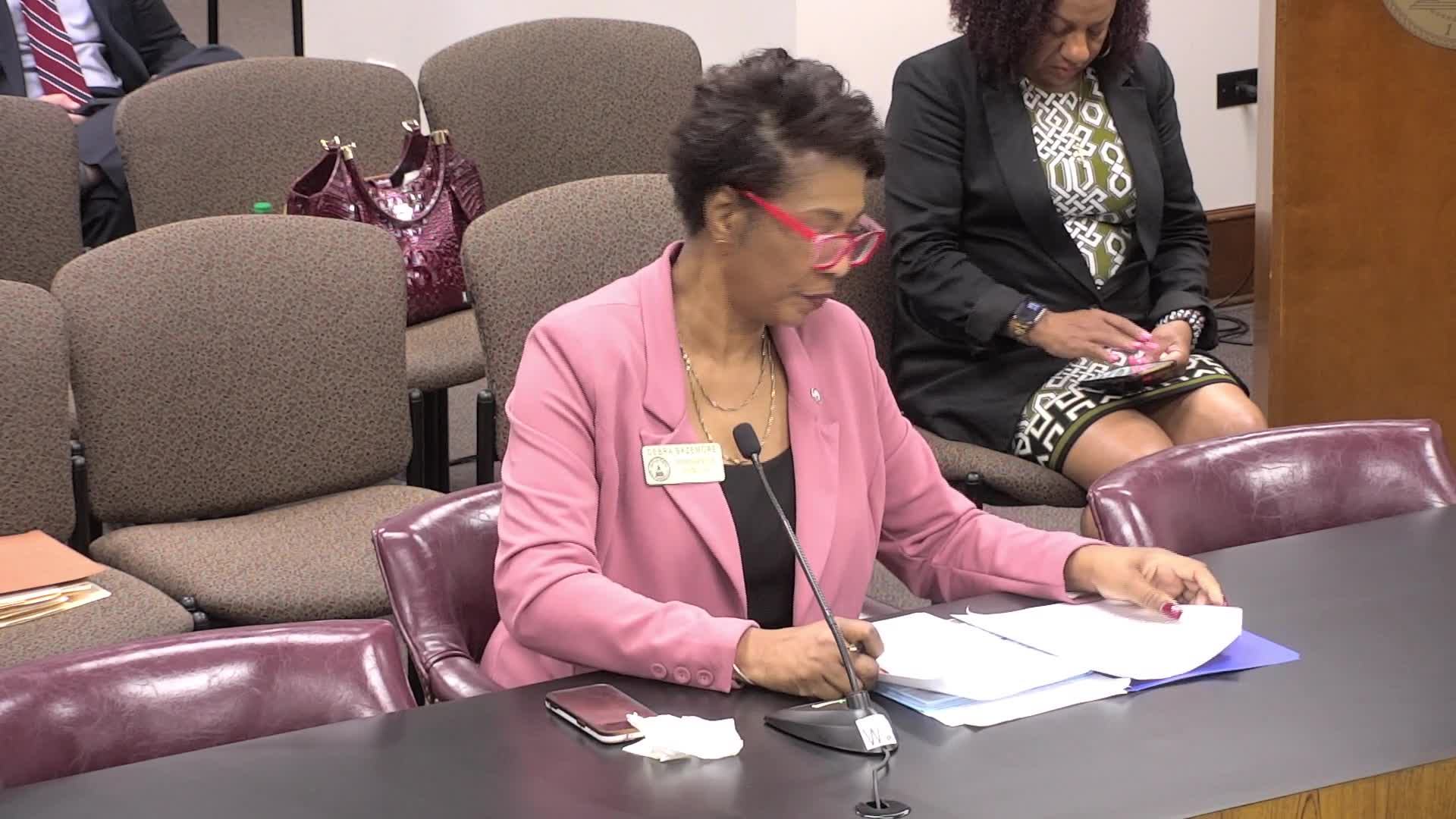
Representative Deborah Bazemore presented the measure and described the three main components. "Starting in July of 20 27, any new elementary school built in the state of Georgia with a playground will have an enhanced minimum set of standards for such playground," Bazemore said, describing the bill’s accessibility provisions and national standards the bill would adopt. She added that Section 2 would require the State Board of Education to establish a three-year immersive writing program for second- through fifth-graders and provide funding for participating schools.
Why it matters: Sponsors described the playground language as an effort to ensure children of all abilities can access play spaces and to align new construction with modern accessibility standards. The writing pilot is presented as a targeted literacy intervention; sponsors said participating schools must apply and that the program would align with State Board writing standards.
Civics and youth organizations: Section 3 adds language to encourage schools to permit youth civic organizations to use facilities unless the district provides a written reason not to. Cade Cullifor of Troutman Strategies, representing the Atlanta Area Council of the Boy Scouts, told the panel the provision narrows a broader federal list and focuses on youth organizations that conduct civic activities. "The language in section 3 actually narrows that list ... in that it's youth organizations," Cullifor said, explaining the intent to include service and youth groups while excluding halls of fame or observances that do not apply.
Committee concerns and duplication: Committee members noted overlap with a provision recently passed out of the House committee (House Bill 371 was referenced during the discussion). Senator Kemp and others questioned whether the committee should re-adopt language that had already been considered; sponsors said keeping the language in the current vehicle would help the provision reach final passage on both sides of the legislature. One senator sought clarification about a reference to a "pathway" in the playground standards, asking whether that required a paved sidewalk; sponsors acknowledged they would clarify wording in subsequent drafting.
Vote: The committee voted to advance the bill as presented; the motion carried in committee.
Next steps: The bill proceeds from committee with the three sections intact. Committee members said they would consider cleanup language to address funding and specific pathway wording in follow-up drafting.