Get Full Government Meeting Transcripts, Videos, & Alerts Forever!
Get email alerts on the Outdoor Education Aed topic
No spam. Unsubscribe anytime.
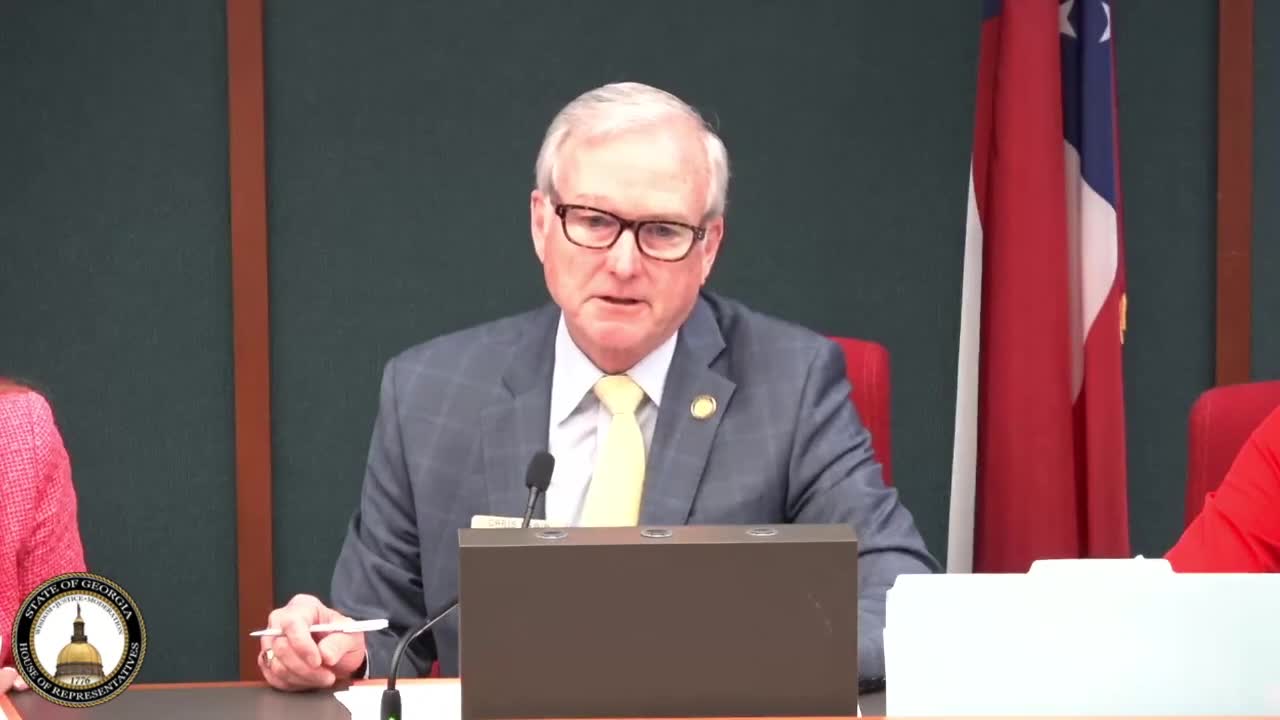
Committee backs pilot program for outdoor learning spaces and removes physician requirement for school AEDs
Summary
Senate Bill 148, approved by the committee, would authorize a Department of Education pilot for outdoor education spaces and clarify state AED requirements by removing a separately required physician-signoff that schools say has complicated implementation.
Senate Bill 148 passed the committee after sponsors described a pilot to expand outdoor learning spaces and an amendment that would ease the requirement for physician oversight of automated external defibrillators (AEDs) in K–12 schools.
The sponsor said the proposal would authorize the State Department of Education to select elementary and secondary schools for a pilot program testing best practices and design standards for outdoor learning spaces; the sponsor said the department had identified a “dozen” candidate schools and that private foundations and local funds could be used alongside a prospective House appropriation. The sponsor noted an amendment increasing teacher personal days from three to five that was added at the Senate’s request.
The substitute also includes language that removes a separate requirement that each public school secure a physician’s direct oversight for AED purchase, training and maintenance. Tara Buckle of Children’s Healthcare of Atlanta told the committee that manufacturers and AED vendors already provide physician oversight and maintenance structures, and that requiring each elementary school to find and retain a physician had stalled placements. Buckle said, "AED companies now have these physicians internally to help do all that," and described the amendment as a cleanup to last year’s AED expansion law.
Committee members asked about the pilot’s curriculum, evaluation and funding. The sponsor said the pilot’s curriculum would be locally determined and could integrate existing standards (for example, life science lessons) into outdoor settings; local school boards would provide data from each participating pilot school to support statewide expansion. On funding, the sponsor cited local philanthropic partners such as the Arthur and Turner family foundations and said the House budget included a possible appropriation but did not provide an exact amount in committee.
Children’s Healthcare of Atlanta confirmed the change was intended as a cleanup to last year’s AED language (originally HB 629) and said the companies that supply AEDs routinely include physician oversight and EMS notification. Committee members urged sponsors to coordinate with emergency management and local school safety plans; the sponsor said the bill removed only the redundant physician signature, not training, notification or maintenance requirements.
After public questions and no registered opponents on the day’s sign-up sheet, the committee voted to give Senate Bill 148 (LC 339823S) a do-pass recommendation on a voice vote; the transcript records the ayes and “your bill carries” but no numeric roll call.
Votes at a glance: Senate Bill 148 (LC 339823S) passed committee by voice vote; numeric tallies were not specified in the transcript.