Get Full Government Meeting Transcripts, Videos, & Alerts Forever!
Get email alerts on the Education Accessibility Literacy Civics topic
No spam. Unsubscribe anytime.
Senate committee advances bill setting accessible playground standards, writing pilot and protections for youth civic organizations
Summary
A multi-part bill the committee advanced would require accessible playground standards for new elementary-school playgrounds, create a three-year immersive writing pilot for grades 2–5, and encourage schools to allow Boy Scouts, Girl Scouts and similar youth organizations to use facilities unless the district provides written reasons not to.
The Senate Education Committee approved a multi-part bill that would set accessibility standards for new elementary school playgrounds, create a three-year immersive writing pilot for second- through fifth-graders, and clarify that schools should permit youth civic organizations such as Boy Scouts and Girl Scouts to use school facilities unless the district documents a reason to deny access.
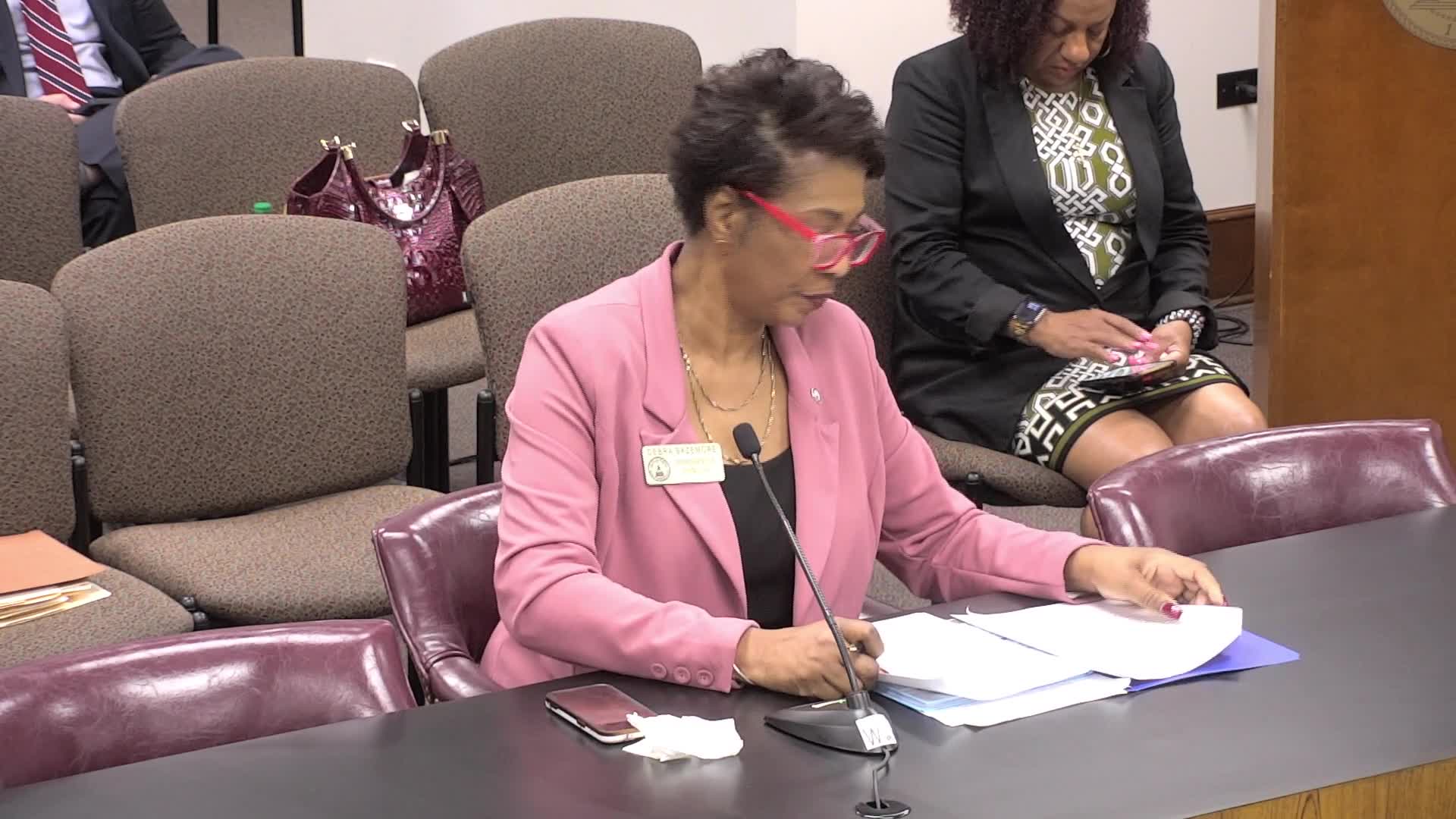
Representative Deborah Bazemore told the committee Section 1 would require any new elementary school built beginning July 1, 2027, with a playground to meet enhanced, age- and ability-appropriate standards aligned with national accessible-playground guidance. Section 2 would direct the State Board of Education to establish a three-year immersive writing program for students in grades 2–5 and provide funding for participating schools to apply to the pilot. Section 3 would create a presumption in favor of allowing youth civic organizations, defined in line with federal guidance, to use school facilities for civics education; districts that deny access would be asked to provide a written justification.
Bazemore said the writing program is intended to improve literacy and give students entrepreneurial opportunities, citing an 11-year-old author example. She said the accessible-playground language aims to ensure students with disabilities can develop physically, socially and emotionally on modern, inclusive play spaces.
Cade Cullifor, representing the Atlanta Area Council of the Boy Scouts, told the committee the bill narrows the federal list of “patriotic societies” cited in Title 36 of the U.S. Code to focus on youth organizations that are involved in civic activity. “There are a few aviation hall of fame or observances that just don’t apply,” Cullifor said, and the draft language limits the list to relevant youth organizations. He described the bill as discretionary: it does not force schools to allow access but creates a presumption and requires a written reason if access is denied.
Committee members discussed overlap with earlier legislation: the language on playground accessibility had already been included in a bill the committee moved days earlier (House Bill 371), and members debated whether the duplicate language should be retained in this vehicle or streamlined to avoid redundancy. The committee noted the house-passed version included funding language; this committee substitute described the functionality of playgrounds but did not include the funding mechanism in the version presented.
The committee voted to pass the bill. The transcript records the chair announcing the vote and that the bill passed; no member-by-member roll call is recorded in the transcript.