Get Full Government Meeting Transcripts, Videos, & Alerts Forever!
Get email alerts on the Tax Policy topic
No spam. Unsubscribe anytime.
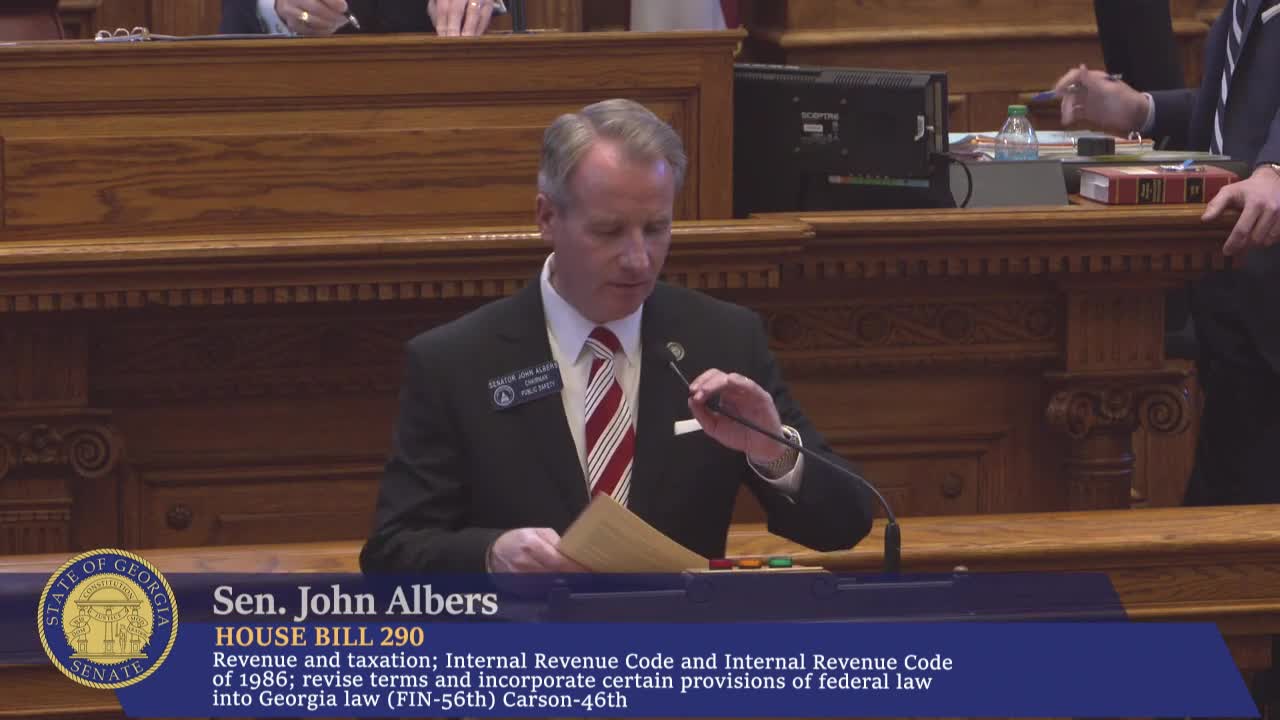
Senate approves annual IRS cleanup bill updating federal-date references; minor projected fiscal impact
Summary
House Bill 290, the routine tax code update aligning state references to recent federal Internal Revenue Code changes, passed the Senate. Sponsors said it ensures taxpayers and software can map to federal changes; the fiscal note showed a modest impact under $1 million for FY 2026.
The Senate approved House Bill 290 on Wednesday, the annual "IRS cleanup" bill that brings state tax code citations up to date with the Internal Revenue Code and prepares state tax administration for the next filing season.
Sponsor summary and fiscal impact Senator (District 56), who presented the bill for the Finance Committee, said the bill updates statutory cross-references and dates from 2023 to 2024 (and from 2024 to 2025 in some sections). He described the measure as a Department of Revenue bill necessary so taxpayers and tax software can prepare returns under consistent definitions.
The sponsor directed senators to a fiscal note placed in folders on the floor: the floor record states a small estimated cost for fiscal year 2026—"just less than a million dollars"—with negligible or zero ongoing impacts in later years.
Questions and committee vetting Senators asked whether the bill was a department bill and about which taxpayers would be affected; the sponsor confirmed the Department of Revenue requested the changes and that the updates benefit both individual filers and businesses by aligning the state's definitions with current federal law.
Vote and outcome The Senate recorded 54 yeas and 0 nays on final passage. The sponsor urged colleagues to consider the bill favorably to ensure taxpayers and preparers do not face timing or mapping problems for imminent filing deadlines.
Ending Legislators described the bill as routine housekeeping that helps taxpayers and the Department of Revenue maintain consistent rules with the federal tax code.