Get Full Government Meeting Transcripts, Videos, & Alerts Forever!
Get email alerts on the Voting Rights topic
No spam. Unsubscribe anytime.
Subcommittee advances overhaul of felony voting-rights restoration; critics say bill raises barriers
Summary
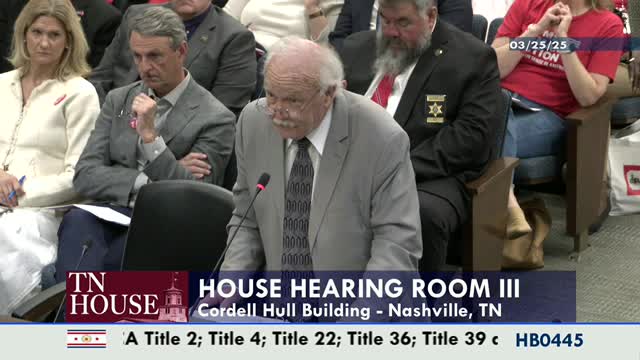
Subcommittee members voted 7-2 on March 25 to send House Bill 4 45, a measure that would create a single judicial petition process for restoring voting rights after a felony conviction and separate restoration of gun rights from voting-rights restoration.
Subcommittee members voted 7-2 on March 25 to send House Bill 4 45, a measure that would create a single judicial petition process for restoring voting rights after a felony conviction and separate restoration of gun rights from voting-rights restoration.
Supporters said the bill resolves confusion the courts created after the Tennessee Supreme Court’s decision in Falls v. Goins and standardizes the process statewide.
Representative Hulsey, the bill sponsor, told the committee the proposal ‘‘streamlines the process for restoration of voting rights’’ and separates gun rights from other rights so courts may restore voting rights without restoring firearms rights. Hulsey said existing disqualifications — for crimes such as murder, treason, official misconduct, certain crimes against minors and voter fraud — would remain and that petitioners must show they have paid restitution, court costs and current child support obligations before rights are restored.
The bill would require petitioners to file a single form with the administrative office of the courts and appear before a chancery or circuit court in either the county of conviction or the county of residence. It directs the administrative office of the courts to develop a standard petition form and allows a judge to sign an order without a hearing if supporting documentation is presented. The bill also changes the statutory presumption by requiring a petitioner to demonstrate by a preponderance of the evidence that citizenship rights should be restored and expands notice to include the attorney general in addition to district attorneys and the U.S. attorney.
Opponents said the proposal would make a previously free, administrative process more complex and costly for people seeking to regain voting rights. Amy Pruitt, a legal assistant who said she helps prepare petitions, said judges, court clerks and local election officials are ‘‘confused’’ by recent changes and that HB 4 45 ‘‘will ultimately make it more difficult for people with a felony conviction to vote.’’ Keeda Hanes, an attorney with FreeHearts, told the committee the preponderance standard and the additional notice and service requirements would erect new hurdles and create larger caseloads for rural courts and overburdened district attorneys.
Public commenters gave concrete examples of problems under current practice: lost probation or court records that prevent petitioners from proving eligibility and hundreds of people contacting restoration programs for help. Dawn Harrington, who regained voting rights in 2020 after nine years of navigating the process, said the bill ‘‘adds more procedural barriers rather than removing them’’ and warned that filing and service costs could total several hundred dollars for some petitioners.
Officials from the Division of Elections told the committee they support clarifying the statutory standard and said much of the bill reflects existing documentary requirements. Mark Goins, the coordinator of elections, and Janet Kleinfelter, special counsel to the Division, said the bill does not require traditional civil‑process service on the attorney general or other offices; rather, it requires clerks to provide notice, and the administrative office will create standard forms and sample orders to ease implementation.
The committee adopted an amendment before the final vote (the bill reported ‘‘as amended’’ in committee). The motion to send HB 4 45 as amended to the full House Judiciary Committee carried on a 7‑2 vote.
The bill now goes to the full Judiciary Committee, where members will consider the amendment and the broader statutory changes.