Get Full Government Meeting Transcripts, Videos, & Alerts Forever!
Get email alerts on the Criminal Justice Parole topic
No spam. Unsubscribe anytime.
Senate panel rejects bill to restore earlier parole reviews for some life-with-parole sentences
Summary
The Senate Judiciary Committee voted 3–5 with one present to defeat legislation that would have allowed limited parole review for people serving 51‑year life-with-parole sentences, after hours of testimony for and against the measure.
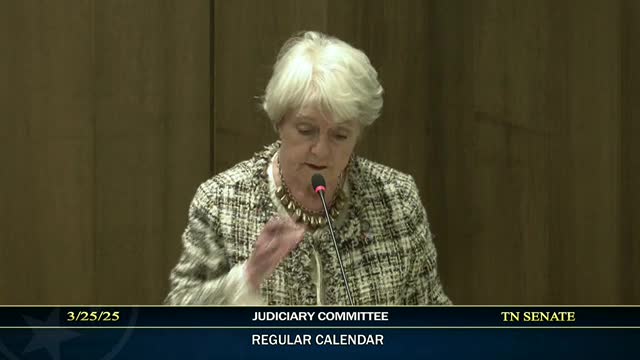
At a Senate Judiciary Committee hearing, Senators rejected Senate Bill 475, a proposal from Senator Brenda Bolling that would have shortened parole-eligibility thresholds for certain people sentenced to life with the possibility of parole. The motion failed on a roll call of 3 yes, 5 no and 1 present, not voting.
The bill would have restored parole-review windows closer to those that existed before 1995: it would have allowed review after 25 years for offenders who were 18–25 at the time of the offense and after 30 years for older offenders, while leaving life without parole and the death penalty unchanged. Bolling said the measure would “return us to our previous standard” and argued it would reduce long-term incarceration costs and give a pathway for a limited number of people who have been incarcerated for decades.
Supporters included Raheem Buford, founder of Unheard Voices Outreach and a person who said he was paroled after serving 26 years. Buford told the committee, “This bill fixes that,” and described the change as a chance for a small group of people — he said the bill would immediately make about 100 people eligible now and roughly 15 people under 25 — to be reviewed rather than “die in prison.” He also described his own rehabilitation and urged the committee to allow parole review for those who have transformed.
Opponents included Stephen Crump, executive director of the Tennessee District Attorneys General Conference, who urged the committee to reject the bill. “We would ask you to vote against this bill,” Crump said, arguing Tennessee should retain the sentencing standard set after the 1995 federal changes and that prosecutors see the longer sentence as an appropriate response to the most serious crimes.
Committee members debated deterrence, fairness and cost. Senator Lamar pressed whether the longer sentence had reduced homicides; Crump said prosecutors cannot point to a measurable deterrent effect, describing punishment policy as a “lighthouse” that is difficult to quantify. Bolling and supporters said many states have reversed the 1995 changes and that Tennessee remains an outlier.
After extended public testimony and back-and-forth among senators, the committee voted to defeat SB 475. Sponsor Bolling said she was “very sorry” the bill failed as the vote was announced. The measure will not move forward from the committee as presented.
Votes and next steps: SB 475 failed in committee (3 yes, 5 no, 1 present). No additional amendments or referrals were recorded in the hearing record.
Context: Proponents framed the bill as restoring pre‑1995 parole review windows for a narrow class of offenders; opponents warned the change would remove a long-standing sentencing standard for homicide and could undermine victims’ expectations about punishment. The numbers cited in committee — including the sponsor’s estimate that 1,304 people are serving 51‑year life sentences (104 women and about 1,200 men) — were provided by the sponsor during the hearing and attributed to the sponsor’s presentation.
Ending: With the committee’s vote, the bill will not advance from the Senate Judiciary Committee in its current form. Senator Bolling and supporters said they would continue advocacy outside the committee.