Get Full Government Meeting Transcripts, Videos, & Alerts Forever!
Get email alerts on the Transportation Infrastructure topic
No spam. Unsubscribe anytime.
TDOT answers committee questions on backlog, IMPROVE Act projects and Blue Oval City ties to state infrastructure
Summary
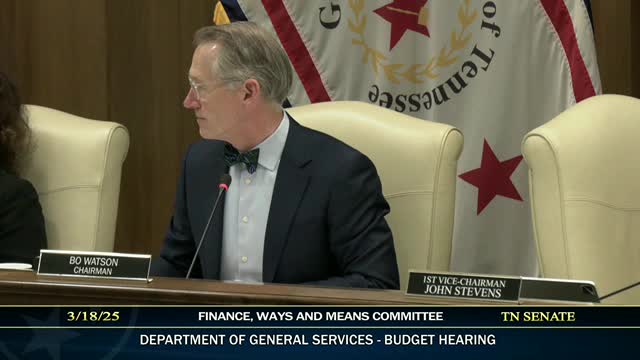
TDOT officials told the Senate Finance Ways and Means Committee on March 18 they are delivering most projects listed in older state road programs but continue to balance long-standing commitments with changing community priorities, inflation and funding constraints.
Tennessee Department of Transportation officials answered detailed questions from the Senate Finance Ways and Means Committee on March 18 about the state's long-running backlog of road projects, the status of IMPROVE Act and 1986 road-program commitments, and the state's approach to inflation, bidding and project prioritization.
TDOT officials told the committee the department has worked on most of the projects that were originally listed in the 1986 comprehensive tax-restructure ("86 road program") and the IMPROVE Act but that delivery timelines and local priorities have changed over time. The department said it has actively worked on 72 of the 93 non-bridge projects listed in the IMPROVE Act and that multiple long-running projects have been delivered in whole or in part. "We have a huge backlog of projects that have existed, for 40 plus years," an agency leader said, adding that the department is committed to the projects but must balance changing needs, funding availability and construction-market conditions.
Deputy Commissioner Preston Elliott told members that an earlier inventory of 86-road-program projects showed six projects undelivered in 2017; TDOT said that number has fallen to two outstanding projects (one of which is scheduled to let this spring). The department's chief engineer and planning staff described a new prioritization process that accounts for safety, project performance, community input and time-to-deliver to select which projects to include in a 10-year cash-flow based plan.
Members raised several concerns:
- Project delivery timelines: Senators noted some projects remain on agency lists for extended periods; TDOT said multi-year design and environmental work and changing corridor needs can fragment original corridor projects into deliverable pieces.
- Inflation and construction cost escalation: TDOT staff said they escalate project estimates to the midpoint of construction and include contingencies; they reported the producer price index for new construction rose sharply during the pandemic and has since moderated, but that the department still budgets for inflation and uses contingency planning.
- Bonding, cash flow and project finance: Committee members asked how bonded projects interact with cash-funded projects. TDOT staff explained bonds are coordinated with Finance & Administration and Treasury; in many cases cash is used while projects proceed and bonds are issued later as financing is finalized.
- Non-state roads and federal earmarks: Members questioned a $33.2 million budget line for Peyton Road (a non-state road), which TDOT said is included in the budget because of federal earmarks tied to that project and other commitments; TDOT said the earmarked federal funds associated with similar projects have been treated as secure, but members requested documentation of federal commitments.
TDOT also discussed program-level statistics: staff reported annual resurfacing resources have been increased in recent years and that the department expects to spend roughly $425 million annually on resurfacing (the agency said its aggregate resurfacing and state-of-good-repair investments were higher this year than in prior years). Officials also described recent improvements in bidder participation, which the department said reduces the risk of higher-than-budgeted awards.
Committee members pressed TDOT about statutory and policy commitments, including a cited 2007 public chapter that expressed legislative intent to connect county seats to the nearest interstate. TDOT said that connector commitments are considered when developing the 10-year plan and that, to date, most county-seat connections have been delivered but a small number remain in various development stages.
Why it matters: TDOT's capital and maintenance plans determine the state's highway investments, affect local economic development, and drive decisions about bonding and the use of cash in the budget. Lawmakers sought more transparency about which long-standing promises remain active and how the department balances those commitments against new needs.
What’s next: TDOT staff offered to provide additional documentation on project status, federal earmark commitments and project-by-project timelines to committee members on request.