Get Full Government Meeting Transcripts, Videos, & Alerts Forever!
Get email alerts on the Cannabis Regulation topic
No spam. Unsubscribe anytime.
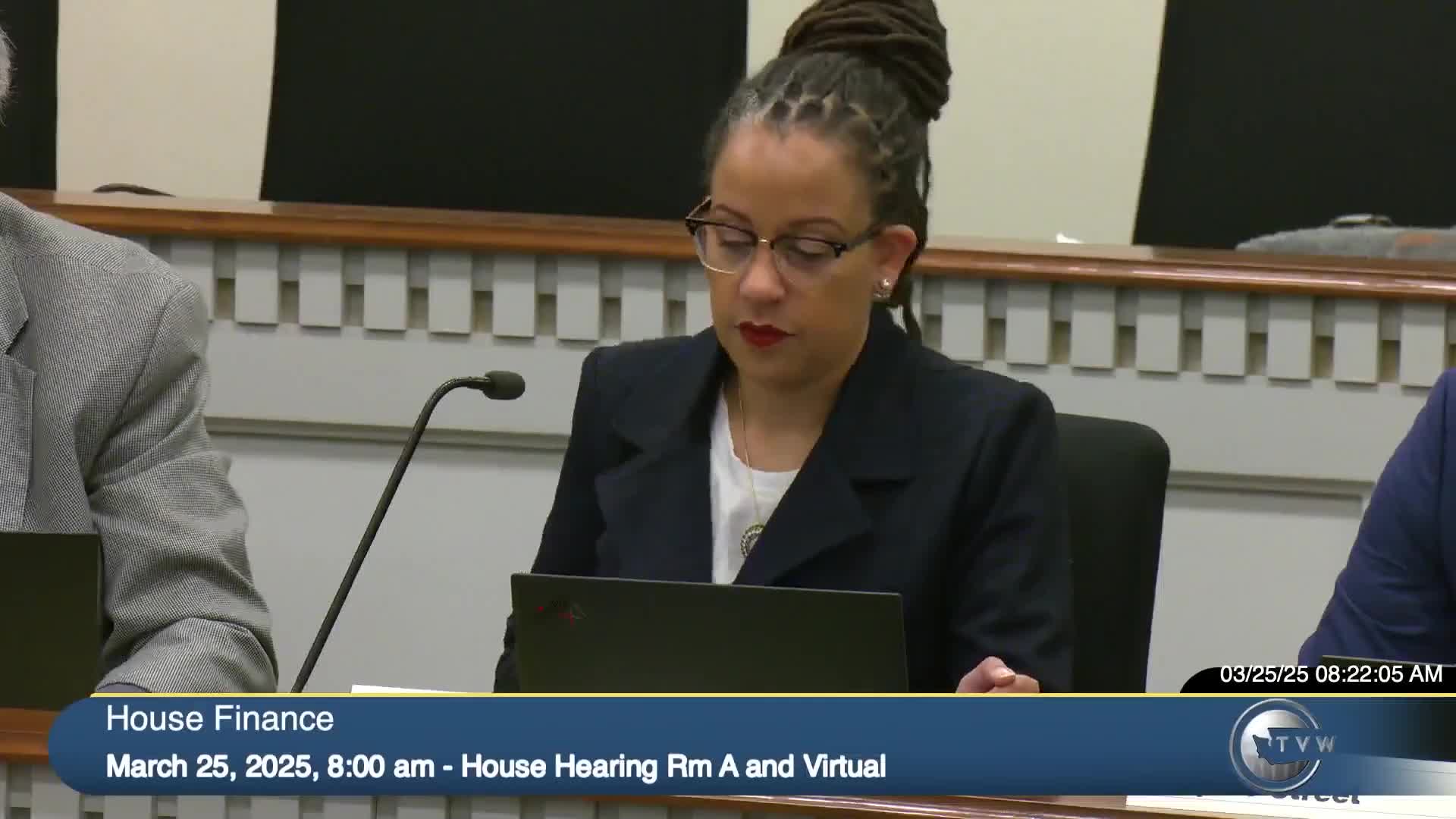
House Finance committee hears HB 2037 to lift cannabis residency restriction, expand tax relief and allow agricultural associations; industry divided
Summary
The House Finance Committee on March 25 held a public hearing on House Bill 2037, a package of changes to Washington’s cannabis licensing and taxation rules that would remove the state’s six-month residency requirement for license applicants, allow licensed cannabis producers to form agricultural associations, and create temporary B&O tax exemptions for social-equity licensees and certain license transfers.
The House Finance Committee on March 25 held a public hearing on House Bill 2037, a package of changes to Washington’s cannabis licensing and taxation rules that would remove the state’s six-month residency requirement for license applicants, allow licensed cannabis producers to form agricultural associations, and create temporary business-and-occupation (B&O) tax exemptions for social-equity licensees and certain license transfers.
Michelle Harris, committee staff, summarized the bill’s main provisions and said the Liquor and Cannabis Board issues producer, processor and retail licenses. Harris explained that the bill would permit producers to form agricultural associations and would create two separate B&O tax exemptions for producers, processors or retailers licensed through the cannabis social equity program. Under the draft language cited by staff, an exemption would apply for five years after a licensee exceeds $5,000 in sales revenue and would expire on specified sunset dates in the bill; a similar five-year exemption would apply when a social-equity license is obtained via transfer. Harris said the provision eliminating the requirement that applicants have lawfully resided in Washington for six months would be removed under the bill, and that annual license fees for out-of-state owners would be increased (staff noted that the out‑of‑state fee would be approximately $267 higher than in-state fees and said they would follow up with details).
Representative Melanie Morgan, the bill’s prime sponsor, said the measures are designed to remove barriers to capital and investment for historically marginalized entrepreneurs who seek to enter the regulated market. “One of the most significant challenges is the restriction of the out‑of‑state investment, which has made it nearly impossible for social equity applicants to access capital,” Morgan said, adding the bill’s exemptions and residency change are intended to strengthen the social equity program.
Supporters included the Washington Cannabis Association, the Cannabis Alliance (mixed/neutral on ownership but urging more discussion), industry owners and advocates, and several social-equity advocates. Vicki Christofferson of the Washington Cannabis Association said Representative Morgan had convened many stakeholders and argued the residency requirement is “one of the most outdated provisions” holding the industry back. Paula Sardinas, who co-chaired the cannabis social equity task force, said access to capital is the program’s biggest impediment and noted that of the 43 social-equity licenses issued in September 2024 only seven were operable.
Opposition was substantial among licensee and producer associations and many small business owners. Trent Mattson of the Washington Cannabis Licensee Association recommended opposing the bill, saying the combination of removing residency limits and offering tax exemptions could “significantly disrupt Washington’s stable cannabis industry” and depress state revenues. Producers and retailers raised concerns that allowing out‑of‑state ownership would invite large multistate operators and publicly traded companies that could drive down prices, cause market oversupply, siphon jobs and profits out of state, and increase opportunities for fraud or complex ownership structures. Several speakers cited examples from other states where opening ownership coincided with market instability.
The Liquor and Cannabis Board’s Mark Webster said the agency was officially neutral but warned that removing the in‑state ownership prohibition could affect an ongoing appeal before the U.S. Court of Appeals for the Ninth Circuit; he told the committee that Washington courts had twice affirmed the constitutionality of the in‑state restriction and that changing the law could “break with arguments the state has made in the past and could impact the appeal.” Webster also said the agency and the Attorney General’s Office expect higher implementation costs, including staff for nationwide background checks and appeals, and that such costs would appear in fiscal notes.
Several industry witnesses urged more time for stakeholder discussion and recommended clarifying implementation timing, effective dates and the interaction between the bill’s two B&O exemptions. Kate Armstrong of the Department of Revenue recommended delaying an exemption’s effective date (for example to Oct. 1, 2025 or Jan. 1, 2026) to allow programming changes and suggested clarifying that businesses may claim only one of the two proposed exemptions, as currently drafted both could apply and extend relief beyond five years.
No committee votes were taken during the hearing. Testimony on both sides called for additional analysis of fiscal impacts, market effects and litigation risk before the Legislature considers final action.