Get Full Government Meeting Transcripts, Videos, & Alerts Forever!
Get email alerts on the Court Records Exhibit Retention topic
No spam. Unsubscribe anytime.
Clerks tell committee aligning exhibit-retention periods will reduce errors
Summary
Senate Bill 5,021 would change the retention period for court exhibits from six to five years to align conflicting statutes, clerks told the Civil Rights & Judiciary Committee; clerks said the change would reduce duplicate processing and the risk of errors.
Senate Bill 5,021 would reduce the statutory retention period for most court exhibits from six years to five years so both categories of records are governed by the same timeline, supporters and county clerks told the Civil Rights & Judiciary Committee on March 25, 2025.
For the record, Matt Sterling, staff to the committee, summarized current practice: county clerks maintain case files and exhibits, return items of value to sheriffs as unclaimed property, and may destroy some materials after a statutory retention period; reporter notes in criminal cases and exhibits of historical value are preserved for longer periods. The bill would make the general retention period five years, bringing it into alignment with the more recent five‑year standard that already applies to some documents, Sterling said.
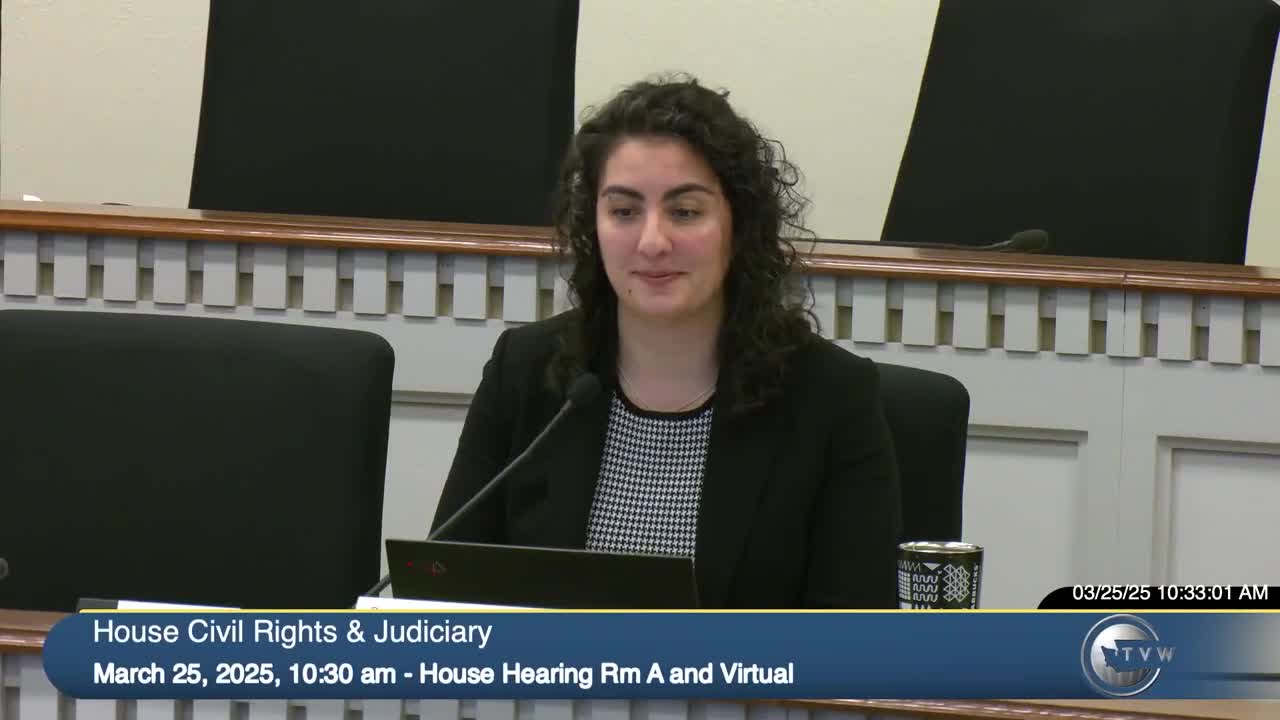
County clerks who testified said the alignment would simplify recordkeeping and reduce the chance of mistakes. Catherine Cornwall, King County Clerk, said having two different destruction schedules forces staff to revisit cases at different intervals and increases the risk of error. Spokane County Clerk Tim Fitzgerald described the practical process: clerks seek a court order before destroying an exhibit, give prosecutors and attorneys the opportunity to reclaim nonproperty exhibits, and retain items that are high‑visibility, historical, or might be needed on appeal — "I have exhibits in Spokane County back to 1878," Fitzgerald said.
Why it matters: Clerks and the Washington Association of County Officials, which described the bill as a "good government" measure, said the change reduces administrative complexity. Michael Shaw, testifying for the Washington Association of County Officials, noted the bill had already passed the Senate: "It passed 49 out of the Senate," he said.
The committee heard no formal amendments or votes in the March 25 hearing. Witnesses emphasized that exhibits requiring long-term preservation — for example, capital‑murder or forensic evidence — would continue to be retained as required under existing case‑by‑case rules.
Ending: Supporters asked the committee to move the bill to ensure clerks can apply a single, easier-to-compute five-year standard; no final committee action appears in the hearing record.