Get Full Government Meeting Transcripts, Videos, & Alerts Forever!
Get email alerts on the Accessibility Movie Captioning topic
No spam. Unsubscribe anytime.
Committee hears bill to require open- and closed-caption screenings at theaters
Summary
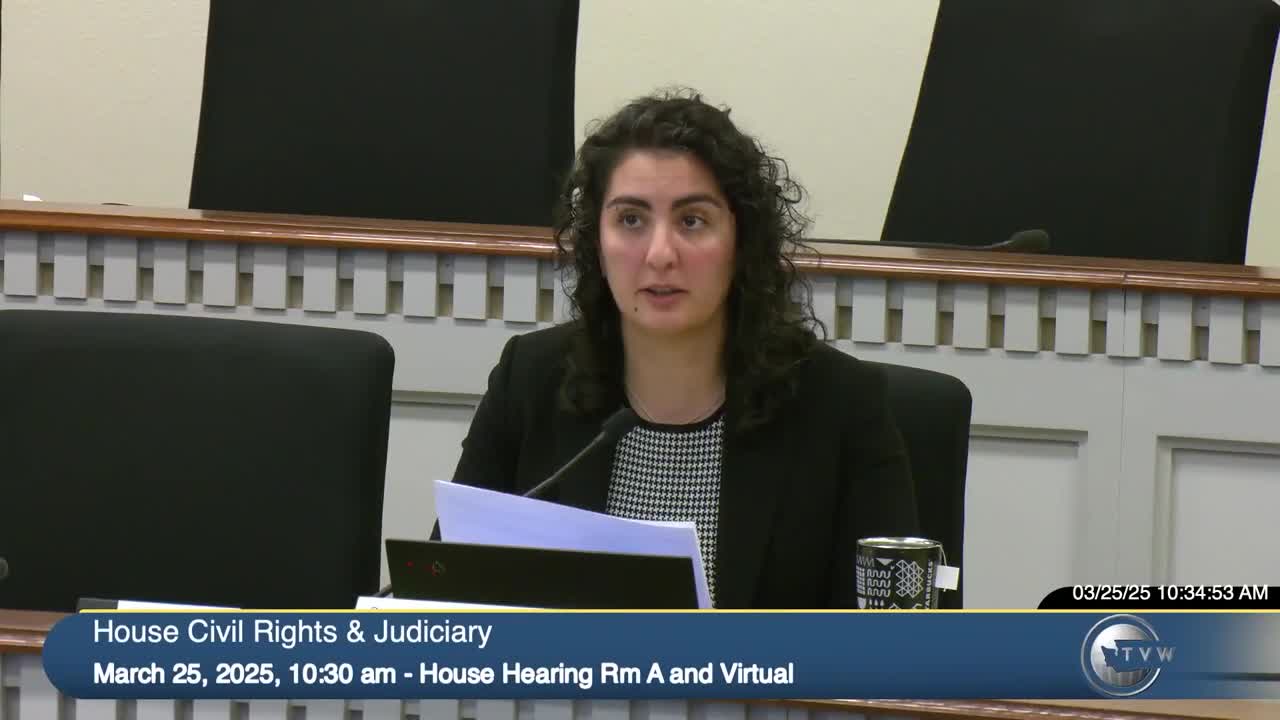
Senate Bill 5,486 would require movie theaters to provide open-caption screenings and working closed-caption technology for films that are produced and distributed with caption files, supporters told the Civil Rights & Judiciary Committee on March 25, 2025.
Senate Bill 5,486 would require movie theaters to provide open-caption screenings and working closed-caption technology for films that are produced and distributed with caption files, supporters told the Civil Rights & Judiciary Committee on March 25, 2025.
The bill, described in a staff briefing by John Brzezinski, would require companies that control, operate, own, or lease five or more theaters in Washington to schedule a minimum number of open-caption screenings for qualifying films: at least two open-caption screenings per week during the first two weeks of release (one of which must be on a weekend) and at least one open-caption screening per week during subsequent weeks in peak hours. Smaller companies (four or fewer theaters) would not face the same scheduled minimums but would have to provide an open-caption screening within five calendar days after receiving a request. The bill would not apply to drive‑in theaters and would require theaters to post contact information, advertise open-caption showtimes, and retain documentation of compliance for at least one year, Brzezinski said.
Why it matters: Supporters said open captions give people who are deaf, hard of hearing, or who speak English as a second language an equal, shared movie-going experience and avoid the practical problems of individual closed‑caption devices. "We really wanted to express our strong support for this bill," Karen Atwood, president of the Washington State Association of the Deaf, told the committee. "It really allows us to have and experience joy in the theaters and for us to see movies just like anyone else does." Cynthia Stewart of the Hearing Loss Association of Washington said captions improve comprehension and called the measure "a huge difference for people with hearing loss."
Industry perspective: Bruce Gardner, executive director of the Pacific Northwest Theater Owners Association, said theaters already provide captioning at many screenings and do not charge extra for open-caption shows. Gardner told the committee his members offer "over a thousand open caption screenings each week in the state of Washington" and asked that the bill extend the five‑day response window for requests to eight days to allow time to obtain distributed caption files and schedule screenings.
Committee discussion focused on implementation details and questions about whether theaters charge extra for caption services; staff said the bill is silent on a separate charge. Sponsor Senator Tina Orwall said the measure is intended to standardize access across the state and to address inconsistent website and advertising practices that leave some patrons unaware of available captioned showings.
The committee opened public testimony and heard supportive remarks from disability advocates and technical questions from representatives; no committee vote or amendment was recorded in the hearing transcript.
Ending: Proponents asked the committee to pass the bill to ensure consistent, statewide access to captioning; industry witnesses supported parts of the bill but asked for the five‑day request window to be extended to eight days. The hearing record does not show a final vote.