Get Full Government Meeting Transcripts, Videos, & Alerts Forever!
Get email alerts on the Department Health Budget topic
No spam. Unsubscribe anytime.
Senate committee hears Louisiana Department of Health plan; Medicaid, managed care and maternal health top the agenda
Summary
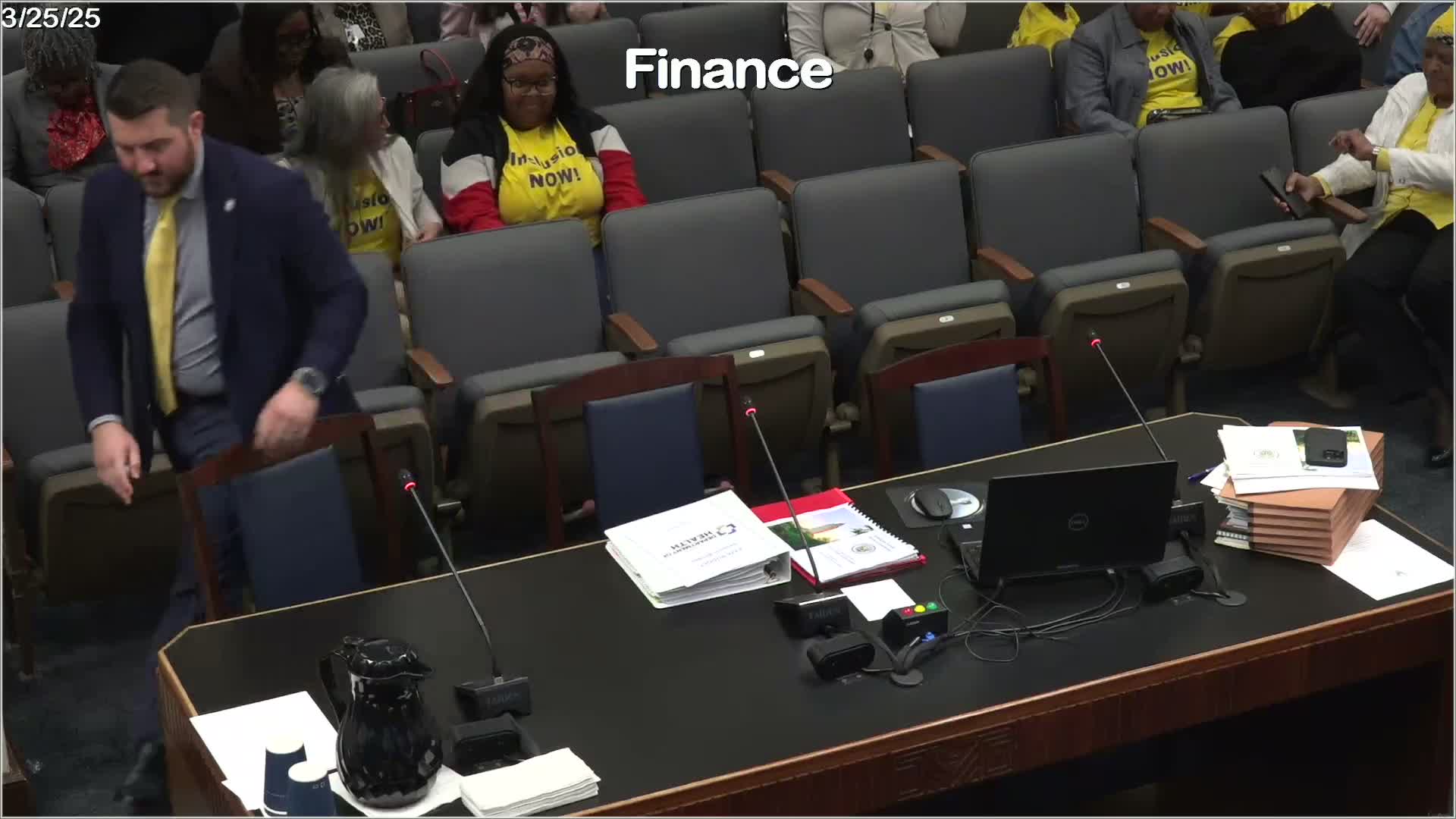
The Louisiana Senate Finance Committee on March 25 reviewed the Department of Health’s FY26 budget package, focusing on Medicaid projections, supplemental payments, managed-care oversight and targeted initiatives for maternal health and behavioral health.
The Louisiana Senate Finance Committee on March 25 reviewed the Department of Health’s FY26 budget package, focusing on Medicaid projections, supplemental payments, managed-care oversight and targeted initiatives for maternal health and behavioral health.
Why it matters: LDH accounts for the largest share of state spending through Medicaid and associated programs. Committee members pressed department leaders on how the proposed FY26 budget balances federal matching dollars, state general fund needs and program priorities such as nursing-home rebasing, physician payment increases and services for people with developmental disabilities.
Budget totals and structure
Senate Fiscal Services presenter Heather McKnight laid out the department’s recommended FY26 totals: LDH’s recommended budget for FY26 is approximately $21.4 billion. McKnight said federal funds make up about 71 percent of the department’s financing, while State General Fund is roughly 15 percent. Medicaid remains the largest program within LDH and was cited repeatedly as the primary driver of expenditure growth.
McKnight and subsequent LDH witnesses described departmental structure that includes 21 LDH agencies, 10 human-services authorities/districts (state–local partnerships), and a variety of 24-hour facilities. The presentation noted authorized positions and other-charge positions total about 7,753 positions across LDH (6,458 authorized positions plus roughly 1,300 other-charge positions associated with local authorities and facilities).
Key Medicaid and program adjustments discussed
- Managed care: The department requested a net managed-care adjustment of roughly $1.2 billion to balance FY26 Medicaid projections, driven by enrollment, utilization, pharmacy rebates and reimbursement changes. That increase was presented as supported largely by federal funds and other non‑SGF sources; McKnight said the FY26 net budget change required relatively modest additional State General Fund in combination with means-of-finance substitutions.
- Physician payment rates: The department said it will begin increasing physician Medicaid reimbursement toward 85 percent of Medicare in FY26, pursuant to changes enacted in the 2024 session. The transcript includes several cost figures for that change — department witnesses cited total gross-dollar figures in the hundreds of millions and a stated state share in testimony near $22 million — but those numbers were reported in multiple places and were not reconciled to a single, documented fiscal note on the record at the hearing.
- Nursing-home rebasing and other provider-base adjustments: The hearing identified nursing-home rebasing and other statutorily required rate adjustments as large FY26 drivers. Multiple figures for rebasing adjustments were discussed in testimony and committee questions; the testimony did not reconcile the differing figures on the record.
- Transfers and program moves: LDH staff said about $31.7 million in General Fund that was previously budgeted within Medicaid would move to the Office of Behavioral Health to cover services tied to implementation and court‑ordered obligations (identified in testimony as related to the Cooper/Jackson settlement). The department also described means-of-finance substitutions using the Medical Assistance Trust Fund (MATF), Hospital Stabilization Fund and intergovernmental transfers in several program areas.
Maternal health, behavioral health and other priorities
Department leadership highlighted nonbudget initiatives and grant-based investments that accompanied the FY26 request:
- Maternal health: Interim Secretary Drew Maranto and Surgeon General Ralph Abraham described awarding $6 million in HERO Fund grants in mid-April and noted Louisiana was awarded CMS’s Transforming Maternal Health Model grant to pilot system changes to reduce disparities and improve maternal outcomes. Department leaders told senators that overdose is a leading cause of maternal mortality and that the department is integrating behavioral-health interventions into maternal care pathways.
- Behavioral health and Cooper/Jackson: The Office of Behavioral Health was allocated an additional state general fund sum tied to the Cooper/Jackson settlement to maintain compliance with court obligations and to augment forensic and inpatient capacity. The department also flagged the shift of certain UCC/DISH supplemental payments into managed-care-directed payments for specific hospital payments.
- Developmental disability waivers and community supports: LDH confirmed that its NOW waivers are managed via a prioritized-offer model rather than a simple first-come, first-served list; the department said urgent and emergent needs continue to be prioritized for available slots. Committee members asked for further cost information and fiscal notes for possible expansion, support coordination compensation and nurse consultation for direct-support staff.
Federal funding concerns and grants
Senators pressed LDH leaders about recent federal changes. LDH officials reported receiving late notices from federal partners that several time-limited ARPA-funded behavioral-health grants were being terminated; the department said it was still assessing the FY26 impact from those termination notices and planned to report details to the committee.
Oversight, managed-care accountability and next steps
Multiple senators pressed for stronger managed-care oversight and clearer performance metrics, arguing that increased spending should show measurable improvements in access and outcomes. Department leaders said they are reworking directed-payment and incentive programs, standardizing managed-care incentive metrics and improving programmatic performance measurement tied to the State Health Improvement Plan (SHIP).
Senators also asked for additional follow-up materials, including detailed reconciliations of large adjustments (nursing-home rebasing, physician-rate increases), the proposed implementation timeline and fiscal-impact notes for year-two physician-payment changes, and an accounting of any federal grant terminations and their budget effects.
Ending note
Committee members thanked LDH staff for a broad briefing and requested follow-up memos and supplemental information on several specific items before final budget deliberations. LDH officials committed to provide additional detail on the physician‑payment schedule, the hospital-directed payment structure, means‑of‑finance substitutions and the department’s response to federal grant changes.