Get Full Government Meeting Transcripts, Videos, & Alerts Forever!
Get email alerts on the Licensing Construction topic
No spam. Unsubscribe anytime.
Senate committee agrees to report bill exempting residential drywall installers from contractor-license requirement
Summary
A West Virginia Senate committee voted to report a committee substitute for Senate Bill 8-71 to the full Senate with a recommendation that it pass.
A West Virginia Senate committee voted to report a committee substitute for Senate Bill 8-71 to the full Senate with a recommendation that it pass. The substitute removes residential drywall installation from the statutory definition of "contractor," exempting residential drywall installers from West Virginia's contractor-licensing requirement while preserving licensing for commercial drywall work.
The bill's committee substitute, described by counsel as narrowed to apply only to residential drywall services, would leave commercial drywall work subject to contractor licensing and the business-and-law examination currently used for contractor licensure. Counsel said businesses performing residential drywall work would still be required to register with the state, carry workers' compensation and meet ordinary business licensing requirements.
The change was presented to the committee by counsel, who said the original bill would have exempted all drywall services but was revised to apply only to residential work. "This, in effect, exempts those persons from being required to obtain a contractor's license," counsel said; "this only applies to residential work. Drywall installers on commercial project are still required to have a contractor's license."
Witnesses spoke in favor and against the substitute during the hearing. Brian Page, who identified himself as a representative of ConApp Inc., told the committee that in the 10 states where his company operates, "we currently don't have any licensing needed to hang drywall." Page said his company enforces insurance limits and on-site supervision and that the company "believe[s] we should be accountable" for work performed.
Representing building trades interests, Justin Williams of Affiliate Construction Trades urged retaining licensure. "Licensure, you know, protects the public interest," Williams told the committee, arguing that the business-and-law test and contractor licensing require owners to understand payroll, workers' compensation and other employer responsibilities and that licensure helps prevent small employers from being set up to fail.
Several senators questioned witnesses about the business-and-law examination required for contractor licensure and about how subcontracting, supervision and quality control are handled in other states. Counsel noted that the business-and-law exam focuses on business and finance topics rather than installation technique.
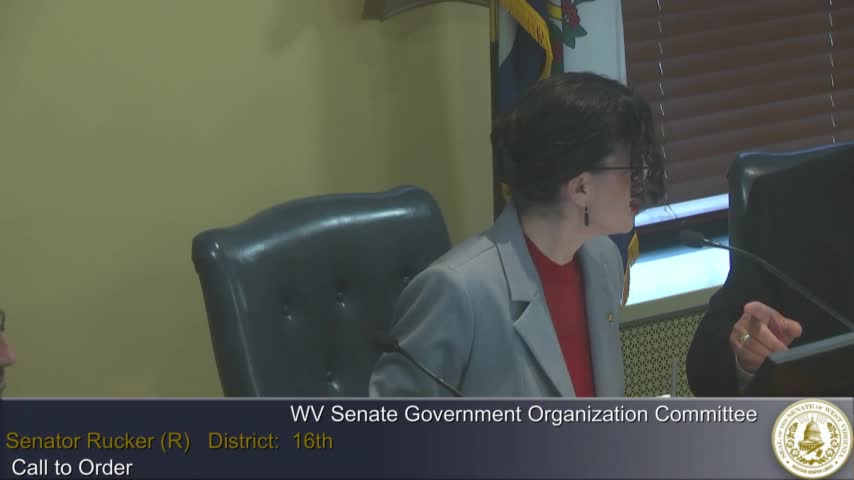
After discussion, the committee agreed to the language of the committee substitute and the vice chair moved that the substitute be reported to the full Senate with the recommendation that it pass. The chair said, "In the opinion of the chair, the ayes have it." The committee substitute will go to the full Senate for further consideration.
The measure, if enacted, would alter licensing requirements for residential drywall installers statewide while leaving commercial drywall work under the contractor-license framework.