Get Full Government Meeting Transcripts, Videos, & Alerts Forever!
Get email alerts on the Peoplestown Stormwater Custer Avenue topic
No spam. Unsubscribe anytime.
Peoplestown residents ask Atlanta Watershed to pause Custer Avenue relief project, seek fuller community engagement
Summary
Residents of Peoplestown urged the City Utilities Committee to pause the Custer Avenue capacity relief project and hold a community-led meeting with the Department of Watershed Management and the design-build team, citing concerns about flooding, construction impacts and inadequate prior engagement.
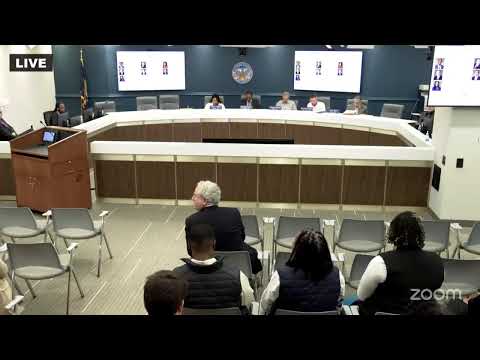
Peoplestown residents asked the City Utilities Committee on a public-comment agenda to pause the Custer Avenue capacity relief project and meet with neighborhood leaders before construction begins.
Kim Scott, chair of the Entrenchment Creek Community Stewardship Council and executive director of Georgia Wand Education Fund, Inc., told the committee residents have “sought transparency and meaningful dialogue” and remain “deeply concerned that the project fails to adequately address the combined sewer and broader storm water management issues” affecting the neighborhood. Scott said residents were surprised by a planned ribbon-cutting announcement at a recent Neighborhood Planning Unit (NPU) meeting and asked that the Department of Watershed Management (DWM) “slow the progression” of the project until community concerns are addressed.
The request for a pause was echoed by Shareese Brown, a Peoplestown resident and member of the Entrenchment Creek Community Stewardship Council, who said community meetings to date “were not engaging” and that engineers at earlier sessions “did not answer our questions.” Brown said the current plan includes a 7‑acre vault and a 30‑foot‑deep junction box that she expects will “disturb the neighborhood for 2 years with tons and tons of dirt,” and urged DWM to commit to a courtesy meeting in Peoplestown to discuss community benefits and other design choices, including park naming.
Resident Tianna Johnson asked the committee to pause the project and to require the participation of the design‑build team, DWM, and city officials in a community-led meeting. Registered professional engineer and Peoplestown resident Elizabeth Angel also requested a pause and said she and other residents want follow‑up meetings with the design‑build team to address flooding and environmental‑justice concerns for future generations.
During public comment, attorney Craig Pendergrass — who identified himself as a water‑law specialist — urged careful structuring of any broader stormwater financing tools the city might consider; his remarks focused on equity and legal risks if a stormwater utility fee is designed improperly, and he recommended forming a task force to study structure and distributional effects.
The committee did not take formal action on the project during the meeting. Council members in the room asked that a Watershed representative speak with commenters after the session; the committee record shows council leadership requested DWM staff meet with Ms. Brown and other residents to continue the conversation.
The public-comment speakers asked for: a city‑led, community‑driven meeting; clearer explanations for plan changes; consideration of green infrastructure alternatives; incorporation of community benefits; and recognition of neighborhood history through park naming.