Get Full Government Meeting Transcripts, Videos, & Alerts Forever!
Get email alerts on the Legislation Sessions topic
No spam. Unsubscribe anytime.
Colorado Senate advances gun‑safety, school AED maintenance and 340B drug‑pricing transparency bills; consumer pricing measure also adopted
Summary
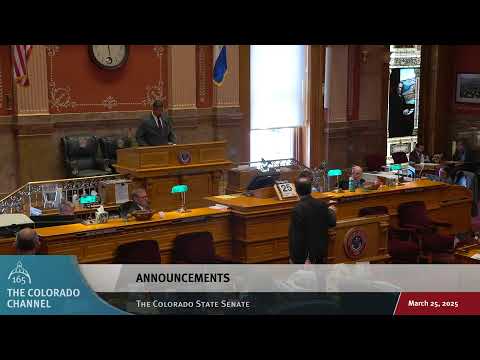
The Colorado Senate on March 25, 2025 voted to approve a set of bills addressing ammunition retail delivery, gun‑show rules, AED maintenance in schools, and transparency and reporting tied to the federal 340B drug‑pricing program, after extended floor debate about public safety and the potential impact on rural hospitals and clinics.
The Colorado Senate on March 25, 2025 voted on and approved a bundle of bills addressing public safety, school health and healthcare transparency, including measures on ammunition retail delivery, gun‑show requirements, automated external defibrillator (AED) placement and maintenance in schools, and reporting requirements tied to the federal 340B drug‑pricing program.
The measures drew extended debate on the Senate floor about public safety and the practical effects of new reporting rules on hospitals and rural healthcare providers. Proponents said rules would increase safety or transparency; opponents warned of unintended consequences for lawful businesses and financially strained hospitals and clinics.
The most contested items included House Bill 11‑33, which creates new requirements for retail sale and delivery of ammunition; House Bill 12‑38, which tightens requirements tied to gun shows; Senate Bill 191, which revises AED planning and maintenance standards for schools; and a pair of related bills about the federal 340B program (Senate Bill 124 and Senate Bill 71) that set state reporting and usage limits for savings generated by discounted outpatient drugs. The Senate also adopted a consumer‑protection measure, House Bill 10‑90, aimed at deceptive or hidden fees.
Senator Sullivan, who pressed for stricter controls on ammunition sale and access, argued the issue was tied to recent local shootings: "Our first question ... is where did he get the gun?" He framed the ammunition bill as a next step to address how minors obtain both guns and the ammunition that makes the harm possible. Sponsors and supporters of the gun‑show bill framed it as a public‑safety measure "to take one more step forward towards the goal of gun violence prevention and tightening up some guardrails around gun shows," as Senator Danielson said on the floor.
On the healthcare package, senators debated how to preserve services for underserved and rural communities while increasing transparency about how 340B discounts are used. Senator Kirk Meyer (Kirkmeyer) said the program and its use are complicated and urged caution; Senator Rich and other sponsors pointed to hospital testimony that 340B savings support programs such as community outreach and chemotherapy subsidies. Senator Michaelson Genet summarized the program’s purpose concisely: "The 340B program is to ensure that hospitals have money for charity care and other care to the underserved." Supporters added new reporting requirements aimed at showing how savings are spent.
The AED measure prompted floor remarks urging more protective standards for students and athletes. Senator Judah said changes to the law will improve access and maintenance of AEDs and lamented that the Legislature had to narrow the bill from its original, broader version: "To not have them at a sporting event doesn't make any sense anymore." She and co‑sponsors said the final language focuses on maintenance, placement and access rather than creating an unfunded mandate.
Votes at a glance
- House Bill 11‑10 (allocation of railroad crossing maintenance costs): Passed; recorded tally 34 ayes, 1 no. (Third reading/consent calendar)
- House Bill 12‑05 (fair access to insurance requirements plans — consent calendar item): Passed; recorded tally 28 ayes, 7 no.
- Senate Bill 9 (recognition of certain tribal court orders): Passed; recorded tally 35 ayes, 0 no.
- House Bill 11‑33 (retail sale and delivery requirements for ammunition): Passed; recorded tally 19 ayes, 16 no. Supporters said the measure helps trace and limit unsafe access to ammunition; opponents said debate and public input had been limited.
- House Bill 12‑38 (requirements for gun shows): Passed; recorded tally 22 ayes, 13 no. Dissenting senators argued it could drive lawful operators out of business and push some transactions into informal settings.
- Senate Bill 191 (school AED maintenance and placement): Passed; final floor vote not explicitly recorded in the transcript as a numeric tally but the motion carried. Sponsors said the enacted language updates maintenance and placement rules rather than imposing the more expansive, originally introduced mandate.
- Senate Bill 124 (state rules on outpatient drugs sold under the federal 340B program, transparency and protections): Passed on the floor; final numeric tally not specified in the provided transcript. Sponsors described the measure as a transparency first step; opponents warned of consequences for Colorado hospitals and clinics.
- Senate Bill 71 (prohibitions on certain supply‑chain practices and added transparency tied to 340B savings; includes reporting and Attorney General enforcement language): Passed; final numeric tally not specified in the provided transcript. Sponsors said the bill protects contract‑pharmacy arrangements and adds transparency; amendments added community‑benefit reporting requirements.
- House Bill 10‑90 (protections against deceptive pricing practices, amended to limit some private enforcement): Passed; final numeric tally not specified in the provided transcript. The bill’s floor debate included discussion of federal statutes and whether entities already regulated federally should be exempt from parallel state enforcement.
What supporters and opponents said
Supporters of the gun and ammunition measures said the bills address specific public‑safety gaps. Senator Sullivan urged colleagues to consider recent incidents in Aurora while describing why ammunition access deserves scrutiny. Opponents, including Senator Liston and others, warned of unintended consequences such as driving lawful commerce underground or unduly burdening promoters and small businesses.
On 340B and related measures, sponsors argued reporting and guardrails are necessary to ensure savings are used to benefit patients and communities, especially rural and safety‑net providers. Opponents said additional state rules could destabilize hospitals and federally qualified health centers that rely on 340B savings to provide care in underserved areas. The debate included data cited from testimony and reports on the floor about the scale of community benefits and hospital financial margins.
Process and next steps
Most bills were taken up on third reading or as part of the consent calendar; a number of appropriations and committee referrals also appeared on the morning calendar. Several bills were amended on the floor before passage. A few items were laid over for later consideration, including Senate Bill 152 and Senate Bill 157, which will return to the calendar on specified dates. The Senate recessed for a mid‑day break and planned to resume consideration of additional items in the afternoon session.
Ending note
Senators used several floor moments to raise constituent concerns beyond legislation — including health coverage and potential federal Medicaid cuts — and to recognize guests at the Capitol. The floor record shows sustained debate on balancing consumer protections, public safety, and the fiscal stability of rural and safety‑net healthcare providers as the session moves toward final passage on remaining measures.