Get Full Government Meeting Transcripts, Videos, & Alerts Forever!
Get email alerts on the Commemorations And Resolutions topic
No spam. Unsubscribe anytime.
Resolution designating Paul Robeson Day passes after heated floor debate and tabling attempt
Summary
The Assembly approved A.J.R. 217 to designate April 9 as Paul Robeson Day after a motion to table a substitute failed to stop the resolution. Opponents criticized Robeson’s political views; supporters noted his historical and cultural contributions.
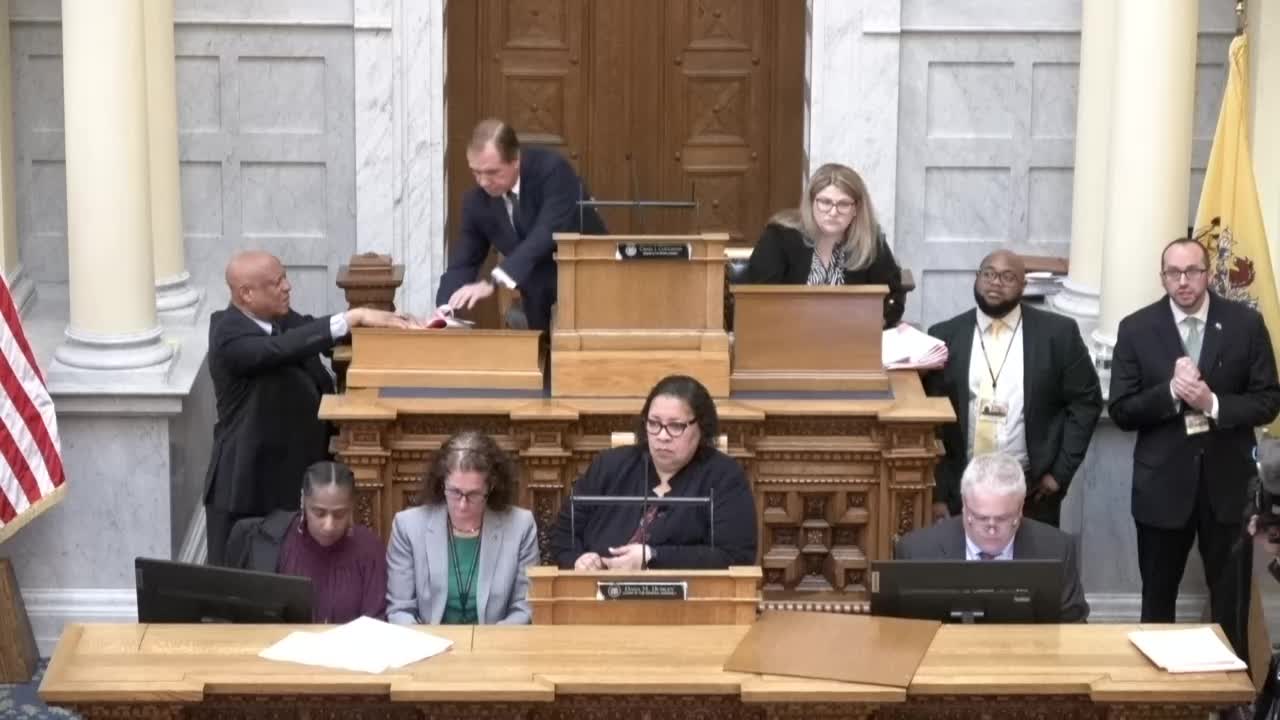
The New Jersey General Assembly on March 17 approved Assembly Joint Resolution 2‑17, designating April 9 as Paul Robeson Day in the state, after a contested floor exchange and a failed substitute effort.
The final recorded vote on AJR 2‑17 was 46 in favor, 20 opposed and 0 abstentions. Earlier in debate, Assemblyman Weber opposed creating a commemorative day, calling Paul Robeson “an avowed communist” and arguing the legislature should not honor someone he described as a defender of the Soviet Union. Weber also proposed an alternative resolution designating November 7 as Victims of Communism Day; that substitute was tabled by Majority Leader Greenwald.
Majority Leader Greenwald moved to table the substitute motion; the motion to table passed on a recorded vote of 44 in the affirmative and 27 opposed. After the motion to table succeeded, the Assembly proceeded to a final vote on AJR 2‑17 and approved the resolution 46‑20.
Assembly members who spoke both in favor and against the resolution placed the vote in the context of how the legislature chooses to honor historical figures. The record shows an extended floor statement from Weber objecting to the resolution on political grounds, and subsequent parliamentary motions by leadership to keep the resolution on the calendar.
The resolution is a memorial designation and does not create statutory rights, appropriation, or regulatory changes. The bill will take the usual course of post‑resolution processing in the clerk’s office.