Get Full Government Meeting Transcripts, Videos, & Alerts Forever!
Get email alerts on the Public Health Institute topic
No spam. Unsubscribe anytime.
Assembly approves public health institute after tense reconsideration and substitution
Summary
After floor debate and a procedural reconsideration, the Assembly substituted and passed Senate Bill 35 62 to create a New Jersey Public Health Institute. Lawmakers protested creating a new state‑affiliated body and warned of added bureaucracy before the final 50‑26 vote.
The New Jersey General Assembly approved legislation to designate and establish a New Jersey Public Health Institute after a floor reconsideration and substitution, passing the Senate version, S.35/62, by a vote of 50‑26.
The measure, taken up on third reading as Assembly Bill 43‑62 and later substituted with Senate Bill 35‑62, would create an institute charged with designing and deploying public‑health programming. Supporters said the institute would coordinate public‑health efforts statewide; opponents said the change would add bureaucracy and duplicate existing department functions.
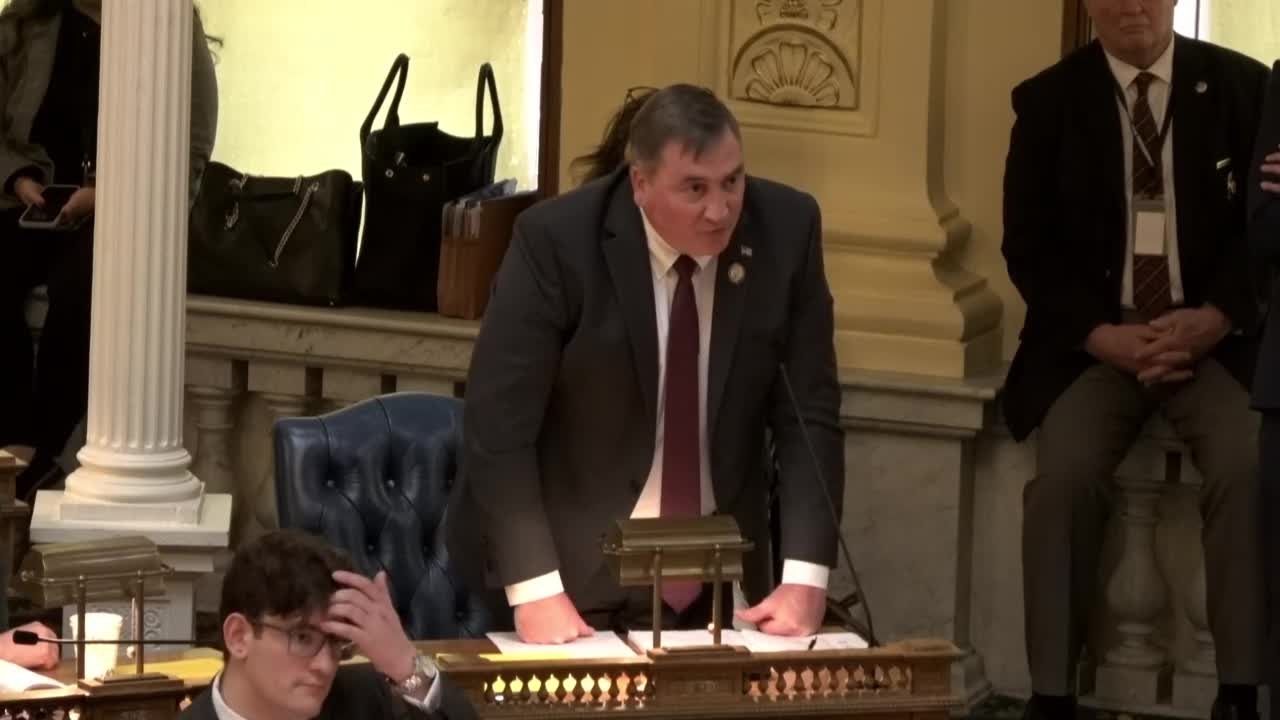
Opponents repeatedly warned the measure would expand government and create “a very large bureaucracy.” On the floor, a member who identified himself as Assemblyman Rumph argued the state’s local municipalities and counties should retain responsibility for public‑health measures rather than establishing a new statewide institute, saying the proposal “simply shows that this bill would simply create more bureaucracy.”
Assemblywoman Spade moved the substitution to replace the Assembly bill with the Senate version and then moved final passage. After a revote sequence triggered earlier in the session, the Assembly approved the substituted Senate bill, S.35/62, with 50 affirmative votes and 26 opposed. The clerk recorded no abstentions on the final roll call.
The debate included repeated calls for clearer limits on the institute’s powers and for stronger oversight of how the institute would interact with county and municipal public‑health authorities. Several members cited the COVID‑19 pandemic and national public‑health agencies during remarks arguing both for and against centralizing some functions, but no amendment limiting the institute’s authorities was adopted on the floor.
Because the Assembly substituted the Senate bill for the Assembly bill before final passage, the bill will be transmitted consistent with the usual legislative process for enrolled bills.
Lawmakers did not cite any specific statute that the institute would repeal or replace on the floor. The record shows formal substitution and the final tally, but does not include additional implementing language beyond the bill title taken up on the floor.