Get Full Government Meeting Transcripts, Videos, & Alerts Forever!
Get email alerts on the School Nutrition topic
No spam. Unsubscribe anytime.
Senate committee advances amendment to bill limiting ultra‑processed foods in schools; sponsor temporarily postpones bill
Summary
Sen. Martin introduced SB 1826 to ban ultra‑processed foods on school grounds during the school day. The committee adopted an amendment moving the compliance date to July 1, 2026, then the sponsor temporarily postponed the bill for further work and amendments after extended debate and testimony from industry and public‑health stakeholders.
Senator Jason Martin, sponsor of SB 1826, told the Senate Committee on Agriculture that the bill would bar public schools from serving or selling defined “ultra‑processed” foods on school grounds during the school day and would apply only to government‑purchased meals and snacks provided by government employees.
The bill’s sponsor said the measure targets industrially manufactured, nutrient‑depleted products with synthetic additives and dyes and is intended to protect students’ health and reduce childhood obesity. "If kids are fed the wrong fuel during the school day, they will not have the opportunity to be successful in school," Martin said.
Committee members pressed the sponsor on definitions, costs and legal authority. Senator Rouson asked whether the bill had a House companion and whether the sponsor had assessed differences in cost and logistics for rural versus urban districts. Martin replied there was no identical House companion and that he had not analyzed urban‑versus‑rural cost differences, saying the bill’s priority was students’ health.
Senator Rouson offered amendment barcode 822294, which the sponsor and the committee described as a “glide path” giving school districts an additional year to comply. Senator Rouson, who introduced the amendment, said the extra time to July 1, 2026, would reduce disruption and cost as districts renegotiate vendor contracts. The committee adopted that amendment by voice vote: "All in favor, say 'yay.'" The amendment was recorded as adopted.
The hearing drew opposition from beverage, retail and food industry representatives who said the bill uses an unclear definition of processing, duplicates federal authority and could produce a patchwork of state rules that confuse manufacturers and school purchasers. Elizabeth DeWitt, representing the Florida Beverage Association, said the industry provides 40,000 jobs and argued that colors and sweeteners named in the bill "have been formally evaluated and approved for consumption by multiple regulatory agencies," adding that the FDA is the appropriate authority for ingredient safety.
Other witnesses pressed practical concerns: Chris Hanson of the Consumer Healthcare Products Association noted that dietary supplements are regulated by the Food and Drug Administration as food and pointed to titanium dioxide’s common use as a pigment in pills; Scott Shally of the Florida Retail Federation urged a federal solution and said the bill’s vague definitions needed more vetting. Supporters who spoke or waived in support included a group listed as Moms for Liberty.
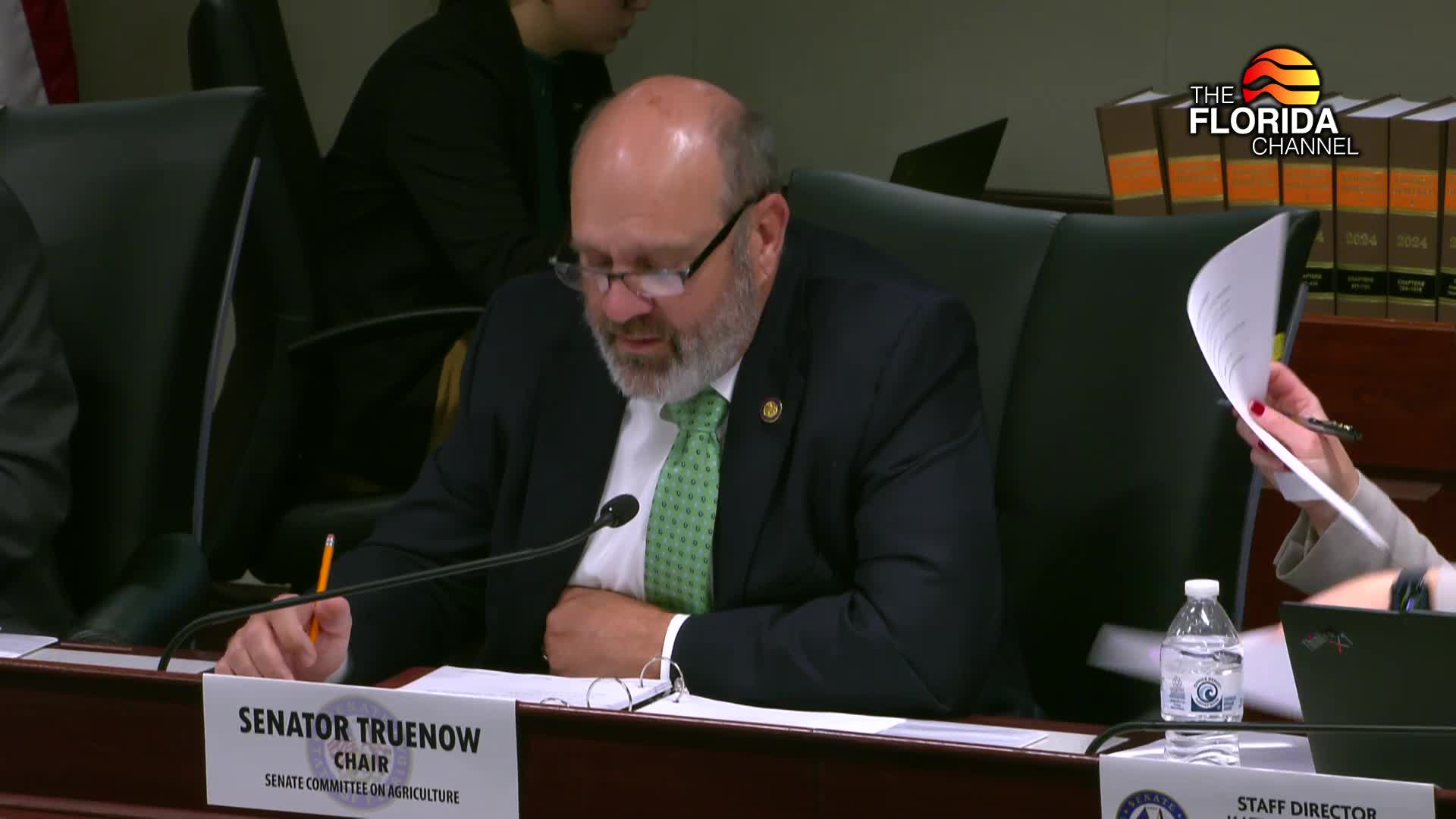
Several senators said they supported the concept but were not ready to vote for final passage. Senator Bernard and Senator Berg both said they believed the idea of improving students’ nutrition is worthy but that the definition of “ultra‑processed” needs tightening and that incentives could be an alternative to mandates. Martin said he appreciated questions and amendments and announced he would "temporarily postpone this bill" to allow further work and to bring substantive amendments before the next committee appearance.
The committee did not record a final favorable report on SB 1826 at the hearing. The only formal actions recorded in committee were adoption of amendment barcode 822294 (glide path postponing compliance to July 1, 2026) and the sponsor’s announcement that the bill would be temporarily postponed for further amendment work.
Votes at the hearing were taken by voice on the amendment and were recorded as adopted; no roll‑call final committee vote on the bill itself was taken. The discussion highlighted points committees will need to resolve should the bill return: an operational definition for "ultra‑processed," the bill’s interaction with federal food‑safety authority, the timeline for districts to renegotiate vendor contracts, and cost differences between urban and rural districts.
Looking ahead, Martin said he will work with industry and committee members to produce amendments that clarify definitions and address contract and supply‑chain concerns before rescheduling the bill for committee action.