Get Full Government Meeting Transcripts, Videos, & Alerts Forever!
Get email alerts on the Alcohol Licensing topic
No spam. Unsubscribe anytime.
Anniston council questions alcohol license for proposed retailer near childcare
Summary
Councilmembers discussed whether a proposed alcohol retailer located across from a childcare facility should be approved, debating whether the concern is a zoning issue or an alcohol-licensing decision and noting there is no explicit state or city prohibition.
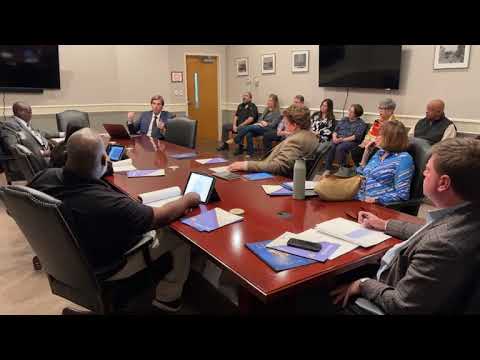
Councilmember (unnamed) raised concerns at a city council meeting about a planned alcohol retailer located across the street from a childcare facility, asking, "is that not right across the street from a child care facility? Mhmm. Is that is that an issue?"
A staff member (unnamed) told the council he was not finding a statutory or municipal prohibition, saying, "I'm not seeing anything in the Alabama regulations or in the city code, and or the zoning ordinance." Councilmembers and staff discussed whether the matter is governed by zoning rules or by the council's discretionary authority over alcohol licenses.
Several speakers emphasized that an alcohol license is often "contingent on council" approval and that prospective business owners commonly buy property subject to that contingency. One councilmember said prospective owners may "buy the property for this specific purpose and negotiate that I'm I'm gonna I'm gonna buy this property subject to the council authorizing use if the if they know council has to authorize it."
The council debated whether the location question should be handled through zoning changes or on a case-by-case licensing basis. One member framed it as a zoning matter while acknowledging the separate role of alcohol licensing: "it's a zoning question rather than alcohol regulation, but it doesn't matter." Speakers noted the council can consider the "totality of the circumstances" — including the character of the applicant, the location, and the number and type of nearby businesses — and concluded, "you can refuse an alcohol license."
Council discussion also referenced prior local limits on similar retail categories, saying the city has used saturation limits before for businesses such as tobacco and vape shops and could take similar approaches by zoning amendment or a citywide cap on licenses.
No formal motion or vote on this particular license appears in the transcript excerpts provided. Council members discussed options for handling similar future applications, including placing such items on a work session before a formal vote or leaving them on the consent agenda with the option to suspend rules and consider them immediately.