Get Full Government Meeting Transcripts, Videos, & Alerts Forever!
Get email alerts on the Homelessness Camping Ordinance topic
No spam. Unsubscribe anytime.
Chillicothe council hears hours of public comment on proposed anti‑camping law; motion to table fails
Summary
After an extended public comment period about homelessness and a drawn-out debate, the City Council defeated a motion to table proposed Chapter 5.55 (prohibited camping). The ordinance remains at second reading; council approved a package of other routine resolutions and appropriations at the same meeting.
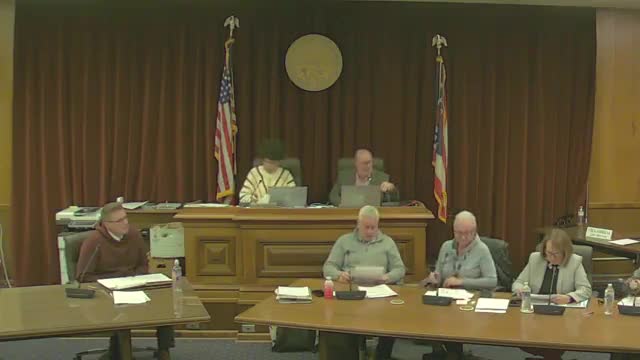
Chillicothe City Council members on Monday heard more than an hour of public comment on a proposed ordinance that would add Chapter 5.55, “Prohibited Camping,” to the city code, then rejected a motion to table the measure and left the ordinance at its second reading for later consideration.
The proposed ordinance — presented to council as Item 11 on the agenda — would create a notice-and-removal process for camping on public property. Supporters said the measure protects property users and connects people experiencing homelessness to services; opponents said it would criminalize homelessness and asked council to pause work until more shelter and services are in place.
The debate drew a lengthy public‑comment turnout. Connie Scott, who identified herself as a Chillicothe resident, told council she supported the ordinance as written and said it improves on the current trespass law by providing a 72‑hour notice period and requiring police to notify an on‑staff social worker. “They have 72 hours to move their items,” Scott said. “The police . . . are supposed to notify a social worker who is on staff already at the police department to connect with this camper so the camper can be informed of where they can get shelter, where they can get help.”
Other speakers described outreach work already under way. “We meet them where they are,” said Melanie Yep, who identified herself as the coordinator of the homeless outreach team for Ross County Community Action. Yep listed medical, benefits and referral services the outreach team provides and said volunteers and partner agencies routinely try to link people to shelters and treatment.
Several speakers urged caution. “This legislation does not solve homelessness. It punishes it,” said Logan Hudson, who identified himself as a Chillicothe resident and a supervisor for an early‑childhood program in Franklin County. Nathaniel Elliott, a transportation planner, urged council to delay the ordinance for more study and broader bipartisan review. “The best option is to table it, then discuss it on public record with one another, consult experts, see what works in other cities,” Elliott said. He warned of operational and legal risks if the city enacted a flawed ordinance.
Nancy Schaefer, a resident who said she consulted an attorney, summarized differences she said exist between current criminal trespass law and the proposed ordinance. She said criminal trespass can be prosecuted as a fourth‑degree misdemeanor with possible jail time, whereas the proposed ordinance’s penalty would be a minor misdemeanor (a civil fine) and gives people time to remove their property and be referred to services. “The proposed legislation gives violators the opportunity to receive social services and assistance before any criminal penalty results,” Schaefer told the council.
Councilman Proll formally moved to table the ordinance so council could develop a different approach; a council member seconded the motion. The clerk called the roll: Bennett — No; Payne — No; Barnes — Yes; McKeever — No; DeMint — No; Preston — No; Proll — Yes; Creed — No. The motion failed (2 yes, 6 no). Because the motion to table failed, the ordinance remained at second reading and was not adopted that night.
Council President Shoemaker said the meeting’s turnout and comments showed community interest, and he said future meetings would be scheduled in larger venues if necessary so more people can attend. Several council members and the mayor encouraged continued collaboration with social‑service providers; speakers representing outreach teams and Ross County Community Action described ongoing efforts to provide supplies, referrals and case management.
Votes at a glance
- Motion to table proposed Chapter 5.55 (prohibited camping): motion by Councilman Proll; second not specified on the record. Vote: Barnes, Proll — yes; Bennett, Payne, McKeever, DeMint, Preston, Creed — no. Outcome: failed (motion did not pass). Note: because the motion failed, the ordinance remained at second reading and will return on a future agenda.
- Adoption of proclamation for National Work Zone Awareness Week: adopted by unanimous roll call. (Proclamation presented by Adrian Harrison and Kevin Lewis of Laborers Local 83.)
- Approval of minutes for the March 10, 2025 meeting: adopted by roll call.
- Multiple routine resolutions and ordinances (items 1–9 on the agenda) were adopted by roll call, including applications/acceptance for Ohio Public Works Commission funds (Item 1), consent to ODOT resurfacing of US‑50 (Item 2), appropriation for two traffic controllers for the Bridge Street project (Item 3), filing for Federal Transit Administration/ODOT grants (Item 4), appropriation to Assistance House of Ross County ($20,000, Item 5), acceptance of Attorney General reimbursement for police training ($37,517.03, Item 6), reappropriation of unspent 2024 funds (Item 7), solicitation of an RFP to administer PY2025–26 CDBG programs (Item 8), and creation/acceptance of Fund 254 for the Appalachian Community Grant Program in the amount of $34,819,990 (Item 9). Each of those items was recorded on the roll and adopted as read at the meeting.
- Several items (including the proposed Chapter 5.55 ordinance, a street‑levy resolution and two other ordinances/resolutions) were moved forward to future agendas or remain at second reading (Items 10–13). Item 13 (disposal of municipal property by auction) was amended earlier in the meeting to specify auctions would be administered by the auditor’s office; that amendment passed on a roll call.
What happens next
Because Chapter 5.55 remained at second reading, council may revise the language, schedule additional committee review or hold another public review session before taking final action. Council members and several public commenters urged more coordination with Ross County Community Action, the Community Resource Center and other service providers, and some speakers asked the council to pursue housing‑first and wraparound service investments in lieu of punitive enforcement.
The council approved multiple grant applications and appropriations that could fund infrastructure and community‑development activity. The agenda listed the $34,819,990 Appalachian Community Grant Program award (Item 9) and an RFP for CDBG administration (Item 8); both measures were recorded as adopted at third reading and will move forward to implementation steps outlined in the respective resolutions.