Get Full Government Meeting Transcripts, Videos, & Alerts Forever!
Get email alerts on the Homelessness Camping Ban topic
No spam. Unsubscribe anytime.
Chillicothe council hears broad public opposition to proposed camping ban; first reading advances, tabling attempt fails
Summary
At a March 10 Chillicothe City Council meeting, residents urged the council not to criminalize homelessness as the council held a first reading of a new 'prohibited camping' ordinance (chapter 555). Speakers urged housing-first responses; a motion to table the legislation failed for lack of a second.
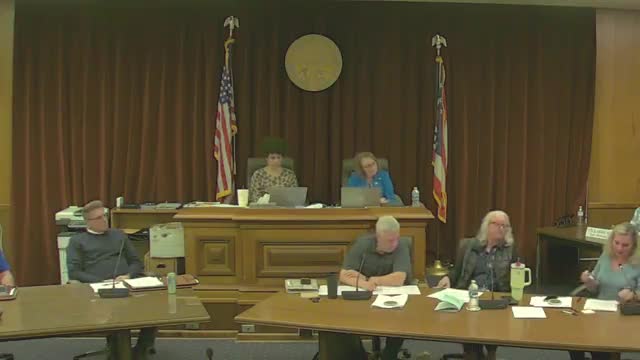
Acting President Payne presided over the March 10 Chillicothe City Council meeting as the council held a first reading of an ordinance to add chapter 555, “Prohibited Camping,” to the city’s codified ordinances.
The item drew more than 20 public commentators during the meeting’s lengthy public-comment period, many urging council members not to criminalize people experiencing homelessness and to prioritize shelter and supportive services instead. “Whereas shelter and sleep are basic human needs,” resident Beverly Wilkes said, reading portions of an alternate draft ordinance she said she emailed to council. “Criminalization of homeless citizens is not a solution but a deterrent to ending homelessness.”
The nut graf: The measure (agenda item 12) remains at first reading; council did not adopt the ordinance on March 10. A council member moved to table “the piece of legislation” after the public comments, but the motion received no second and therefore no action was taken. The council signaled it will continue committee and council review before any final vote.
Speakers who addressed the council framed the issue around gaps in local services and the limits of enforcement. Linda Hoover, 319 Renick Avenue, told the council that other municipalities that adopted similar bans later rescinded them after seeing increased city costs and lawsuits. Jamie Brown, 98 Douglas Avenue, cited local shelter capacity and the point-in-time count, noting a recent unsheltered count of “31” and saying many people do not self-identify in that survey because of fear.
Residents and service providers urged alternatives. Stephanie Renner summarized national evidence against criminalization and highlighted “housing-first” models and supportive shelters, saying such programs reduce long-term costs and improve outcomes. John Thacker, identifying himself as a board member of Assistance House of Ross County, urged council members to support a separate agenda item (item 6) to allocate $20,000 to the Assistance House and asked that council consider constructive local supports rather than punitive measures.
Acting President Payne acknowledged the volume of public comment and the council’s procedural obligations; the ordinance was read as a first reading under agenda item 12. No formal vote on the ordinance occurred on March 10. A later attempt by a council member to table the legislation was unsuccessful because no council member seconded the motion.
Council procedural notes: earlier in the meeting Payne successfully moved to waive the three-day receipt rule on the agenda; that motion (moved by Payne, seconded by McKeever) passed by roll call. Separately, council voted to remove item 11 from the agenda (see separate votes summary).
Ending: Council members and staff did not adopt chapter 555 on March 10; council left the ordinance at first reading and signaled further review. Members of the public who spoke said they will continue outreach and monitoring as the item returns to committee and future council agendas.