Get Full Government Meeting Transcripts, Videos, & Alerts Forever!
Get email alerts on the Hotel Occupancy Tax Grants topic
No spam. Unsubscribe anytime.
Fredericksburg council approves $519,975 in hotel‑occupancy tax grants; asks cemetery group to return if county funding falls short
Summary
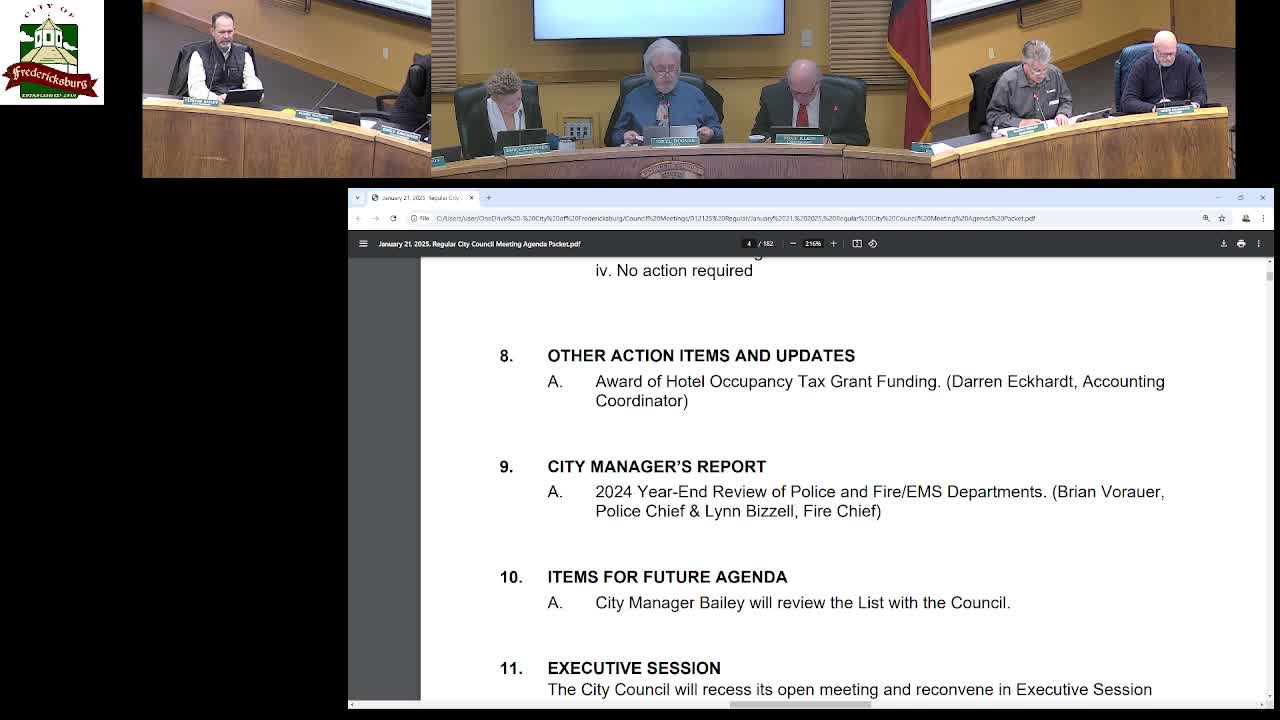
The Fredericksburg City Council on Tuesday approved $519,975 in hotel‑occupancy tax grants for 27 applicants across preservation, arts, marketing and sporting‑event categories, exceeding the council’s $500,000 baseline budget.
The Fredericksburg City Council on Tuesday approved distribution of $519,975 from the city’s hotel‑occupancy tax (HOT) fund across 27 applicant organizations for historic preservation, arts, marketing and sporting events.
Mayor Gerald Hooper opened discussion noting that the council had budgeted $500,000 for grants but received $797,000 in requests. "This is the public's money as earned by people who are in business in Fredericksburg," Hooper said, urging applicants to demonstrate visitor impact because HOT funds must benefit overnight stays. Council members debated whether to keep the $500,000 baseline and ‘‘dip into reserves’’ for additional awards; staff reported estimated year‑end reserves of about $2 million.
After item-by-item discussion of applications, councillors approved awards that reduced several large requests while funding programs the council judged likely to draw overnight visitors. Major allocations recorded in the meeting packet and approved by motion included: National Museum of the Pacific War/Nimitz- related requests (approved $150,000 full request), Gillespie County Colored Church historic preservation ($21,500), Friends of County Schools ($8,400), Frontier History Company ($5,850), and a $40,500 in‑kind/assistance allocation toward the city cemetery drainage project (council agreed to provide city labor and money and invited the cemetery group to return for additional assistance if the county does not meet its expected funding). Other awards ranged from several thousand dollars for arts and annual events to six‑figure historic‑preservation grants for the county historic society ($90,000 approved).
Council discussed using analytics from the Convention and Visitors Bureau (CVB) to estimate how many attendees were likely to be out‑of‑town visitors who generate hotel stays; staff noted the CVB tool can estimate attendance and origin ZIP codes but may not separate city versus county hotel stays. Several council members urged first‑ or second‑time events to receive smaller “incubator” awards (for example, some first‑time festivals were funded at $7,500–$10,000) and told repeat applicants they should provide stronger visitor data if they seek larger awards in future years.
A motion to approve the awards, with staff direction to invite the cemetery organization to return for reconsideration after the county’s March deliberations, passed on a voice vote. Council instructed staff to publish the award list and to return any requested follow‑up information by May 1.