Get Full Government Meeting Transcripts, Videos, & Alerts Forever!
Get email alerts on the Rail Line Lampasas Burnet topic
No spam. Unsubscribe anytime.
Residents urge Lampasas leaders to oppose proposed Texas Materials rail line
Summary
Dozens of landowners and residents told Lampasas City Council the proposed Lampasas–Burnet County rail line would damage property values, wildlife habitat and emergency access; council said it will monitor Surface Transportation Board review and coordinate with Burnet County.
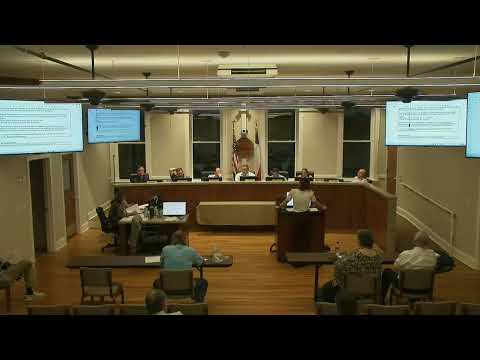
Dozens of landowners and residents urged the Lampasas City Council on Monday to oppose a proposed Texas Materials rail line they say would bisect ranchland and affect traffic, safety and property near Lampasas.
The comments came during a workshop session the council moved to the start of its meeting so citizens could speak about the project. Many speakers said the railroad corridor, which would cross major roads including U.S. 183 and Highway 190, will create repeated train crossings, block emergency response routes and depress nearby property values.
The council heard from landowners who said the project already has lowered the marketability of property once the corridor was made public. “Once it’s presented, once it’s in the front, it always affects property values,” said a wildlife biologist and consultant who said he does eminent-domain work across Texas. Bill Hinkley, who said he represents Bar H Bar Ranch, said the proposal “ties your hands on growth” and predicted the railroad would limit where a town could place future schools or fire stations.
Several residents described multi‑generation family ownership of affected land and warned about harm to springs, creeks and archaeological sites along the corridor. David Sandifer said parts of the corridor would come close to an archaeological dig on family property. Stephanie R., who organized a petition and a Facebook group opposing the line, argued that Lampasas would “undeniably bear the consequences” even if the route remains outside city limits.
Two speakers who identified themselves as professionals said they were not working on the project but had concerns. Richard Hijas said his firm, RITD Engineering and Survey, had no involvement in the rail proposal but offered to be a local resource. Another speaker described contacts with national property‑rights groups and noted statutory options for cross‑jurisdictional planning that could coordinate responses.
Council members and Commissioner Rainwater told speakers they are coordinating with Burnet County officials. Rainwater said he had spoken with the Surface Transportation Board staff and that the federal agency described the project as in preliminary stages and performing a National Environmental Policy Act (NEPA) environmental review. Rainwater said STB staff told him the process typically takes one to two years for an environmental impact statement but can be shorter if reclassified to an environmental assessment; he said STB had scheduled site visits in April and was accepting public comments.
Council did not take a formal vote opposing the project. City leaders said they would stay in contact with county counterparts and with STB staff and relay community concerns as the federal review proceeds. “We’re going to work with Burnet County very closely,” Rainwater told the meeting.
The council urged residents to continue organizing and to provide information STB staff may request, including details about school bus crossings and emergency services that could be affected. Several speakers said they had organized petitions, social media outreach and a new local group to coordinate resistance and to seek legal advice about eminent‑domain risks.
The city did not announce any ordinance or formal resolution at the meeting; Rainwater encouraged citizens to submit comments to STB’s environmental review process and said staff would report back as new information arrives.