Get Full Government Meeting Transcripts, Videos, & Alerts Forever!
Get email alerts on the Housing Tenant Landlord Law topic
No spam. Unsubscribe anytime.
Committee advances Georgia Anti-Squatting Act with magistrate jurisdiction and innkeeper protections
Summary
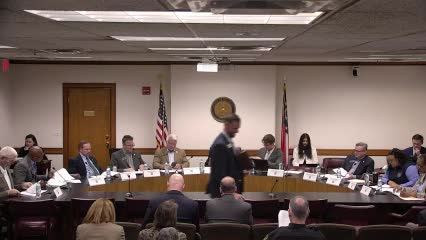
The Senate Public Safety Committee advanced a committee substitute of House Bill 61, the "Georgia Anti-Squatting Act of 02/2025," adopting amendments that add magistrate-court jurisdiction, innkeeper protections, and criminal and civil remedies for unlawful squatting.
The Senate Public Safety Committee voted to advance a committee substitute for House Bill 61, titled the "Georgia Anti-Squatting Act of 02/2025," after extended debate and two adopted amendments. Representative Seabaugh, the bill's author, presented the substitute and answered committee questions; the committee adopted the measure and voted to send it forward.
Representative Seabaugh said the substitute aims to "enable swift and lawful removal of squatters, protect property rights, and deter fraudulent occupancy," and summarized key provisions that the substitute adds. The bill grants magistrate courts jurisdiction over unlawful-squatting cases, adds unlawful squatting to magistrate-court misdemeanor trials with countywide jurisdiction, defines unlawful squatting and requires mandatory restitution to property owners under Code section 16-7-21.1, and clarifies innkeeper guest-versus-tenant status under Code section 43-21-3.2.
The substitute allows innkeepers to remove overnight overstaying guests as trespassers through law enforcement when supported by an affidavit and permits landlords to use off-duty certified officers to execute writs of possession when sheriff response is delayed for safety reasons. It also establishes a process in a new Code section 44-11-34 for verified complaint submission and immediate squatter removal, creates felony penalties for fraudulent leases or documents (stated in committee as a one- to five-year mandatory prison term), grants immunity to law enforcement and owners acting in good faith, and provides civil remedies for wrongful removal.
Committee discussion focused on the boundary between a squatter and a holdover tenant, and on due-process protections for extended-stay guests who may have paid in the past or who believe they paid. Senator Jackson raised concerns that the affidavit process could lead to immediate removals of families who have lived in extended-stay lodging for months and sought more procedural safeguards for such residents.
Legislative Counsel Kate Alexander advised a wording change to remove the phrase "or former" from two affidavit-related lines, limiting the exclusion in the affidavit to "not current tenants." The committee adopted that amendment unanimously. Senator Robertson offered a second amendment deleting language that raised sheriff liability concerns; the committee adopted that amendment unanimously as well. The committee's final vote was recorded by the chair as five in favor and two opposed; the chair named Senator Still as the senator who will carry the bill in the Senate.
Supporters said the bill closes loopholes remaining after enactment of House Bill 1017 last year. Representative Seabaugh said, "With House Bill 61, we will have one of the strongest anti-squatting laws in the nation to protect honest Georgians from property theft." Opponents and some committee members urged additional protections for residents of extended-stay lodging and stressed the need for clear distinctions between late-paying guests and intentional squatters.
The committee advanced the bill with recorded amendments; further refinements and formal votes may occur in subsequent Senate proceedings.