Get Full Government Meeting Transcripts, Videos, & Alerts Forever!
Get email alerts on the Criminal Justice Public Health topic
No spam. Unsubscribe anytime.
Speakers urge council to reconsider ban on licensed marijuana dispensaries and allow regulated stores
Summary
Two public commenters asked Mayfield Heights City Council to reconsider a local prohibition on licensed marijuana dispensaries, arguing state-level rules will allow a small number of compliant locations and that licensed dispensaries would supply tested products and tax revenue.
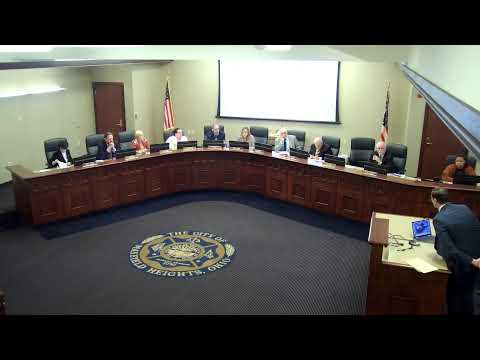
Two members of the public used the March 24 meeting's public-comment period to ask Mayfield Heights City Council to reconsider the city's local prohibition on licensed marijuana dispensaries and to allow a licensed, state-regulated retail outlet in the city.
Scott Halloran said he had secured a potential site that meets the state's 500-foot separation rules from schools, parks, playgrounds, libraries and churches. He argued illicit THC products are already sold at local stores and called for a licensed, heavily regulated dispensary that would provide tested product and local tax revenue. "The industry is here to stay in Ohio and we are here to give the citizens clean, tested, regulated product that they want and that they're going to get somewhere," Halloran said.
Caitlin Frederick, who identified herself as a lab manager who has worked in Ohio's marijuana industry since 2019, told council she oversees internal quality control testing in licensed dispensaries and said licensed products are tested for potency and contaminants (pesticides, heavy metals, residual solvents, mycotoxins and microbes). "Virtually none of the products...currently being sold at vape shops, head shops, and gas stations in Mayfield Heights are tested by any labs for these safety assays," she said, and argued a licensed dispensary would reduce unregulated sales and improve consumer safety.
Halloran cited local election results, saying 66% of Mayfield Heights voters supported Issue 2 (the statewide measure referenced in his remarks), and he predicted meaningful tax revenue for a host city when state rules finalize.
Council did not take action on these comments during the meeting; both speakers asked for a committee or hearing to revisit the city's prohibition and said they could provide additional materials to council. Handouts were offered and accepted for the record.