Committee weighs bills to streamline community scheduling, improve access and expand residential mental health care
Loading...
Summary
Senators and witnesses discussed bipartisan bills to improve veterans' access to care by upgrading scheduling systems, codifying community‑care access standards and protecting residential mental health programs.
Senators and witnesses at the Senate Veterans' Affairs hearing discussed bipartisan bills aimed at improving veterans' access to care in both VA facilities and the private community — with particular attention to scheduling systems and residential mental health programs.
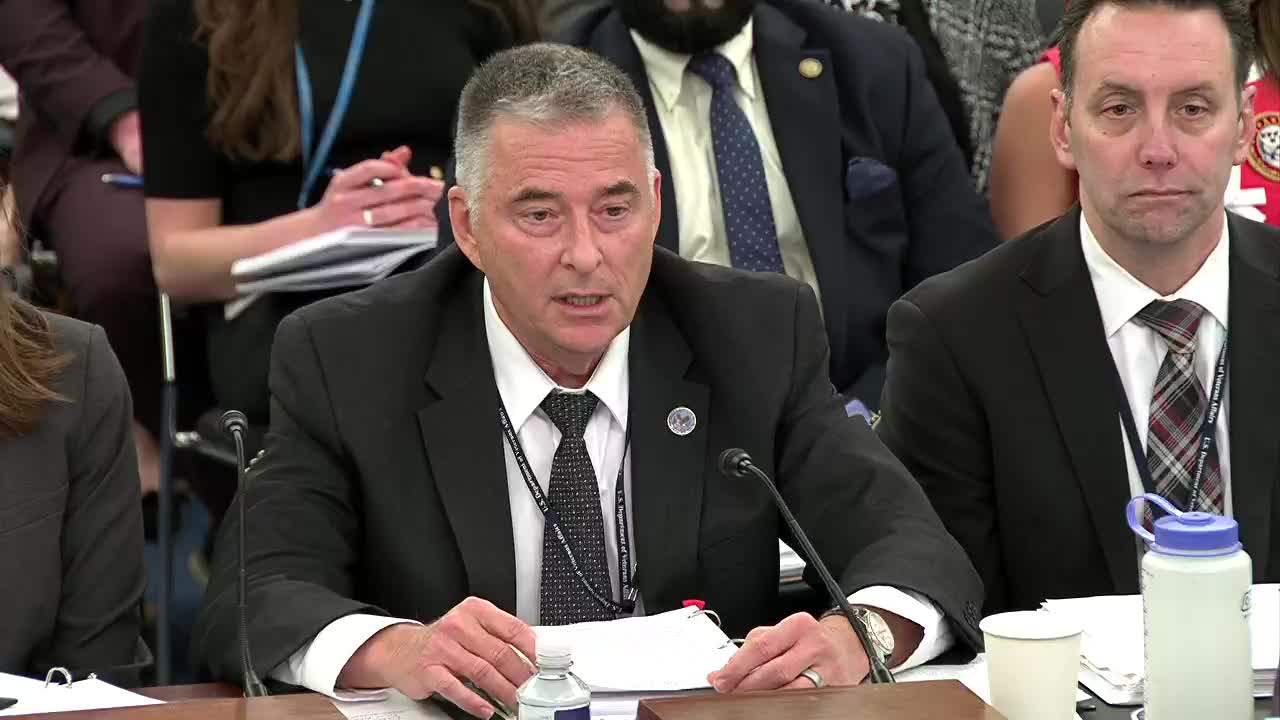
In testimony, Mark Engelbaum of the Department of Veterans Affairs said the VA "strongly supports the Veterans Assuring Critical Care Expansions to Support Service Members Act of 2025 or the Access Act as it is known," subject to amendments and appropriations, and that the department is willing to work with the committee to refine technical language. Engelbaum also said the department "appreciates the committee's interest and focus on helping improve VA scheduling systems."
Senators and witnesses emphasized two main benefits: faster scheduling for community care and clearer statutory access standards so veterans understand their options under the Mission Act. Al Montoya, Deputy Chief Operating Officer of VHA, described external provider scheduling (EPS) as a tool that can speed community scheduling: "Without external provider scheduling, it takes roughly 30 minutes for a veteran to get scheduled in the community. Whereas with EPS, it's actually about 7 minutes for that to happen."
Veteran service organizations including the American Legion and Veterans of Foreign Wars supported codifying minimum access standards to reduce local inconsistency. Patrick Murray of the VFW told the committee the VFW "fully agrees the Secretary of Veteran Affairs should have the ability to remove bad employees," but warned against arbitrary cuts that would undercut VA direct care. Murray and other witnesses urged the committee to fund improvements to both community care and VA direct care so the community network does not become a one‑way replacement for an underfunded VA system.
On residential mental health and addiction treatment programs (RRTPs), witnesses said these services can be life‑saving and should be treated as a distinct category in access rules because they are often located away from population centers "by design" to support recovery. Veteran accounts included instances in which veterans seeking RRTP placements were referred to inappropriate programs or denied because the facility was not in a particular third‑party administrator's network. The VFW and other witnesses said codified access standards and better coordination would reduce denials and improve outcomes.
The VA cautioned that newly authorized commissions or data requests should not inadvertently impede the department's ability to respond to urgent care needs. Engelbaum used the department's quadrennial review as an example of a non‑disruptive review process but asked the committee and stakeholders to align new oversight mechanisms to avoid redundancy.
Next steps: VA witnesses asked to work with the committee on technical fixes. Senators asked the VA to provide more operational detail, including how EPS and VA internal scheduling reforms would interoperate and what safeguards would preserve inpatient and residential care capacity while expanding community options.