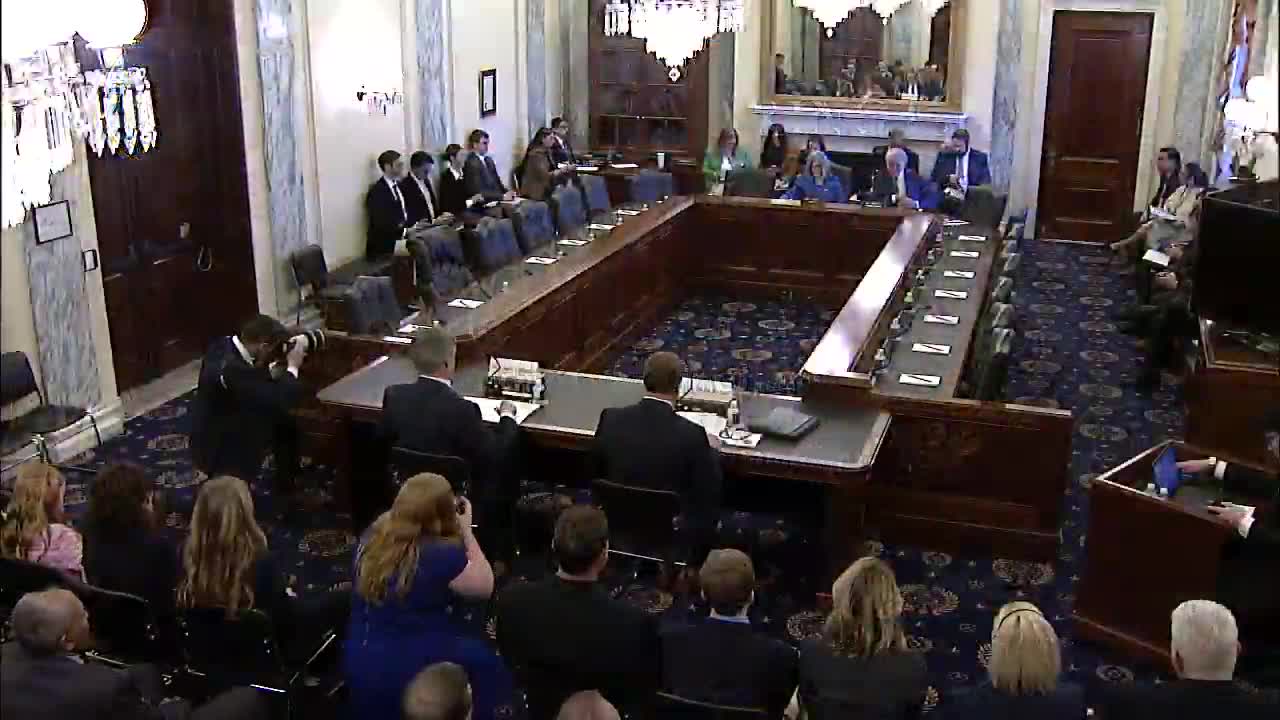
Senate Small Business Committee questions Trump nominees on SBA fraud, disaster loans and advocacy independence

2759949 · March 12, 2025

Get AI-powered insights, summaries, and transcripts

Subscribe
AI-Generated Content: All content on this page was generated by AI to highlight key points from the meeting. For complete details and context, we recommend watching the full video. so we can fix them.

Summary

The Senate Committee on Small Business and Entrepreneurship convened a March 12 hearing to consider President Trump’s nominations of William “Bill” Briggs to be deputy administrator of the Small Business Administration and Dr. Casey Mulligan to be chief counsel for the SBA Office of Advocacy.

The Senate Committee on Small Business and Entrepreneurship convened a March 12 hearing to consider President Trump’s nominations of William “Bill” Briggs to be deputy administrator of the Small Business Administration and Dr. Casey Mulligan to be chief counsel for the SBA Office of Advocacy.

The hearing focused on three recurring themes: fraud and program integrity in COVID-era SBA lending programs, recent shortfalls and customer-service problems in the disaster loan program, and the statutory independence of the Office of Advocacy from other executive-branch offices. Chair Joni Ernst opened the hearing and administered the oath to both nominees; the committee left the record open for two days for questions for the record and two weeks for additional statements and letters.

Briggs, the nominee for deputy administrator and currently director of regulatory and federal advocacy for the Independent Bankers Association of Texas, described prior SBA service overseeing the Office of Capital Access during the first Trump administration and said he would prioritize the agency’s “core missions” of access to capital, contracting, counseling and disaster response. He told the committee he would continue efforts to “crack down on fraud” in pandemic-era programs and pledged to work with SBA leadership to bring the 7(a) program back to a neutral subsidy position so taxpayers are not bearing ongoing losses. “I will continue to focus on cracking down on fraud in the current programs and have a zero-tolerance approach to fraud going forward,” Briggs said.

Senators repeatedly pressed Briggs about fraud levels in the Paycheck Protection Program (PPP) and the Economic Injury Disaster Loan (EIDL) program. Chair Ernst asked whether Briggs would ensure Congress is informed about changes to the disaster program and any potential shortfalls; Briggs answered that he would keep the committee informed and work with SBA’s CFO and the Office of Capital Access to prevent future shortfalls. Senators also raised reports of inconsistent customer service by disaster-field staff in affected communities; Briggs pointed to prior field-alignment work he led and said consistent customer service would be a focus if confirmed.

Ranking Member Edward J. Markey used his opening statement to criticize what he described as staffing cuts and office closures under the current administration and challenged both nominees about the influence of political actors inside SBA. Markey said he considered it premature to proceed without fuller briefings on internal actions he referenced; he also criticized the administration’s broader regulatory agenda. In his exchange with Dr. Mulligan, Markey pressed whether Mulligan would preserve the Office of Advocacy’s statutory independence and resist instruction from other executive offices. Mulligan replied, “I will abide by the statutes related to the office,” and said reports from the office are to be submitted to Congress and the president per statute.

Mulligan, an economist and professor at the University of Chicago and the nominee for chief counsel for advocacy, emphasized outreach and economic measurement as central duties of the Office of Advocacy. He endorsed the Prove It Act — a bill the chair said she has reintroduced — and repeatedly committed to evaluating both direct and indirect costs on small businesses when agencies promulgate rules. “I commit to do that,” Mulligan said when asked whether he would properly evaluate agency rulemaking for both direct and indirect impacts on small businesses.

The committee placed into the record letters of support for both nominees by unanimous consent; organizations listed by the chair included the National Restaurant Association, Independent Community Bankers of America, National Small Business Association, International Franchise Association, Independent Bankers Association of Texas and the U.S. Black Chambers, among others. The chair announced the record would remain open until 5 p.m. Friday, March 14 for members to submit written questions and two weeks for additional materials; nominees were asked to respond to questions for the record before their nominations advance out of committee.

No vote occurred at the hearing. The committee adjourned after the concluding remarks and the administrative deadlines were set.