Get Full Government Meeting Transcripts, Videos, & Alerts Forever!
Get email alerts on the Initiative Petition Reform topic
No spam. Unsubscribe anytime.
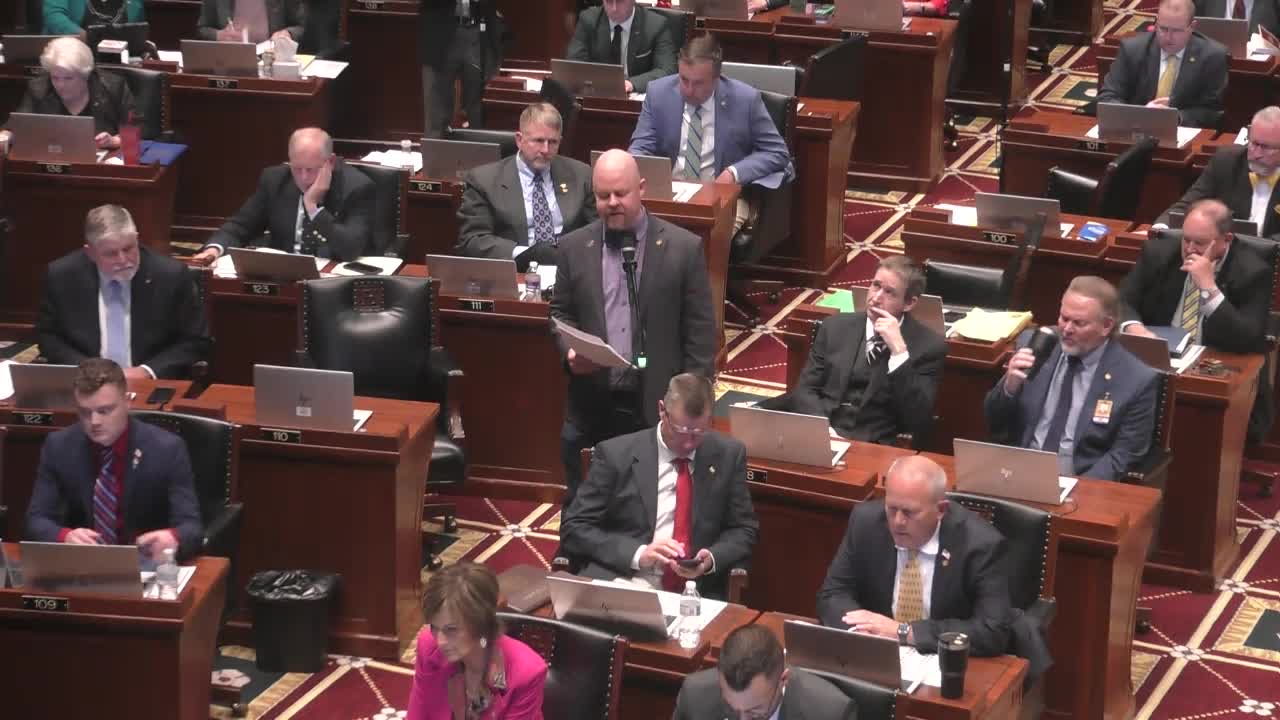
House adopts changes to initiative-petition rules; votes narrow circulator standards and timing
Summary
The Missouri House adopted a committee substitute for House Bills 575 and 551 on March 19 that changes initiative-petition procedures, including limits on per-signature pay for circulators, residency/registration thresholds, and earlier sufficiency determinations.
The Missouri House on March 19 adopted a House Committee Substitute that combines House Bills 575 and 551 and revises rules for initiative and referendum petitions, including how circulators are qualified and paid, who may challenge petitions in court and when sufficiency is determined.
The bill sponsor, the Gentleman from Franklin, a representative, said the measure standardizes the process so the Secretary of State’s office and courts can process petitions consistently and aligns circulator residency requirements with a cited Eighth Circuit precedent. He said the substitute also prohibits paying petition circulators on a per-signature basis and moves key sufficiency determinations earlier in the timeline so circulators and sponsors know sooner whether a petition will meet ballot requirements.
The House debated two floor amendments aimed at greater transparency and clearer warnings for circulators. The Gentleman from Clay offered an amendment to add plain-language qualifications to the circulator affidavit so signers would explicitly acknowledge the new statutory requirements; Clay argued the change would reduce future litigation. The sponsor opposed the amendment, saying the affidavit is already busy and that experienced circulators should know statutory duties. The Clay amendment failed when the House voted it down by voice (no recorded roll call).
A second amendment from the Gentleman from Saint Louis proposed a statutory requirement that local election authorities provide public notice of changes affecting voters (the amendment sponsor emphasized transparency). The bill sponsor and other floor leaders objected on logistics and cost grounds; the amendment failed on the floor.
Supporters said the bill brings Missouri’s initiative process into alignment with court precedent and curbs the practice of per-signature pay, which they said has generated controversy. Opponents argued some provisions—most notably a change to require challengers to be Missouri registered voters and tightened circulator residency terms—raise constitutional concerns and could limit access to judicial relief. The Gentleman from Clay and other critics repeatedly warned the “registered voter” standing requirement is an unusual restriction and could invite litigation.
Procedurally, the House twice approved a motion to close debate and proceed; the previous-question motion on the substitute passed on a roll-call vote of 100 ayes to 44 nays. The House then adopted the committee substitute by voice vote.
Key provisions adopted in the committee substitute include (as described on the floor): a prohibition on per-signature payment to circulators, a residency/registration threshold for circulators and challengers (text requires individuals to meet certain in-state residency periods and in some challenge contexts to be Missouri registered voters), and timeline adjustments to resolve sufficiency questions earlier in the process. The transcript indicates the substitute keeps payment to circulators permissible in the form of compensation but not on a per-signature basis.
Lawmakers debated whether the changes would reduce fraud and confusion or whether they would impose burdens on grassroots, volunteer efforts to gather signatures. The sponsor said the changes would make the process “cleaner” and more efficient; critics argued that the changes risk constitutional challenges and may shift costs to county election authorities.
Ending: The House adopted the committee substitute and perfected the bill for printing. Two transparency-focused floor amendments aimed at expanding affidavit language and imposing explicit public-notice burdens on election authorities were rejected by the House.