Get Full Government Meeting Transcripts, Videos, & Alerts Forever!
Get email alerts on the Blight Enforcement And Dah Budget topic
No spam. Unsubscribe anytime.
Detroit reviews Department of Appeals and Hearings budget, online services and blight enforcement changes
Summary
Julianne Pastula, director of the Department of Appeals and Hearings, told the City Council that blight-ticket volumes and collections rose in fiscal 2024 and outlined office consolidation, online filing, plans to extend the collections contract and a goal to reinstate community blight courts.
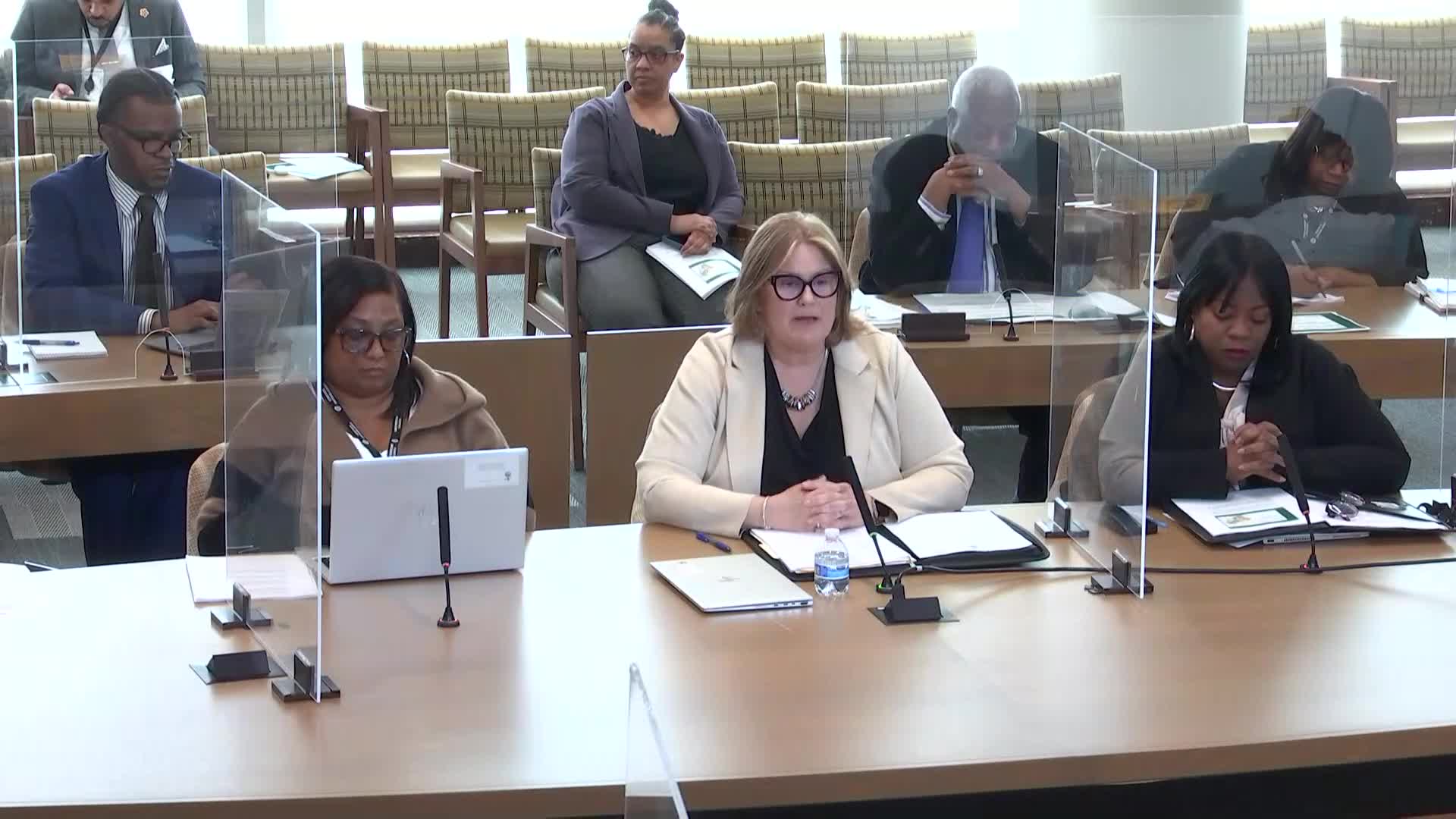
Julianne Pastula, director of the Department of Appeals and Hearings, told the Detroit City Council during a budget hearing that the department saw a sharp increase in blight-ticket activity and higher collections in fiscal year 2024 while continuing operational changes intended to increase public engagement and compliance.
The Department of Appeals and Hearings (DAH) reported that the number of tickets issued rose by 28,000 over the previous fiscal year and adjudicated tickets increased by 8,000. DAH said total judgments for fiscal 2024 totaled $18,400,000 and the department collected $6,600,000, an increase of $1,900,000 over fiscal 2023, for an overall collection rate of 36%.
DAH presented its fiscal-year budget figures to the council: current expenditures of $1,900,000 and identified revenues of $6,740,000, and a proposed fiscal 2026 budget that would raise expenditures by $135,000 and revenues by $1,400,000. Pastula said the department’s overall funding increase is 7%, composed of a 4% general wage/COLA increase and a 3% operational increase.
“The DH is an independent hearings tribunal that is committed to delivering impartial, timely, and efficient services in a fair manner,” Pastula said. She described DAH as composed of two bureaus: Blight Court, which adjudicates blight violations and determines compliance with city code and state law, and the Administrative Appeals Bureau, which handles appeals of certain city decisions such as business-license determinations or emergency demolition designations.
Pastula outlined several public-facing changes completed this year: consolidation of customer service to Suite 1004 at the Coleman A. Young Municipal Center, online filing for motions and blight-clearance applications, a new blight-property-history report for prospective buyers, removal of a notary requirement for motions to set aside, and plans to request an extension of the collections contract. She said a requisition has been issued for a new court-management software solution and that DAH will proceed through procurement.
On process and enforcement, Pastula said DAH uses a five-step blight-court workflow: ticket issuance with a hearing date; opportunity for city and respondent testimony; a hearing-officer determination (for example, responsible or not responsible); appeal of responsible judgments to the Wayne County Third Circuit Court; and enforcement steps after unpaid judgments. She said unpaid judgments are transferred to DAH’s collection vendor after judgments remain unpaid for 30 days and after the department re-mails a reminder notice.
Joylynn Hunt, manager of the hearings division, described how hearing officers consider individual circumstances in adjudications. “We take all of that testimony into account,” Hunt said, explaining officers assess whether a situation is a one-time occurrence or a recurring problem, whether the respondent sought help or remediation, and what resources or assistance city inspectors or other departments may have provided.
Council members pressed DAH on how the department accounts for vulnerable residents and on notice and language access. Pro Tem Tate asked how hearing officers consider “the human factor” — for example, elderly residents on fixed incomes who may not be responsible for dumped trash. Pastula and Hunt said earlier contact with ticket-issuing agencies gives residents and the city more options and that DAH has increased outreach and education to encourage attendance at hearings.
On notifications, Pastula said blight violation notices are mailed by the ticket-issuing agency and posted on the property. “Under state law, the DH hearing cannot be sent within 14 days,” she said, and reported the department’s average time from ticket to hearing fell from 37 days in 2023 to 23 days last fiscal year. DAH said its judgment reminders are currently not translated into multiple languages, but staff work with the city’s language-access resources (CREO) and can provide in-person assistance at customer-service locations.
Council members also asked about liens, garnishments and the relationship between DAH judgments and property sales or auctions. Pastula said DAH does not seize property and that the department’s active enforcement tools include filing garnishments and, beginning in the upcoming fiscal year, filing liens (DAH previously filed liens in the mid-2010s). She said garnishments go through the Wayne County Third Circuit Court and that once files move to collections the collections vendor handles further enforcement and public inquiries.
DAH said it has no current vacancies, plans to add one project-manager position in fiscal 2026, and reported a $150,000 personnel expenditure increase over the prior fiscal year. The department also said it plans to reinstate community blight courts rotating through council districts — hearings held in recreation centers or other neighborhood locations — and listed community outreach and a new docket-management system as top priorities for the coming year.
Council members said they will submit additional questions in writing. Pastula said DAH will provide written answers to the council’s budget questions and invited further offline conversations on detailed issues such as title-company escrow practices and Zoom hearing logistics.
The public-facing improvements, the planned software procurement, and DAH’s outreach goals are intended to increase attendance at hearings and earlier engagement by property owners, DAH said; no formal votes or ordinance actions were taken during this presentation.