Get Full Government Meeting Transcripts, Videos, & Alerts Forever!
Get email alerts on the Civil Rights Budget topic
No spam. Unsubscribe anytime.
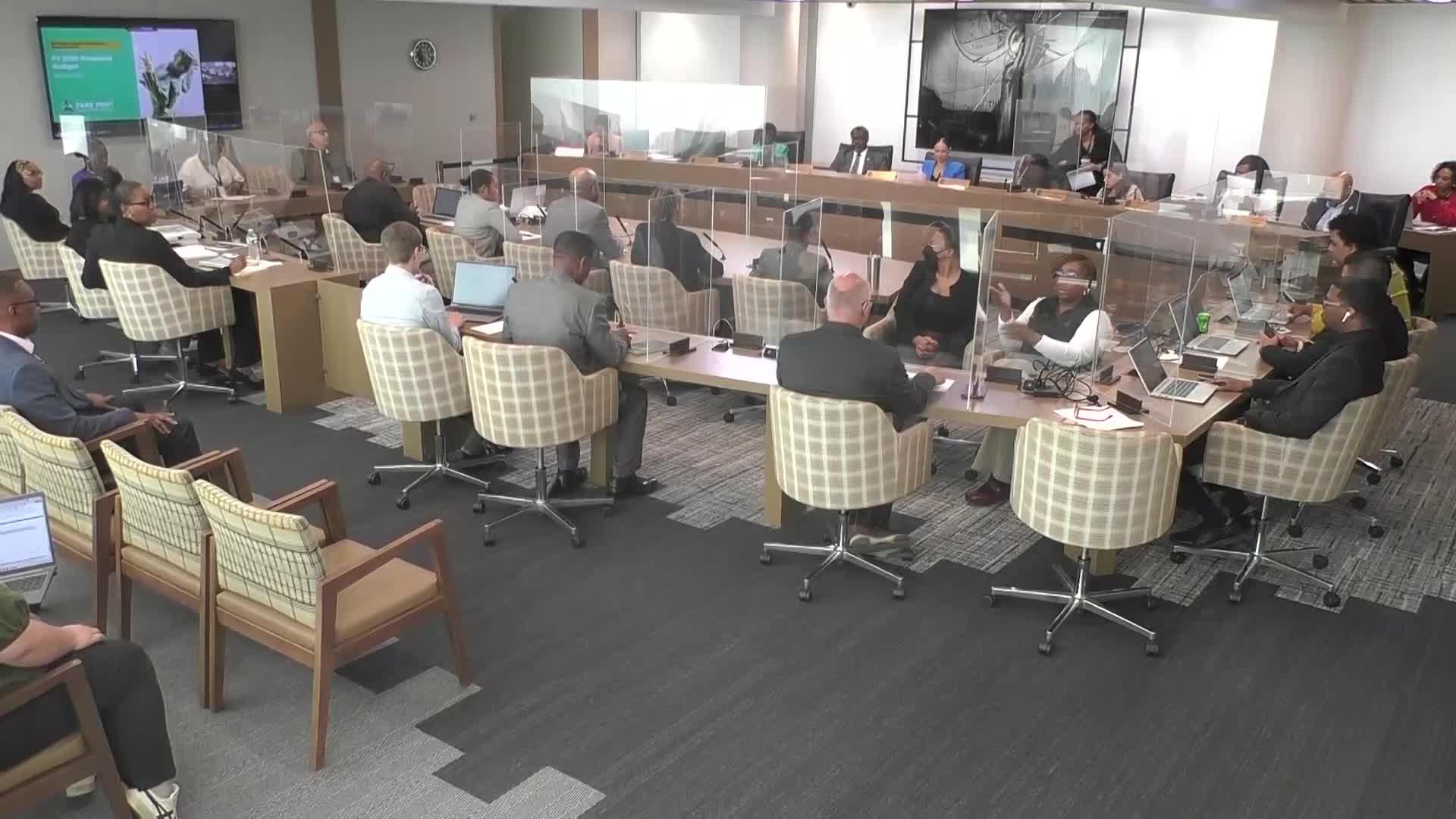
Detroit council presses Civil Rights department on unused disparity-study funds, human-trafficking signs and cannabis revenue allocation
Summary
Anthony Zander, director of the Department of Civil Rights, Inclusion and Opportunity, told the Detroit City Council that CREO27s FY26 request is $7.4 million, down about $1 million from FY25 because of a reduction in state cannabis funding.
Anthony Zander, director of the Department of Civil Rights, Inclusion and Opportunity, told the Detroit City Council that CREO27s FY2026 request is lower than FY2025 mainly because of a roughly $1 million reduction in state funding for the city27s cannabis work.
The council focused on several programmatic issues during the budget presentation, pressing CREO on an unspent $350,000 disparity-study allocation approved in 2023, the absence of human-trafficking placards required by a recent ordinance, staffing for language-access and veterans services, and the department27s handling of the city27s cannabis equity and compliance programs.
Why it matters: Council members said the unspent disparity-study money and the missing placards affect contracting equity and public safety outreach. Several members moved to place specific budget items and program decisions in executive session for further review, and one motion to reassign most cannabis revenue sharing to CREO programming and to seed a legacy fund passed without objection.
Zander opened with an overview of CREO27s structure and FY25 adopted versus FY26 requested totals, saying the department27s FY26 request was $7.4 million compared with an $8.4 million adopted total for FY25, and attributing the $1 million difference to changes in state cannabis funding.
Council Member Callaway pressed Zander about a $350,000 allocation the council authorized in 2023 for a disparity study that CREO never started. "We've talked about it a couple times since then, and I just thought I'd wait until the budget just in case I have to remove $350,000 from your budget, since you didn't use it," Callaway said. Zander said the funds reverted to the general fund because the department and the council needed to clarify the study's scope before the money could be committed.
After discussion, Callaway moved to place the $350,000 disparity-study item into executive session for further review; the motion carried with no objections. Council materials provided in the meeting show the allocation was a one-time 2023 item and, per Zander, unspent funds returned to the general fund when not encumbered.
The council also pressed CREO for a firm timeline to print and distribute hotel and motel placards required by a human-trafficking ordinance the body passed. Callaway said the signage approved by ordinance had not appeared in establishments and raised concerns about the correct color scheme and placement. Zander said the ordinance does not specify a single responsible department for design and placement and that CREO had approved a sign design and was coordinating with law, Buildings & Safety Engineering, and the Detroit Police Department to incorporate placard checks into inspections and outreach. "We do not need any additional resources, and I will let you know within the next 24 to 48 hours when all those placards will be placed in the proper establishments," Zander said.
CREO highlighted program metrics and initiatives. Kim James, director of the Office of Cannabis Affairs, said the city has 58 retail licenses with roughly half majority-owned by Detroiters and many with at least one Black owner. James said 100 Detroiters were hired by licensees in jobs paying $15 or more, community-investment donations totaled about $234,000 to 36 nonprofits, and social-equity contributions totaled $117,000. James also described efforts to help licensees with predatory partnership issues and to respond to illegal sales and break-ins.
Multiple council members moved to add CREO subtopics to executive session: veterans affairs staffing and two new positions (a community-outreach person and a technical-support person); the Office of Immigrant Affairs budget; the office of returning citizens; an additional $200,000 for a language-access FTE; and an extra $400,000 for the Office of Disability Affairs. Each motion was announced and carried with no objections.
On cannabis revenue, a council member moved to reassign 96% of cannabis revenue-sharing from adult marijuana sales to CREO27s cannabis programming and to allocate $1 million to a Homegrown Legacy Fund, leaving 4% to substance-abuse outreach under the health department. Council members approved the motion with no objections.
Council members also questioned CREO27s oversight of compliance-monitoring funds and the workforce-development fund that a portion of developers' compliance fees feed into. Zander said CREO requires quarterly reports from the Detroit Employment Solutions Corporation (DESC) and that CREO's incentive-compliance and construction-outreach teams liaise with projects and DESC to track hiring and training outcomes. CREO presented figures showing Detroit-resident participation on monitored construction projects increasing year-over-year and reported post-construction job percentages of about 22% in 2022 and 33% in 2023, with 2024 still being reported.
Several council members urged earlier and broader workforce pipelines to reach the city's 51% Detroit-worker hiring goal under Executive Order 2022 (referred to during the hearing). Members recommended earlier outreach to students and stronger apprenticeship links with Detroit Public Schools Community District and school-to-work programs.
In closing, Zander said CREO would provide follow-up reports and answers to written questions within 24 to 48 hours on several outstanding items, including the status of the disparity study funds, language-access call logs and complaints, and a breakdown of proposed FY26 cannabis workforce and compliance funding.
The council moved to executive session on multiple CREO-related items for further deliberation; the public hearing portion of the meeting ended after public comments began.