Get Full Government Meeting Transcripts, Videos, & Alerts Forever!
Get email alerts on the Accessibility Language Access Budget topic
No spam. Unsubscribe anytime.
Residents, disability advocates urge Detroit City Council to fund language access and Office of Disability Affairs
Summary
Public commenters urged the council to fully fund the Office of Disability Affairs at $1,400,000, expand language-access services including ASL interpreters, and allocate money for senior-home repairs and accessibility programs.
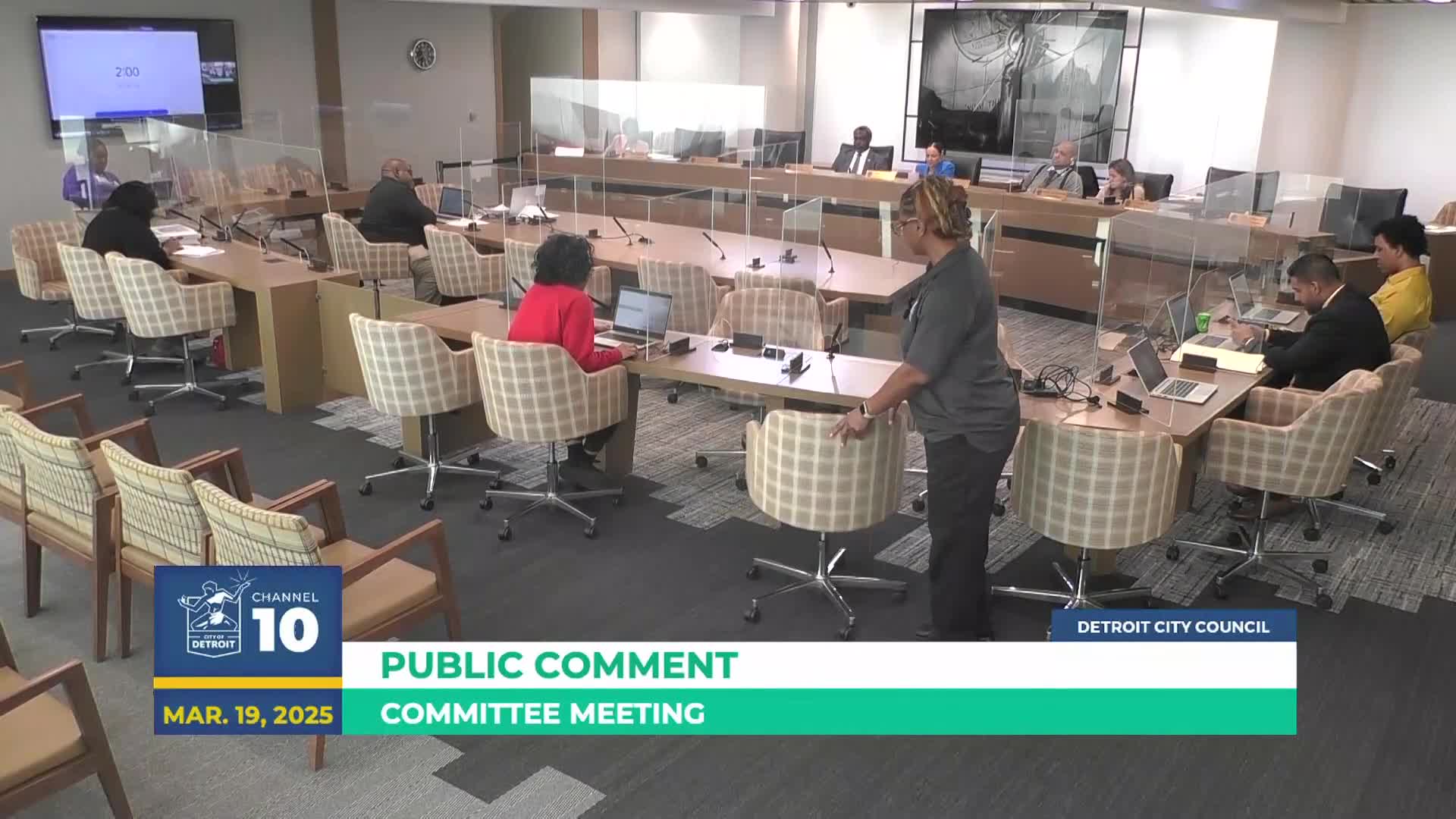
Residents and advocates urged the Detroit City Council during the public-comment period to allocate more money for language access services and to fully fund the city’s Office of Disability Affairs (ODA), saying current staffing and translation resources fall short of residents’ needs.
Casey Peller, a resident of District 4 and policy manager at Detroit Disability Power, told the council: “we definitely need [ASL interpreters] here,” and thanked “especially council member Dural for moving to fully fund the Office of Disability Affairs at 1,400,000.0.” Peller said the ODA had grown from one staff position in 2021 to five today but still needs resources and positions to carry out citywide work on accessible housing and communications.
The requests came during budget hearings and public comment, where several speakers argued that language and accessibility services are essential to equitable access to city services. Ruby Robinson, an attorney at the Michigan Immigrant Rights Center, said the city’s language access program, established in 2016, remains underused by some departments: “These services are critical to ensure that residents with limited English proficiency have meaningful access to essential city services,” she said, and urged the council to fund training so city employees use those services rather than relying on family members or federal officials.
Betty A. Varner, president of the DeSoto Ellsworth Black Association, asked the council to “allocate monies for the senior citizens home repair program and the Detroit accessibility program” and to set aside funds to help community groups pay state fees when applying for 501(c)(3) status.
Supporters said expanded funding would let the ODA act as a coordination hub across departments such as the police department and the Detroit Department of Transportation (DDOT) and provide the outreach, translation and project resources needed to prevent displacement of disabled residents and to increase accessible housing.
Commenters also pressed the council for American Sign Language interpretation at hearings. Jennifer Daniels, a Detroit resident and organizational designer, said: “Detroit is a city that is a welcoming, inclusive, and universally accessible city. It should and it should be that,” and framed full funding as part of systemwide coordination across city departments.
The public comment record in the transcript does not record a final council vote on the ODA funding during this session. A motion to adjourn was made and the meeting was closed; no budget action or vote is recorded in the provided excerpt.