Get Full Government Meeting Transcripts, Videos, & Alerts Forever!
Get email alerts on the Public Transit topic
No spam. Unsubscribe anytime.
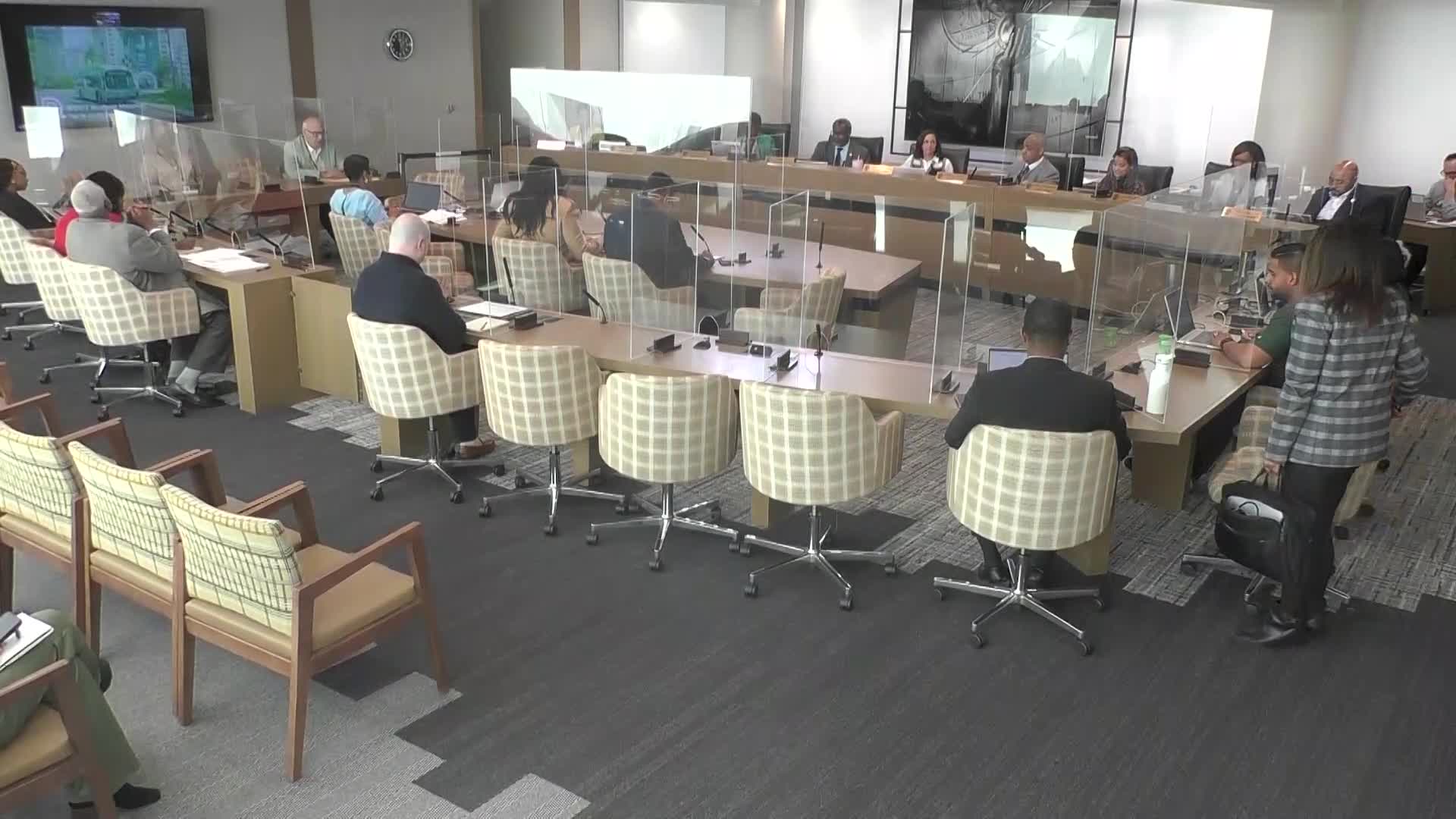
Detroit council hears DDOT 2026 budget: $160 million Coolidge terminal, service growth and dozens of council requests approved
Summary
The Detroit Department of Transportation outlined its top priorities and capital projects during a fiscal 2026 budget hearing, and council members approved a slate of requests — including analyses, pilot ideas and funding asks — to be added to closing actions or executive session.
The Detroit Department of Transportation on Thursday presented its fiscal 2026 priorities and capital program to Detroit City Council, outlining plans to increase drivers and buses, complete a $160 million Coolidge Terminal replacement and advance service and paratransit upgrades as the city’s ridership grows.
“Our priorities are frequent and reliable service, a safe system and a positive customer experience,” Robert Kramer, director of the Detroit Department of Transportation, told the council. “We’ve increased our field positions from about 370 to over 500 in the last 12 months.”
Kramer said DDOT aims to expand morning and afternoon peak “pullout” — buses required on the road at peak times — from about 179 buses in January 2025 with planned increases in April and later into fiscal 2026. He described the Coolidge Terminal replacement as a major operational investment, financed by federal, state and local funds, and nearing the 50% construction mark.
Why it matters
Council members pressed DDOT for more detail on how the agency will translate the budget into improved on-time performance, more shelters and accessible stops, and costs for implementing its multi-year “DDOT Reimagine” plan and a low-income fare. Those follow-ups were added to the council’s closing business or executive session for further analysis.
Most important details
- Ridership and staffing: DDOT reported about 1 million riders in January 2025 (a roughly 25–33% increase over January 2024) and said active transit equipment operators (TEOs, the agency’s bus drivers) rose from roughly 370 to more than 500 in the past year. Mechanics (GAM) rose from about 50 to nearly 80. Kramer said the agency plans to grow to roughly 690 TEOs and pullouts above pre-pandemic levels in 2026.
- Terminals and centers: The Coolidge Terminal project — described as nearly a $160,000,000 operational terminal replacing functions currently at Gilbert Terminal — is more than halfway complete. The Jason Hargrove Transit Center, completed last year, was highlighted as a passenger-facing success. DDOT also identified $3,000,000 in federal/state grants for a Rosa Parks Transit Center renovation, with design and community outreach planned this year and construction in 2026.
- Shelters and stops: DDOT plans two shelter phases: an initial 60 advertising-subsidized shelters (bench, solar lighting, USB port and ADA-compliant pads) with locations across districts, and a second phase of roughly 100 additional shelters through the end of calendar 2026. Council members asked for maps and additional equity checks after district-level disparities were raised during the hearing.
- Paratransit and technology: DDOT described its paratransit model using Ecolane dispatch software and five vendor providers. Weekly paratransit trips and on-time performance were reported as strong (on-time defined as pickup within a 30-minute window), and DDOT said it will roll out a same-day, grant-funded paratransit option (branded “d.Now”) in April or May. IVR (automated reminder/cancellation calls) and other technology upgrades are planned to reduce no-shows.
- Vehicles and electrification: DDOT currently operates four all-electric Proterra buses but said the city’s ability to fully evaluate their cold-weather performance is incomplete because of limited, intermittent operation and parts/support issues after the manufacturer’s bankruptcy. The agency plans to replace 45 oldest buses this year with diesel-electric hybrids and is pursuing grant funding for four additional battery-electric buses from New Flyer. Kramer described future procurements as contingent on federal programs and funding rules.
- Safety and customer experience: DDOT has created a safety function within the agency, tracks preventable crash rates against a goal of under 1 crash per 100,000 miles, holds weekly crash-review meetings and is piloting incentive and training programs (for example, a “bus rodeo” and driver recognition) to reduce preventable incidents. Complaints per 100,000 boardings have fallen from over 20 to roughly 8–10 in recent months.
Council actions and requests
Council members made and approved a series of requests, analyses and budget additions during and at the close of the hearing; in every case recorded on the transcript the motion was approved with no objection. Items added to closing business or executive session included: a full cost analysis of implementing the DDOT Reimagine plan and a low-income fare study; follow-up on student passes and free rides for election day; review of shelters and accessible stop landing pads; and a proposal to explore artificial-intelligence scheduling tools.
Several budget-related motions passed without objection: a $16,000,000 request to add funds to the DDOT budget; $2,000,000 to replace bus seats citywide; $4,500,000 to install safe, accessible benches and shelters at major stops; $350,000 for an in-house paratransit transition research study; and smaller allocations for district-specific shelter mapping and landing-pad accessibility work. Council members also moved to add study items such as a community services coordinator pilot and a senior-transit research report.
Direct quotes and context
- “Our priorities are frequent and reliable service, a safe system and a positive customer experience,” Robert Kramer said in his opening statement.
- Pro Tem Tate praised the progress: “It is very clear that a real improvement has been made,” he said, noting staffing and ridership gains.
- On electric buses: Kramer said, “We have four all-electric buses…Proterra went bankrupt. So we have four buses that are all electric, but…parts and support” have limited the agency’s ability to fully evaluate the technology in Detroit’s cold weather.
What the council asked DDOT to provide next
Council members requested written follow-ups and more detailed maps and metrics: a district-level breakdown of shelter locations and planned second-phase placements; fuller cost estimates for DDOT Reimagine; a written status on low-income fare work; documentation of any free-ride pilots for elections; and itemized reporting on service-change designs that will go to public hearings in April and June.
Ending
Kramer told the council the supplemental budget increase is intended to support continued quarterly service increases, more drivers and vehicle availability and ongoing capital upgrades. The council added the agency’s requested follow-ups and several spending items to closing actions and executive session, and then moved to the next budget hearing with the Port Authority.