Detroit Fire Department reports faster EMS response times, new equipment and plans for firehouse replacements
Loading...
Summary
Executive Fire Commissioner Chuck Sams told the Detroit City Council the department has reduced medical response times, expanded equipment and community programs, and will seek capital funding for station replacements; several items were added to executive session for further evaluation.
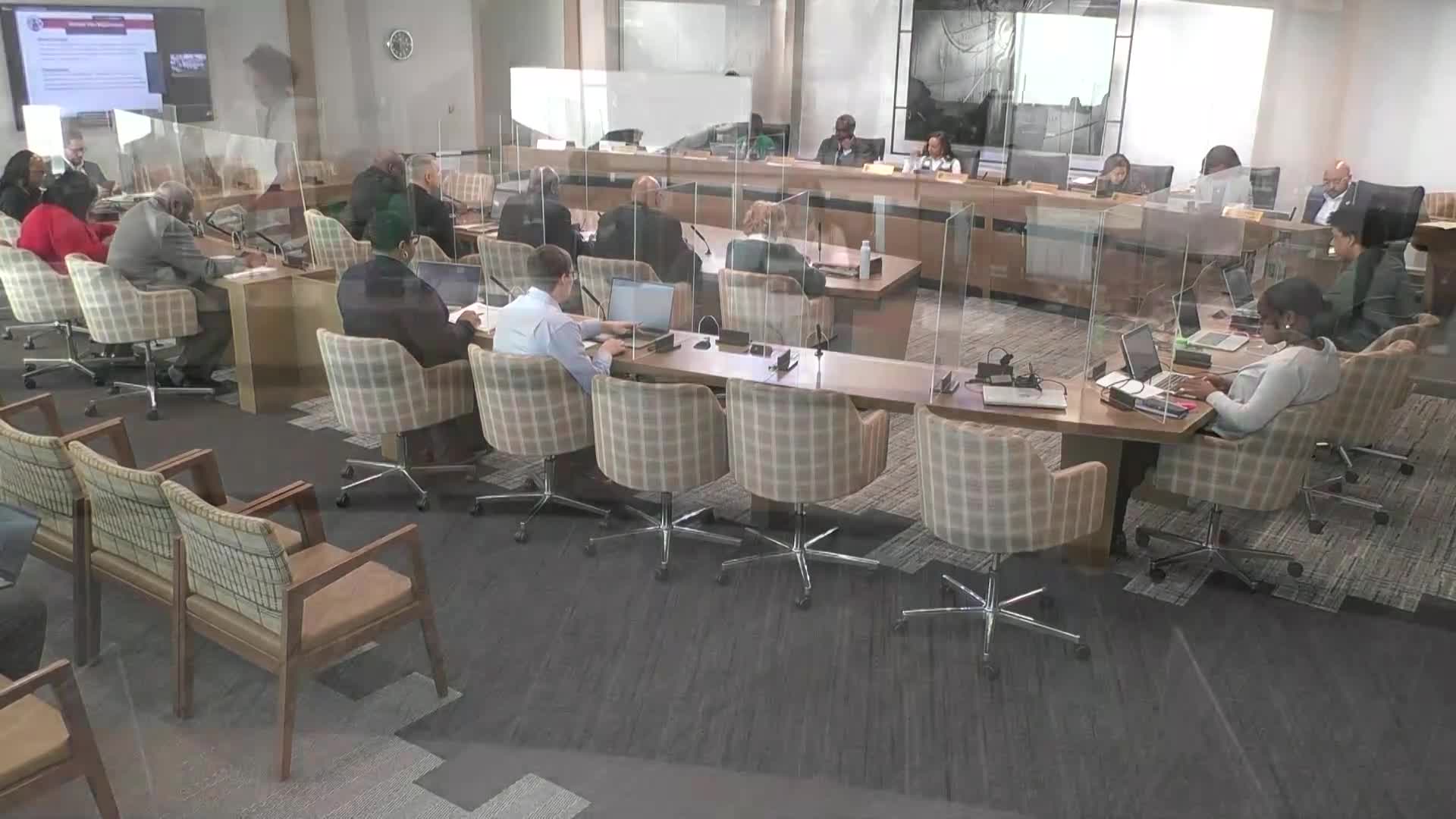
Executive Fire Commissioner Chuck Sams told the Detroit City Council that the Detroit Fire Department has cut average medical response times and increased daily ambulance capacity while rolling out new equipment and community programs.
The department reported an average of about 42 ambulances in service per day, said Sams, and has reduced the average reflex time from 8 minutes, 12 seconds in February 2022 to 7 minutes, 23 seconds in February 2024. "Because of those negotiations and conversations and discussions, we were able to get an increase over the last 2 fiscal years in amount of $25,000,000," Sams said, thanking the Budget Department for recent funding increases.
Sams outlined a suite of operational metrics and initiatives that city leaders said matter to residents: EMS answered roughly 450 medical calls daily and transported more than 300 patients a day, fire operations responded to nearly 200 fire-related runs a day, and structure fires in the most recent period were down about 20% compared with the earlier baseline. The department said it aims to increase Detroit Fire Department–staffed ambulances to 30 this year as academy classes graduate.
The presentation emphasized training and equipment. The department said it has trained more than 5,000 personnel in 583 sessions and that about 75% of members now hold an EMT license or higher. DFD reported the first in-house paramedic class since 1997 is underway. New equipment and systems listed included community AED placements (48 geolocated through the PulsePoint app), 14 grant-funded drones, 44 mechanical chest-compression devices, and upgraded 15-lead EKG monitors. DFD staff described Fire Rescue 1 as the department's learning-management system to track certifications.
Sams and deputies also described community programs: distribution and installation of more than 3,200 smoke detectors and 1,000 carbon-monoxide detectors, 217 fire-safety presentations reaching roughly 33,000 people, and 127 hands-only CPR sessions reaching about 3,200 residents. The department said the city is the largest community in the United States to receive a "heart-safe community" designation after meeting 13 required elements.
Councilmembers pressed DFD on capital needs, specific trends and policy options. Councilmember Coleman Young II asked about cross-training and vendor contracts; DFD staff said personnel hired after February 2021 are automatically cross-trained as firefighter EMTs and that the department will reassess the current private ambulance (referred to in the presentation as the "peppers" contract) this fall to determine whether more runs can be staffed by DFD personnel. "We're gonna assess that this fall, and to see how we can if and how we can phase them out and bring more fire department employees on to drive the ambulances," the commissioner said.
Councilmember Gabriel Santiago Romero asked about achieving an ISO class 1 rating; Sams said DFD currently sits at ISO class 2 and is "maybe 3 or 4 points away" from class 1, and that more vehicles and deployment changes plus station replacement are part of the capital plan. Sams said the department is preparing an analysis to replace about 20 firehouses over the next 10 years and will share capital requests with council.
Councilmembers also sought data and clarification. Members asked for more detailed breakdowns of electrical-fire and elevator-entrapment trends (the presentation listed about 470 elevator entrapments in a year and a district example that showed roughly 30% of certain incidents in one district attributable to careless cooking). DFD said the department is implementing a community-risk-reduction data tool to identify causes by neighborhood and expects a more precise breakdown within three to four months. On cancer presumption for firefighters, DFD said it is following the state's cancer-presumption law and is processing claims through workers' compensation accordingly.
On new and proposed policies, Sams described a draft "medical response ordinance" that would require special-event organizers first to offer event medical coverage to DFD before contracting with private vendors (if DFD has capacity). He also described ongoing pilots and procurement: the nurse-navigation/dispatch‑nurse service is in the bid phase with two finalists and planned site visits, and the department is testing autonomous-drone capability to dispatch aerial assets simultaneously with crews on certain calls.
Council action during the hearing was procedural: several councilmembers moved items into executive session for further discussion. Councilmember Coleman Young II moved to add an augmented-reality program for firefighter safety to executive session; the motion was added after no objections. Councilmember Leticia Johnson moved to add citywide fire-safety walks to executive session; that motion was added. The council's pro tem moved to place the entire DFD budget into executive session; that motion was added without objection. Councilmember [name recorded in transcript as Member Vincent] moved to add a proposal to expand CPR training for city employees to executive session; that too was added after no objections.
Sams closed by reiterating the department's near-term priorities: sustain improved response times, finalize equipment and vehicle deliveries (the department said 20–23 ambulances and about 10 fire engines are expected this year), complete the firehouse replacement analysis, and continue grant-seeking activity (the department reported SAFER and other grant applications and an updated grants estimate). Council members requested follow-up data on district-level fire causes, elevator entrapment "frequent flyers," the number and status of Knox Box installations, and the department's capital requests.
The council and DFD agreed to continue several of the issues in executive session and to return with more detailed cost analyses and district-level data at a future meeting.