Get Full Government Meeting Transcripts, Videos, & Alerts Forever!
Get email alerts on the Land Bank Subsidy Cut topic
No spam. Unsubscribe anytime.
Council questions $5.5 million cut to Detroit Land Bank subsidy; seeks executive session
Summary
Detroit City Council members pressed Land Bank leaders on a proposed $5.5 million reduction in the city subsidy, heard details on program and maintenance impacts, and approved motions to discuss parts of the Land Bank budget in executive session.
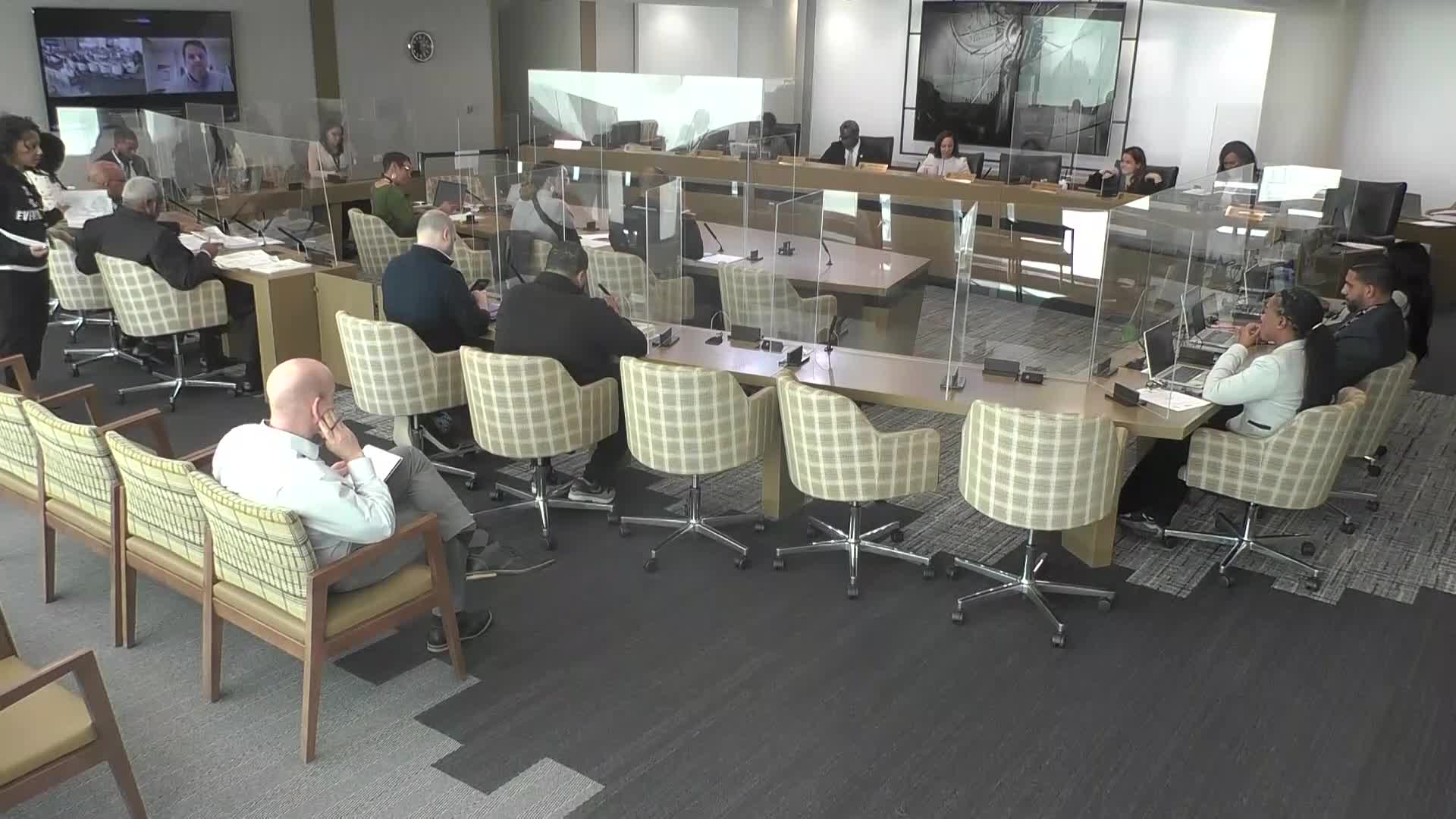
Detroit — Detroit City Council members pressed Detroit Land Bank Authority leaders on a proposed $5.5 million reduction to the city subsidy and voted to send several budget-related items to executive session, saying they needed more detail about service impacts and fund balances.
Tammy Daniels, chief executive officer of the Detroit Land Bank Authority, told the council that the proposed cut — which she described as roughly 25% of the Land Bank’s funding — would force the authority “to shift away from our current mission based programming and focus more on market based approach” to replace lost revenue. Daniels outlined immediate program areas she said would be hit, including maintenance, tree removal and compliance oversight.
The council’s concern centered on how the cut would affect neighborhood maintenance and other on-the-ground services. Donnie Johnson, deputy budget director for the City of Detroit, told the council the administration proposed the reduction because “the land bank is sitting on a very, very large surplus. Their undesignated fund balance, on their balance sheet is, over $30,000,000.” That figure was later clarified by City CFO Jay Rising, who said the Land Bank’s unrestricted fund balance at the end of 2024 was $52,000,000.
Why it matters: Council members repeatedly cited maintenance and nuisance-abatement service levels as their top constituent complaint. Daniels and other Land Bank staff warned the cut would reduce contracted maintenance and live customer-service capacity, and could require shifting to more market-rate sales instead of heavily subsidized side-lot and neighborhood-lot programs that prioritize Detroit residents.
Key details raised at the hearing
- Size and scope of the cut: Daniels said city subsidy reductions of about $5.5 million represent roughly 25% of the Land Bank’s funding and “will cause an elimination of $4,000,000 in maintenance services.” She said the Land Bank historically budgeted about $4.5 million annually for maintenance.
- Specific cost lines named by Land Bank staff: about $2,000,000 in contracted emergency maintenance that historically went to small Detroit-based minority contractors; roughly $450,000 for annual tree removal; and about $1,500,000 that had been passed through to the General Services Department (GSD) for lot maintenance, funded by a now-exhausted HHF grant tied to prior demolitions.
- Vacant-land and sales economics: Daniels said the Land Bank has sold more than 30,000 vacant lots since 2014 but earned just $3.8 million from those sales over roughly a decade. She said those subsidized sales transferred roughly $152,000,000 of land value to Detroit residents at the time of sale and that the current average market value per vacant lot is about $8,000. Daniels noted that the Land Bank’s subsidized vacant-land programs cost roughly $3.5 million a year to run while generating substantially less revenue.
- Compliance, customer service and caseloads: Daniels said compliance oversight costs about $2.5 million annually and that staff are actively monitoring more than 5,400 properties. The Land Bank reported nearly 80,000 customer interactions in 2024 (phone calls, office visits and community meetings) and said it receives thousands of calls per month. The Land Bank also said it provides discount programs that have totaled over $6 million in five years and estimated discounts of about $1 million in 2025 would be at risk.
- Nuisance abatement and litigation timelines: Gabriel Guerrero, general counsel for the Land Bank, told the council that contested nuisance-abatement cases go through the courts and “could very well be correct. It could take upwards of 6 months to a year for that litigation to work its way through the Third Circuit Court.” The Land Bank said it currently has about 500 open nuisance-abatement lawsuits and has been filing roughly 50 properties per month; the program employs about 13 full-time staff.
- Inventory and program scale: Daniels said the Land Bank’s current inventory is “a little less than 64,000 parcels,” including roughly 4,200 residential structures, and that while structure inventory has fallen, the Land Bank continues to receive new properties through donation, reconveyance or foreclosure.
Fund balance and budget debate
Council members pressed both administration and Land Bank leaders about whether the authority’s fund balance should be used to cover ongoing operations. Donnie Johnson said the city reduced the subsidy because the Land Bank’s “undersigned fund balance” exceeded $30 million and that, in the administration’s view, the general fund should not continue to subsidize a large surplus. Daniels and CFO Reginald Scott said the Land Bank follows balanced-budget principles and that spending down reserves is not a sustainable long-term practice; Daniels said some funds are invested and that philanthropic and state grant revenues are reimbursable and therefore require upfront funding.
Council actions and next steps
- The council approved several motions by unanimous consent to discuss parts of the Land Bank budget in executive session. Those motions included placing the lot-maintenance program and related maintenance funding discussions into executive session and placing the remainder of the proposed subsidy reduction, the buyback program, nuisance abatement (NAP) and certain land-ownership records into executive session for further review.
- Council members asked for more written follow-up and data: requests included a detailed breakdown of which Brightmoor parcels (about 800 cited by staff) would be eligible for side-lot or neighborhood-lot programs and mapping of properties sold to Detroit residents versus other buyers. The Land Bank said it would provide more precise figures and addresses in writing and produce quarterly follow-ups.
What leaders said (selected quotes)
- Tammy Daniels, CEO, Detroit Land Bank Authority: “A cut in our subsidy will require us to shift away from our current mission based programming and focus more on market based approach.”
- Donnie Johnson, deputy budget director, City of Detroit: “The reason for the reduction in the land bank subsidy for fiscal year 26 is that the land bank is sitting on a very, very large surplus. Their undesignated fund balance, on their balance sheet is, over $30,000,000.”
- Jay Rising, chief financial officer, City of Detroit: “The land bank's unrestricted fund balance at end of 24 was not $30,000,000. It was $52,000,000.”
- Gabriel Guerrero, general counsel, Detroit Land Bank Authority: “If, however, there is contested and protracted litigation, the reports you're hearing, madam president, could very well be correct. It could take upwards of 6 months to a year for that litigation to work its way through the Third Circuit Court.”
What the council asked for next
Council members and Land Bank staff agreed to follow up in writing with: a detailed budget and program breakdown; reconciliation of the Land Bank’s audited fund balance and restricted investments; a map and eligibility listing for the roughly 800 Brightmoor parcels staff identified; and a written response to specific constituent cases raised at the hearing. The council put the subsidy remainder and several program lines on the agenda for executive session review. The meeting then moved on to the Planning and Development Department budget hearing.
Ending
Council members said they want a fuller written record and data before deciding whether to restore or modify the subsidy; staff committed to providing the requested financial detail, parcel lists and program metrics.